





 Português
  Inglês
  Espanhol
  3 min de leitura
  0 comentários


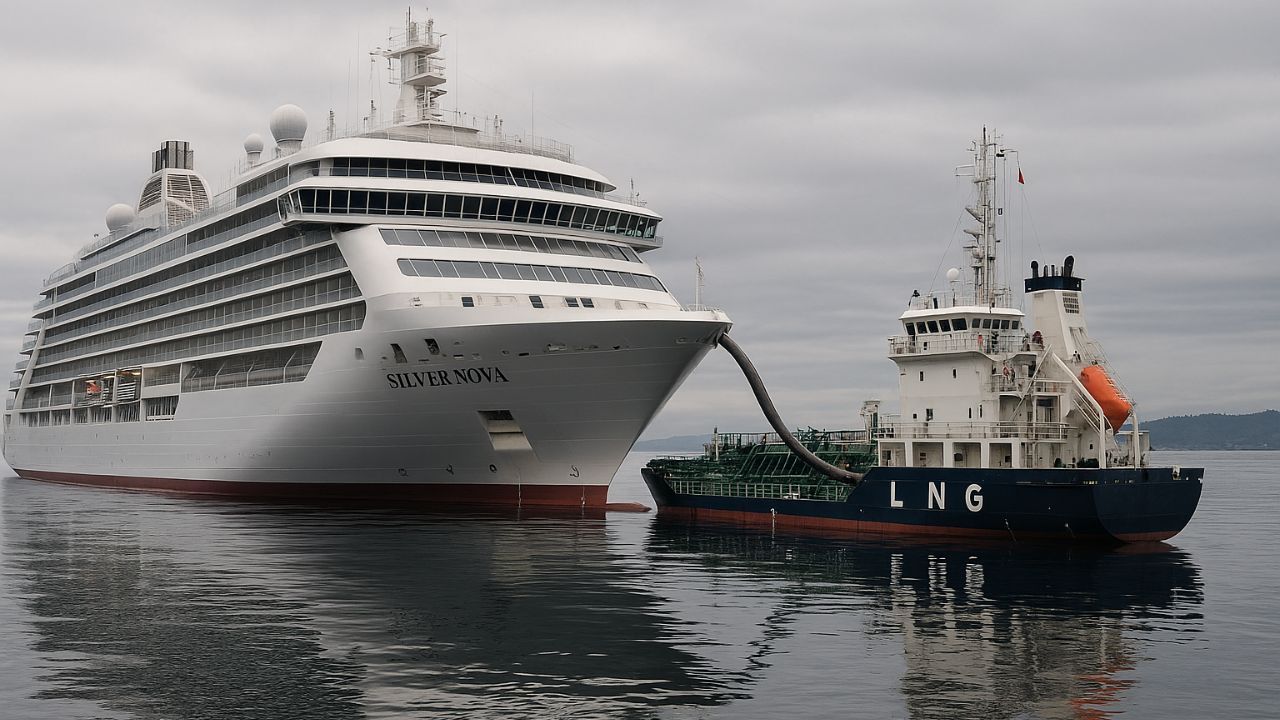
Environmental Milestone: Silver Nova Receives LNG in Unique Operation with Support from Seaspan Energy
In a unique operation in Canada, the cruise ship Silver Nova was supplied with liquefied natural gas (LNG) at the Port of Vancouver, marking a significant advancement in North America’s maritime decarbonization initiatives.
First LNG Bunkering Operation for Cruises in Canada
On May 9, 2025, the Port of Vancouver conducted the first LNG bunkering operation for a cruise ship in Canadian territory. The operation involved the Silver Nova, from Silversea Cruises, and was executed via ship-to-ship (STS) transfer, conducted by the supply vessel Seaspan Garibaldi, owned by Seaspan Energy.
According to information published by Offshore Energy and confirmed by Cruise Industry News, the Silver Nova was built by the German shipyard Meyer Werft and delivered in 2023. Weighing 54,700 tons, the ship is designed to operate on LNG, a fuel that emits significantly fewer air pollutants compared to traditional marine fuels.
-
Offshore industrial demand in Macaé skyrockets with the recovery of oil and gas and could grow by up to 396% by 2026 in the Campos Basin.
-
Offshore industrial demand in Macaé surges with the recovery of oil and gas and could grow by up to 396% by 2026 in the Campos Basin.
-
Brazilian giant expands borders in the Southeast: Petrobras confirms new oil discovery in ultra-deep waters in the pre-salt of the Campos Basin.

-
Alert in the global energy market: Severe tropical cyclone hits the coast and disrupts gas production at major plants in Australia, threatening global supply.


Liquefied Natural Gas as the Engine of Maritime Energy Transition
The unique operation in Vancouver is an important step in consolidating liquefied natural gas as a viable alternative in the cruise sector, which is still seeking solutions to reduce its carbon emissions. According to Offshore Energy, Seaspan Energy had already been conducting similar operations with container ships and bulk carriers and is now expanding its operations to passenger vessels.
Since becoming an accredited LNG supplier last fall, Seaspan has been operating three bunkering ships dedicated to the West Coast of North America, directly contributing to port decarbonization.
Sustainability Drives Investments in Port Infrastructure
The Port of Vancouver has been reinforcing its image as an environmental leader by offering infrastructure for alternative fuels and providing electrical power for berthed ships, known as “cold ironing.” In 2024, over 80% of cruise calls had already adopted this LNG adoption technology, resulting in a cumulative reduction of over 45,000 tons of greenhouse gas emissions since 2009, according to data shared by Offshore Energy.
This environmental commitment is accompanied by a significant economic impact: each cruise ship call is expected to inject, on average, 3 million Canadian dollars into the local economy during the 2025 season, which will host 301 planned calls.
Liquefied Natural Gas (LNG) and the Future of Cleaner Cruises
The adoption of liquefied natural gas in cruise ships represents a strategic turning point for maritime tourism, especially in regions like North America, where regulatory and social pressure for sustainable practices is growing. The operation in Vancouver not only positions the port as a technological and environmental hub but also serves as a model for other port cities around the world.
With the successful operation of the Silver Nova, there is an expectation that more cruise ships will begin to use LNG as their primary fuel on regular routes, a trend aligned with the global decarbonization goals established by the International Maritime Organization (IMO).









Seja o primeiro a reagir!