





 Portuguese
  English
  Spanish
  3 min of reading
  0 comments


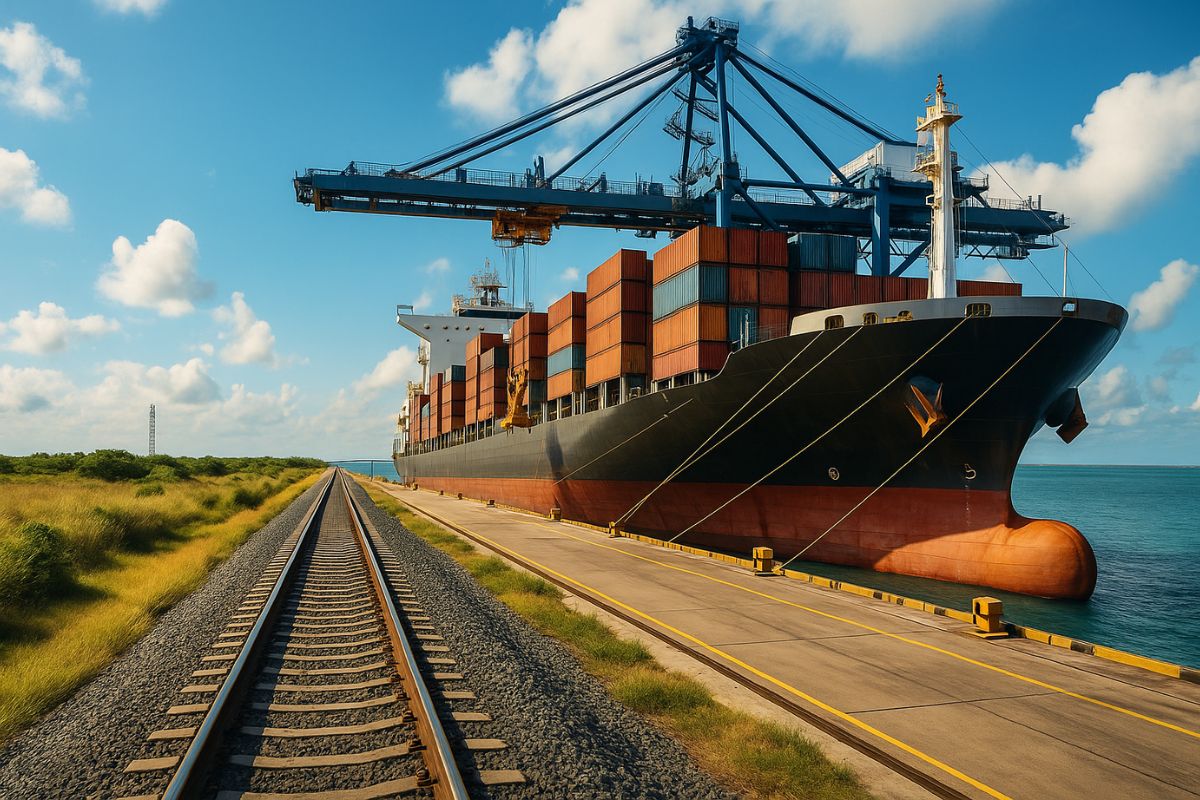
The Northeast Port Has A Central Role In Regional Development, But Pecém And Porto Sul Follow Distinct Strategies To Attract Investments.
Port infrastructure is one of the keys to Brazilian economic growth, and the Northeast port has established itself as a highlight in this context. Among the most relevant are the Pecém Port in Ceará and the Porto Sul in Bahia. Both represent strategic advances in logistics, foreign trade, and job creation, but each has its own characteristics that define its importance.
The Economic Impact Of Pecém Port
The Northeast port located in Pecém has established itself as one of the most modern in Brazil since its inauguration in the early 2000s. Located near Fortaleza, the terminal has transformed into a logistics hub that connects Brazil to strategic international routes.
In addition to the export of fruits, fuels, and industrial products, Pecém houses the Pecém Industrial and Port Complex (CIPP), which includes the country’s first Export Processing Zone (ZPE). This differential attracts international companies with tax incentives, generates thousands of jobs, and strengthens Ceará’s GDP.
-
Larger than entire cities in Brazil: BYD is building a 4.6 km² complex in Bahia with a capacity for 600,000 vehicles per year, but the discovery of 163 workers in conditions analogous to slavery has shaken the entire project.

-
With an investment of R$ 612 million, a capacity to process 1.2 million liters of milk per day, Piracanjuba inaugurates a mega cheese factory that increases national production, reduces dependence on imports, and repositions Brazil on the global dairy map.

-
Brazilian city gains industrial hub for 85 companies that is equivalent to 55 football fields.

-
Peugeot and Citroën factory in Argentina cuts production by half and opens a layoff program for more than 2,000 employees after Brazil drastically reduced purchases of Argentine vehicles.


Another relevant point is the investment in sustainability. The port operates with environmental impact reduction technologies and seeks to establish itself as a Green Hydrogen Hub (H2V), attracting global clean energy projects. This bet puts Pecém at the center of the world’s energy transition.
How Porto Sul Boosts The Economy Of Bahia
The Northeast port in Ilhéus, known as Porto Sul, is in the implementation phase, but already generates grand expectations. Integrated with the West-East Integration Railway (FIOL), the terminal will be vital for the transportation of iron ore, grains, and cellulose, creating a new logistical corridor for the Midwest and the interior of Bahia.
The deep-water infrastructure will allow large vessels to dock, increasing Brazil’s competitiveness in international trade. Furthermore, the project is expected to generate thousands of direct and indirect jobs, boosting sectors such as tourism, agribusiness, and logistics.
The construction also attracts investments for Bahia, diversifying the economy and strengthening regional integration. Since its conception, Porto Sul has adopted sustainable measures to reduce environmental impacts on the Bahian coast.
Pecém vs Porto Sul: Where Is The Difference?
Although both are strategic, the Northeast port in Pecém is already operating, while the Porto Sul is still under construction. Pecém is a reference in industrialization, technology, and diversified exports, while Porto Sul emerges with a focus on solid bulk and rail integration.
While Pecém stands out for the ZPE, the renewable energy hub, and its leadership in multimodal logistics, Porto Sul promises to open a new frontier for exports in mining and agriculture in Brazil’s interior.
| Characteristic | Pecém Port (CE) | Porto Sul (BA) |
|---|---|---|
| Status | Operation Since 2002 | Under Implementation |
| Focus | Multimodal Hub and Green Hydrogen | Transportation of Ore and Grains via FIOL |
| Integration | ZPE, Transnordestina, Highways | FIOL, BR-101 and Ilhéus Airport |
| Impact | Industrialization and Diversified Export | New Logistic Corridor for Interior and Midwest |
The Northeast port is vital for the Brazilian economy, whether in Pecém, already established as a reference in modernization and innovation, or in Porto Sul, which emerges as a promise to transform Bahian logistics. Each, in its own way, shapes the economic future of the region.
And you, do you believe that the future of northeastern foreign trade will be more linked to Pecém or Porto Sul? Which of these models can generate more impact in Brazil? Leave your opinion in the comments and join the debate.








Seja o primeiro a reagir!