





 Portuguese
  English
  Spanish
  4 min of reading
  22 comments




Return of Texaco Promises to Shake Up the Brazilian Market! With Cutting-Edge Technology, Emotional Memory, and an Innovative Business Model, the Giant Bets on Aggressive Expansion in 2025. The Brand Already Has a Guaranteed Presence in Cities Like São Paulo and Rio de Janeiro. Will It Be Enough to Face Petrobras and Shell?
Behind the daily life of Brazilians, an audacious movement has begun to take shape, promising to change the fuel station landscape in the country.
Without fanfare, an iconic brand full of history has decided to make its comeback in Brazil, aiming for a bold and innovative future.
But what explains this sudden return? Moreover, what are the real intentions of this giant in the sector? The answer, though simple, reveals a meticulously planned strategy.
-
Unemployment rises again to 5.8% at the beginning of 2026, raising alarms about the end of temporary positions and its impact on the Brazilian job market.

-
Document organization can cut invisible costs in small businesses, a simple step that prevents waste, rework, and losses in daily operations.

-
Chinese giant worth nearly R$ 4 billion that manufactures cables for electric cars, solar energy, and robotics wants to open a factory in SC.
-
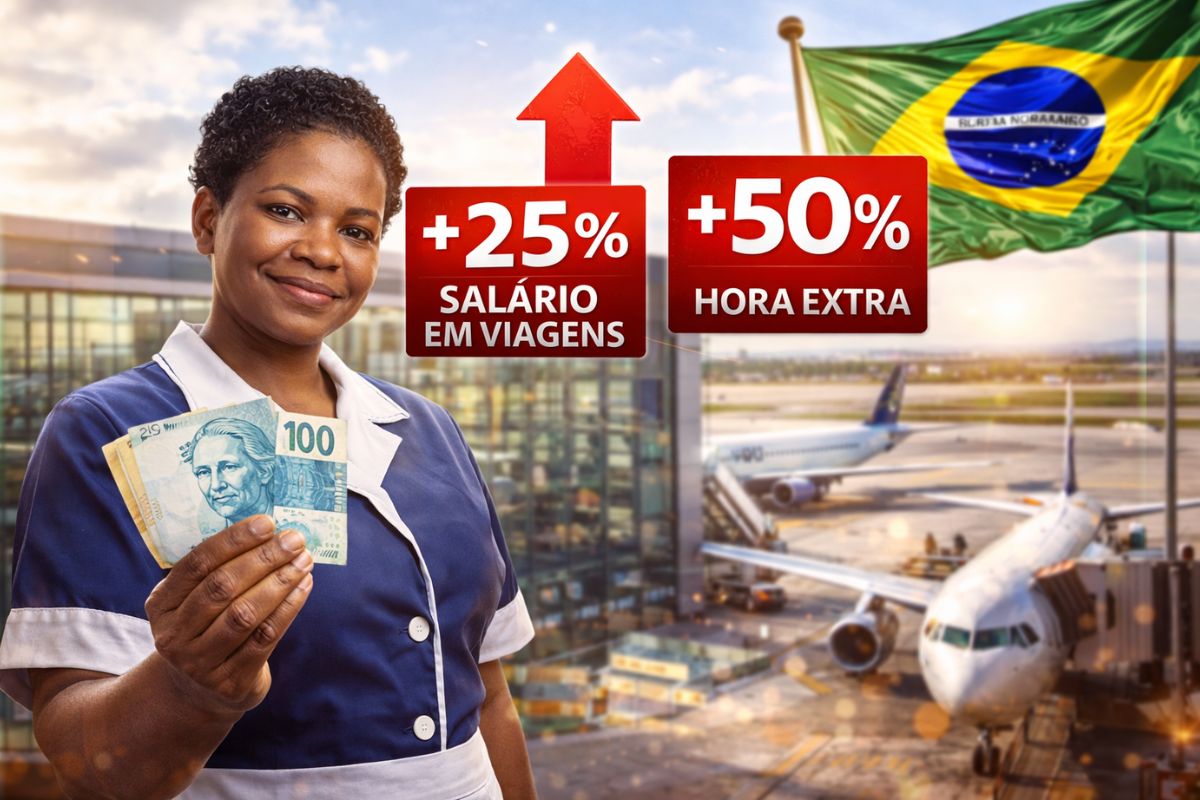
Many employers do not know, but the law guarantees domestic workers a 25% increase in salary during trips, 50% for overtime, 20% for night shifts, and 17 additional benefits that can lead to labor lawsuits if not paid.

Last month, Texaco resumed its operations in Brazil, five years after its exit in 2018.
According to information released by Ipiranga, the company that signed a licensing agreement with Chevron to operate the brand, the first station was opened in Palhoça, Santa Catarina, on October 31.
This is just the beginning of an expansive plan that includes opening stations in Rio de Janeiro and São Paulo starting in 2025, as explained by Bárbara Miranda, Vice President of Marketing and Business Development at Ipiranga.
Expansion Strategy: Santa Catarina as a Laboratory
The choice of Santa Catarina as a starting point was not by chance.
According to Bárbara Miranda, the partnership with the Rede Galo, authorized in the region, aims to consolidate the brand’s presence in the state before advancing to other markets.
“We still have new business opportunities being qualified”, explained the executive, highlighting that Rio de Janeiro is already in advanced negotiation stages.
The operational model adopted by Texaco also marks a novelty.
Unlike traditional practices, dealers now have the autonomy to develop the brand and stations, with exclusivity in specific markets such as neighborhoods, municipalities, or states.
Ipiranga, for its part, acts as a partner, providing technical support, products, and marketing strategies.
A Model Focused on the Dealer
This new business model grants the dealer a strategic role in developing the brand.
“The responsibility for the point, local activation, and promotions lies with the authorized partner”, detailed Bárbara Miranda.
Meanwhile, Ipiranga assists with best training practices, national advertising campaigns, and product management support.
This partnership format can be seen as an attempt to strengthen the bond between Texaco and consumers, allowing each dealer to tailor their strategies to the specific needs of their region.
Texaco versus Giants: Technology Appeal and Emotional Memory
Market studies conducted prior to the return pointed out Texaco as the fourth most recalled brand by Brazilians, behind only Ipiranga, Shell, and Petrobras.
With a strong association with technology and automotive performance, the brand aims to attract a car-loving audience, focused on innovations that improve engine performance.
Chevron, the global owner of Texaco, is already considering launching an additive ethanol in Brazil, reinforcing this technological image.
Meanwhile, Ipiranga’s focus with its line of additive fuels, Ipimax, remains oriented towards efficiency and yield.
Innovation in Marketing: “Come Live Your Best”
To mark its return, Texaco adopted the slogan “Come Live Your Best”, aligned with the brand’s global strategy.
The technology of high-performance additives, called Techron, is at the center of this repositioning.
An example of the impact of this strategy was seen at the inauguration of the station in Palhoça, where red cars received 20 liters of free Texaco Techron gasoline.
The action resulted in a line over a kilometer long and attracted nearly 400 vehicles, distributing 6,700 liters of fuel in just a few hours.
The Bullet agency, responsible for the brand’s communication, utilized digital media, radio, out-of-home, and social media strategies to amplify the reach of the campaign.
What to Expect from Texaco in 2025?
According to Bárbara Miranda, the challenge now is to consolidate the brand across Brazil and reactivate consumers’ emotional memories.
The national presence, however, will be evaluated gradually according to performance in key cities.
With the promise of technological innovation and a differentiated business model, Texaco is ready to face giants like Shell and Petrobras in the Brazilian market.
The big question is: will Texaco manage to win back Brazilians and challenge the dominance of the giants in the sector?








Ameaça a Petrobras? Eles vão explorar petróleo? Refinar? Então, desculpe mas, graças ao Bozolino, ao “Posto Ipiranga” e a ****, a a Petrobras não comercializa mais combustível nas bombas. Atualize-se.
A Ipiranga caiu em qualidade de combustiveis pois cada posto pode comprar de quaisquer fornecedores! Continuarei com a Shell
Espero que venha para fornecer gasolina com preço justo, pois essa Petrobras e os governantes do nosso País são um bando de corruptos.