





 Portuguese
  English
  Spanish
  6 min of reading
  0 comments


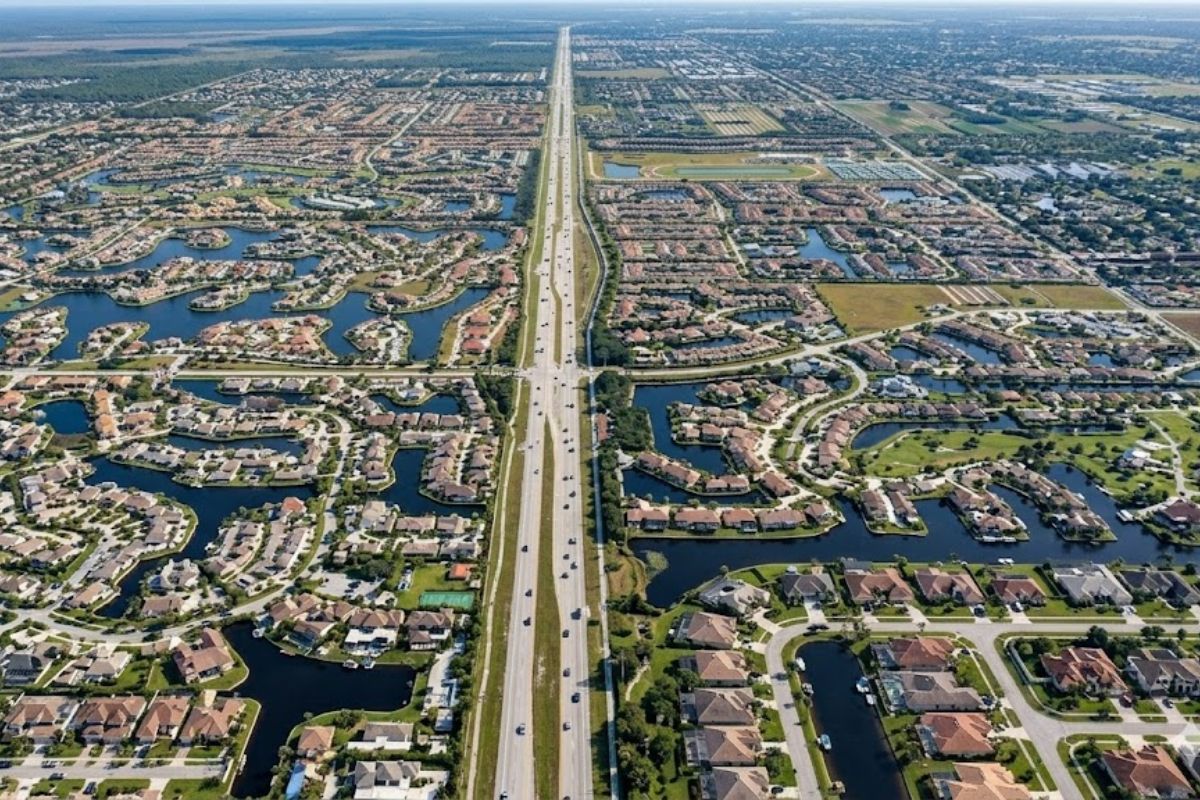
In Florida, The Combination Of Soluble Limestone, Sinkholes, Heavy Rain, And Shallow Aquifer Creates Natural And Artificial Lakes On An Unusual Scale, Redrawing Neighborhoods, Altering Ecosystems And Exposing A State Where The Land Is Never Fully Stable, Because The Subsoil Continues To Change Beneath Every Construction Over The Decades.
The Florida seems like a state made of stagnant water, swamps, and heat, but what supports this landscape is far less solid than it appears. Beneath the ground lies an immense base of limestone that slowly dissolves with rain, opens subterranean voids, and helps explain why so many lakes appear, change in size, and sometimes emerge where there was once solid ground.
This process has not been stuck in the past. It remains active now, influencing neighborhoods, drainage, ecosystems, and even land value. In Florida, the terrain is not a stationary stage. It responds to the weather, the aquifer, human occupation, and the collapse of cavities that can become sinkholes and then fill with water.
Limestone Dissolves Silently And Transforms The Subsoil Of Florida
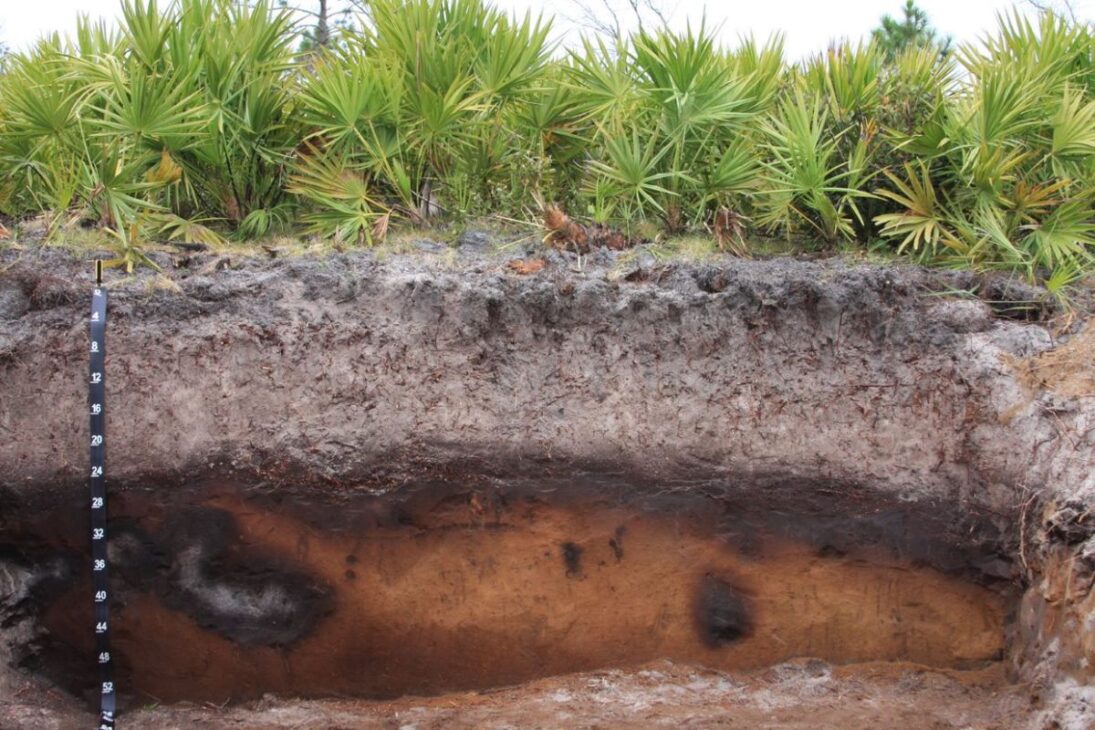
The geological base of Florida is a vast platform of limestone formed by compressed remains of ancient marine creatures. When slightly acidic rainwater seeps into this material, a continuous chemical reaction occurs. The rock gradually dissolves, opening caves, caverns, and subterranean voids that grow over time. It is this invisible erosion that makes the state so different from other regions full of lakes.
-
A couple buys an old chalet, breaks the kitchen floor for renovation, and finds over a thousand coins of gold and silver hidden since the English Civil War over 4 centuries ago.
-
Rigid bags with their days numbered: new trend prioritizes comfort in 2026.

-
YouTuber creates an excavator equipped with a giant 4.5-meter sword to challenge his brother to a rematch, and the invention quickly goes viral on social media.

-
The U.S. Army surprises the world by presenting the UH-60MX Black Hawk helicopter capable of flying without pilots, controlled by a tablet, featuring the MATRIX system, smart sensors, and full autonomy in real combat and rescue missions.


When these cavities become too large, the earthen ceiling above loses support. The result is the sudden collapse of the soil and the formation of sinkholes. If these sinkholes encounter the high aquifer that dominates much of the state, they fill with water and begin to function as new lakes. It is no exaggeration to say that in many parts of Florida, the soil is permanently negotiating with the void just below it.
This mechanism helps explain why some clusters of lakes appear grouped. Near Winter Haven, for example, chains of lakes emerged from separate sinkholes that ended up merging over time. What appears to be a continuous system often began as a series of individual collapses, shaped by the dissolution of limestone.
This is also why the sudden disappearance of the ground cannot be treated as an isolated oddity. Houses, cars, and streets have already been swallowed because the geology of Florida is, by definition, unstable. The problem is not an outlier accident. The problem is the geological curve of the state itself.
The High Aquifer Makes Any Depression Turn Into Water In Florida
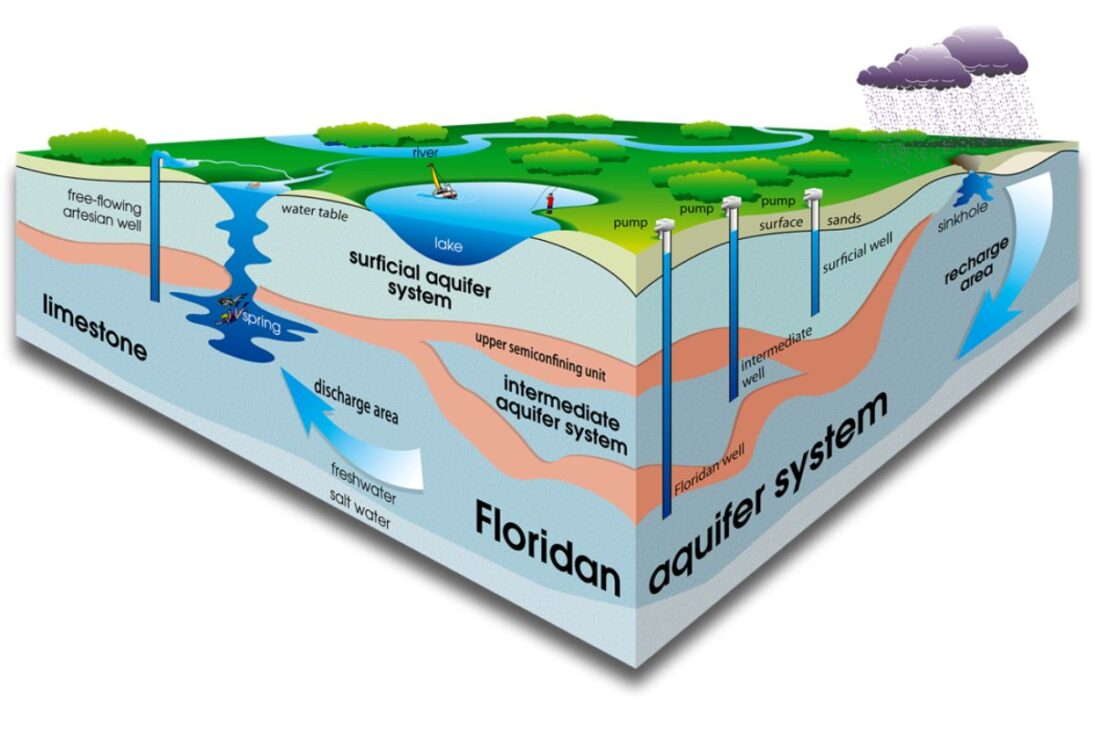
The second piece of this explanation is the aquifer. In many places, the groundwater is far below the surface. In Florida, it is often just a few feet from the ground. This occurs because the state is a flat peninsula, surrounded by the ocean and just above sea level. The highest natural point in Florida is only 105 meters high. With so little elevation, a slight depression is enough for water to appear.
This shallow aquifer alters the entire logic of the landscape. While other states need deeper valleys to form lakes, Florida can create bodies of water with much smaller elevations. The famous idea that just digging a little will find water is not just a local joke. It reflects a hydrological reality that shapes land use, the type of construction, and drainage behavior.
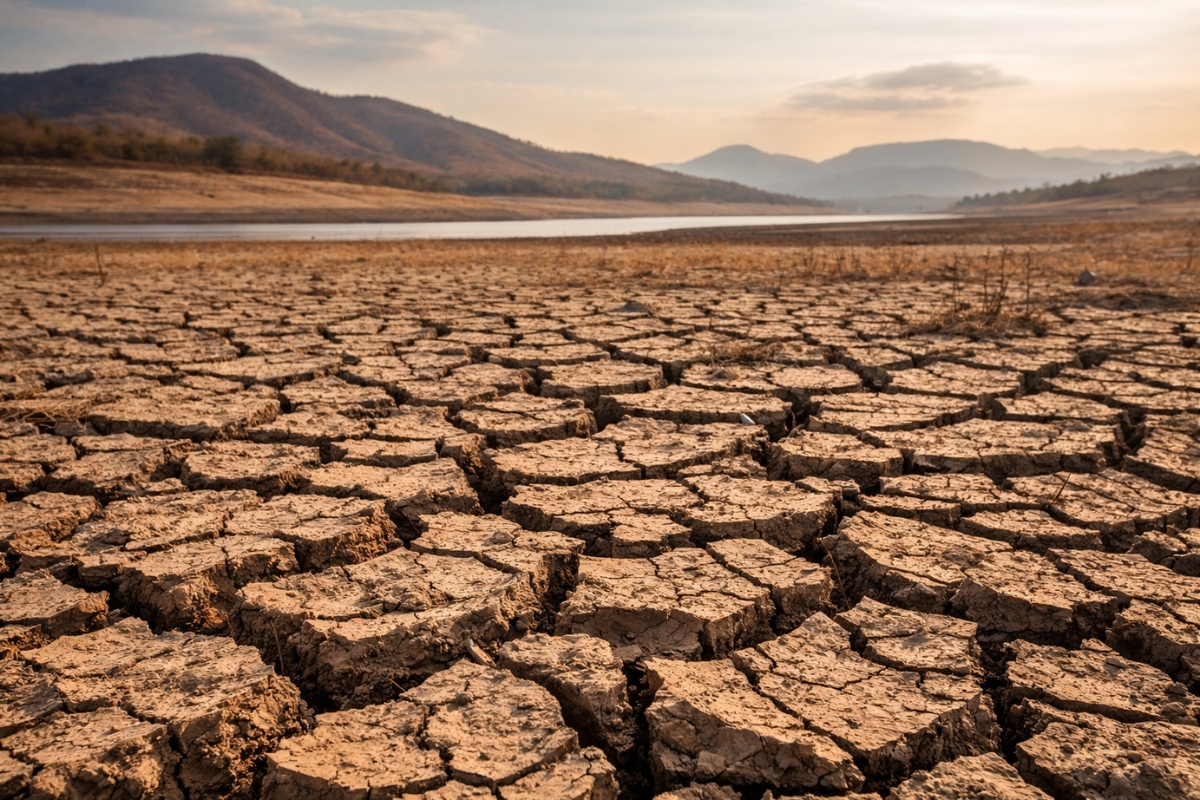
The aquifer is also not static. During the rainy season, it rises quickly and expands lakes. In dry periods, some shrink significantly or even temporarily disappear. In Florida, what seems permanent can change in a matter of days, because groundwater responds rapidly to rain, heat, and soil variations.
This condition helps explain even everyday choices in construction. Basements make little sense in much of Florida, because just a few feet of digging are enough to find water. The shallow soil, the dissolved limestone, and the high aquifer work together all the time.
Extreme Rain And Sinkholes Make Lakes Grow, Disappear, And Reappear
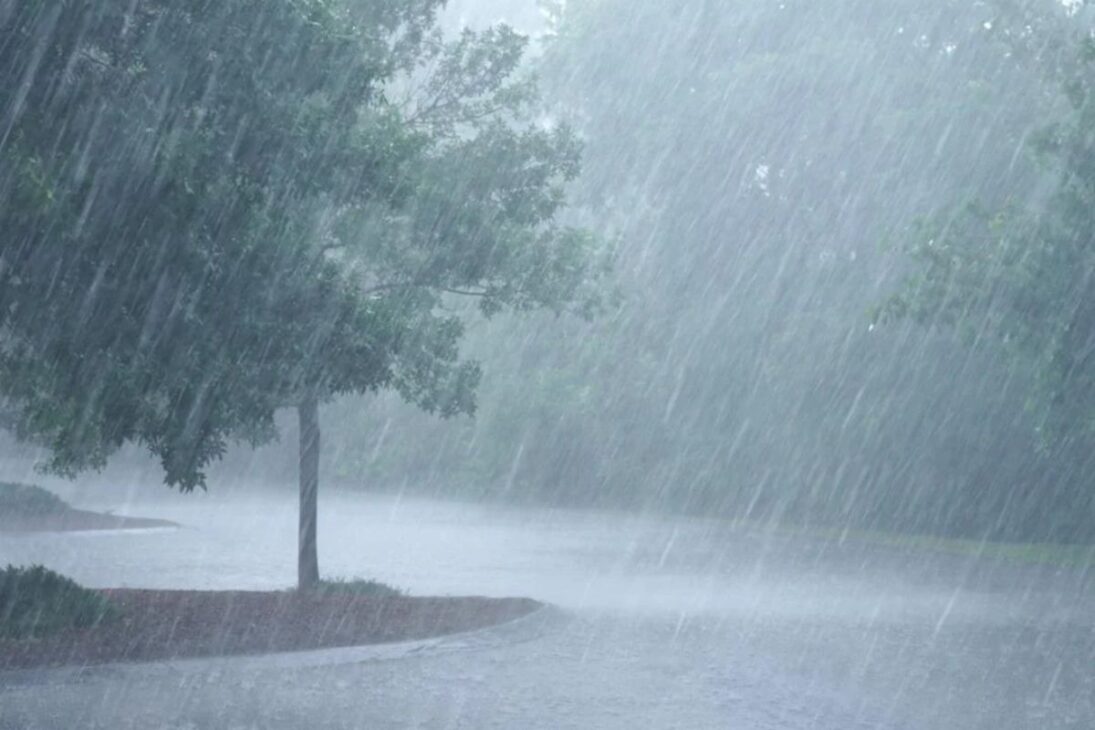
Florida receives between 50 and 60 inches of rain per year, nearly double the national average mentioned in the base. But the amount is not the only issue. The way this water falls matters as much as the total volume. From May to October, afternoon storms emerge with almost mechanical frequency, dumping several inches in an hour before the sky clears again. This rhythm feeds the lakes and further strains an already fragile subsoil.
When excess water seeps in, the limestone continues to dissolve. When water rises and falls violently, the chance of instability increases. This helps explain why new sinkholes can form in areas previously viewed as stable. Extreme rain, combined with the shallow aquifer, makes Florida a territory where geology reacts too quickly to feel safe.
Hurricanes and tropical storms exacerbate this cycle. There are instances when more than 50 centimeters of rain can fall in a single passage. This not only fills the lakes, but alters pressure, infiltration, and the behavior of the groundwater. In Florida, rain not only hydrates the landscape. It reshapes the landscape.
The climate models mentioned in the base also indicate a scenario of greater extremes, with more intense storms and longer droughts. If this pattern is confirmed, the variation in the level of lakes is likely to become more abrupt, and the process of forming sinkholes may accelerate at certain points. What is already unstable today may become even more unpredictable.
Not All Lakes In Florida Are Natural And The Real Estate Market Took Advantage Of It
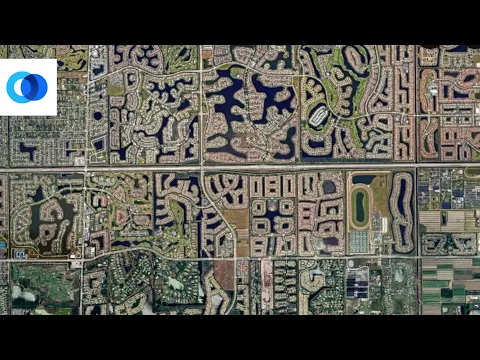

Not all lakes in Florida were born from the dissolution of limestone or the collapse of sinkholes. Many were deliberately excavated by machines in areas of urban expansion. In new subdivisions, retention ponds help control flooding, store water, and provide fill material to elevate construction sites. Real estate engineering realized early on that water could turn into market value.
These artificial lakes often have more perfect geometric shapes and more consistent depths, unlike natural lakes, which exhibit irregular margins and more variable relief. The reasoning is practical: digging solves drainage, elevates the surrounding lot, and creates the appearance of waterfront property. In Florida, the aquatic landscape is not only a natural heritage. It is also a product of human decision.
Large projects reinforce this logic. In the construction of Walt Disney World, for instance, engineers excavated millions of cubic meters of earth to create the Seven Seas Lagoon and elevate areas of the complex. Water was used as a solution for drainage, filling, and marketing at the same time.
This advancement, however, comes at an environmental and urban cost. Growth over naturally wet areas compresses runoff, increases pressure on margins, and alters the behavior of lakes and the aquifer. Florida grows on a base that has never been fully stable, and this turns every new neighborhood into a bet against the geology itself.
Lakes Sustain Life, But Also Reveal The Limit Of Human Occupation
The lakes of Florida are not just holes filled with water. They support complex ecosystems, migratory bird routes, fish, alligators, and entire areas of biodiversity. Lake Okeechobee, for instance, spans about 730 square miles and serves as the centerpiece of the southern water system of the state. Even smaller retention lakes can concentrate enough life to alter the dynamics of an entire neighborhood.
But these environments also face increasing pressure. Agricultural runoff, toxic algae proliferation, invasive species, and urban encroachment degrade margins and change the chemistry of the water. In coastal areas, rising sea levels already allow saltwater to intrude into systems previously dominated by fresh water. This threatens ecosystems, supply, and the biological balance of the lakes.
At the same time, the subsoil continues to dissolve. The limestone does not cease its transformation because there has been construction, asphalt, or subdivision. As the cavities grow, the chance of new collapses also increases. Geologists can monitor part of this process, but predicting exactly where and when the ground will give way remains extremely difficult. In Florida, the risk never disappears; it just changes location.
This is why the landscape of the state can be read as a system in permanent evolution. The more than 7,500 lakes are not signs of stability. They are the visible portrait of a continuous struggle between water, rock, climate, and human expansion. Florida appears to be land surrounded by water, but often functions more like water interrupted by temporary strips of land.
In your view, is Florida’s biggest problem extreme weather, real estate expansion, or that the ground itself never stops changing?








-

-

-

-

-

17 pessoas reagiram a isso.