





 Portuguese
  English
  Spanish
 4 min of reading
  0 comments


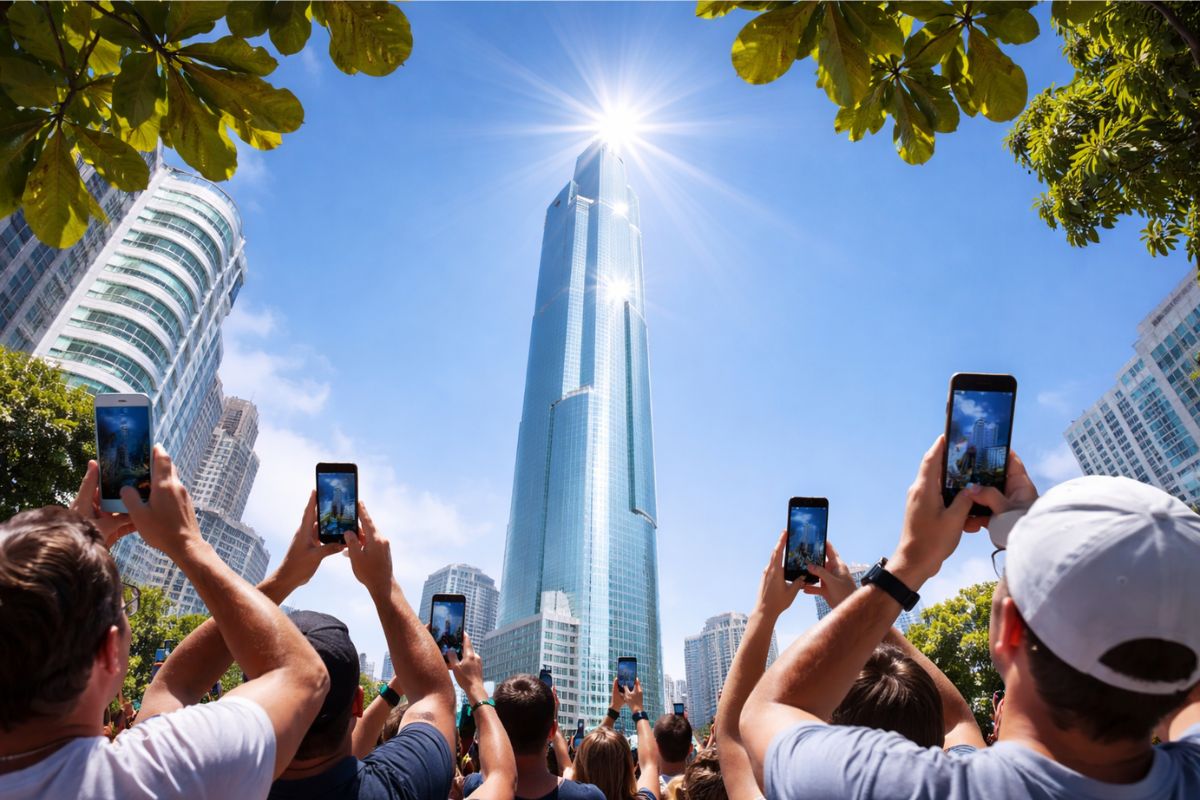
With the Sun Reflecting at the Top of One Tower, Scene Impresses Residents in Balneário Camboriú, Reminds Famous Episode in London and Reveals Detail That Prevents Extreme Heat
The shine at the top of One Tower became a topic of conversation in Balneário Camboriú after images of the solar reflection began circulating widely on social media. The intensity of the light caught attention for its almost unreal appearance, especially in the distant captures.
The comparison with a building in London quickly emerged and shifted the debate into another direction. What seemed like just a strong reflection was perceived by many as a possible risk of extreme heating in the area.
Case in London Became a Reference After Heat Affected Car on the Street
The episode recalled on social media involves the building known as the Walkie Talkie in London. The building entered the history of urban engineering after the light reflected from its facade concentrated on a specific point in the street.
-
A couple buys an old chalet, breaks the kitchen floor for renovation, and finds over a thousand coins of gold and silver hidden since the English Civil War over 4 centuries ago.

-
Rigid bags with their days numbered: new trend prioritizes comfort in 2026.

-
YouTuber creates an excavator equipped with a giant 4.5-meter sword to challenge his brother to a rematch, and the invention quickly goes viral on social media.

-
The U.S. Army surprises the world by presenting the UH-60MX Black Hawk helicopter capable of flying without pilots, controlled by a tablet, featuring the MATRIX system, smart sensors, and full autonomy in real combat and rescue missions.


This concentration uncommonly elevated the temperature and ended up damaging parts of a parked vehicle. Since then, the case has been used as an example of how the geometry of a facade can alter the behavior of sunlight.
Images in Balneário Camboriú Expanded the Comparison on Social Media
On the Santa Catarina coast, the visual effect at the top of One Tower immediately reminded many of the British episode. The volume of glass and the height of the structure help transform the reflection into a scene of great visual impact.
At certain times, the incidence of the sun makes the upper part of the building even brighter. In the images, the scale of the tower and the strength of the reflected light reinforce the impression that something rare is happening.
Shape of the Facade Changes Everything in the Path of Light
According to Rafael Irigoyen, physics professor consulted about the phenomenon, the central difference lies in the shape of the facade. In the London case, the concave structure favors the concentration of solar rays at a focal point.
In One Tower, the geometry does not reproduce this same condition. Without the convergence of rays, the light spreads instead of accumulating in a small area, which prevents the same extreme thermal effect from forming.
Strong Brightness Does Not Mean Concentrated Heat in the Area
The appearance can be misleading to those observing the images online or on their phones. An intense reflection does not always represent concentrated heat with the potential to cause material damage.
In the building in Balneário Camboriú, the highlight is in the visual impact caused by solar incidence on the glass. The phenomenon impresses the eyes but does not present the same physical logic that led to the heating in the London case.
Glass Towers Require Increasing Attention in Cities
The episode reinforces an increasingly important theme in urban architecture. In cities with many skyscrapers, the behavior of sunlight needs to be carefully analyzed throughout the year.
Building orientation, facade curvature, and thermal impact on the surroundings are part of this consideration. Small changes in the surface design can decisively alter the light path and the results perceived on the streets.
Balneário Camboriú Gathers Ideal Scenery for Striking Reflections
With some of the tallest residential buildings in South America, Balneário Camboriú already experiences frequent solar reflections. When the sun hits certain angles, the glass facades amplify this effect and transform the city’s horizon.
This helps explain why scenes like that of One Tower gain such repercussion. The combination of height, glass, and intense light creates impactful images and raises curiosity about the limits of modern architecture.
The case shows that not all extreme brightness indicates real danger. In One Tower, the effect draws attention for its visual strength but does not replicate the heat concentration that made the London building a symbol of the risks of certain facades.
In the end, the scene recorded in Balneário Camboriú highlights how a building’s shape can completely change the interpretation of the same phenomenon. When architecture meets light at the right angle, it changes the strategic reading.







-

-

-

-

6 pessoas reagiram a isso.