





 Portuguese
  English
  Spanish
  4 min of reading
  0 comments


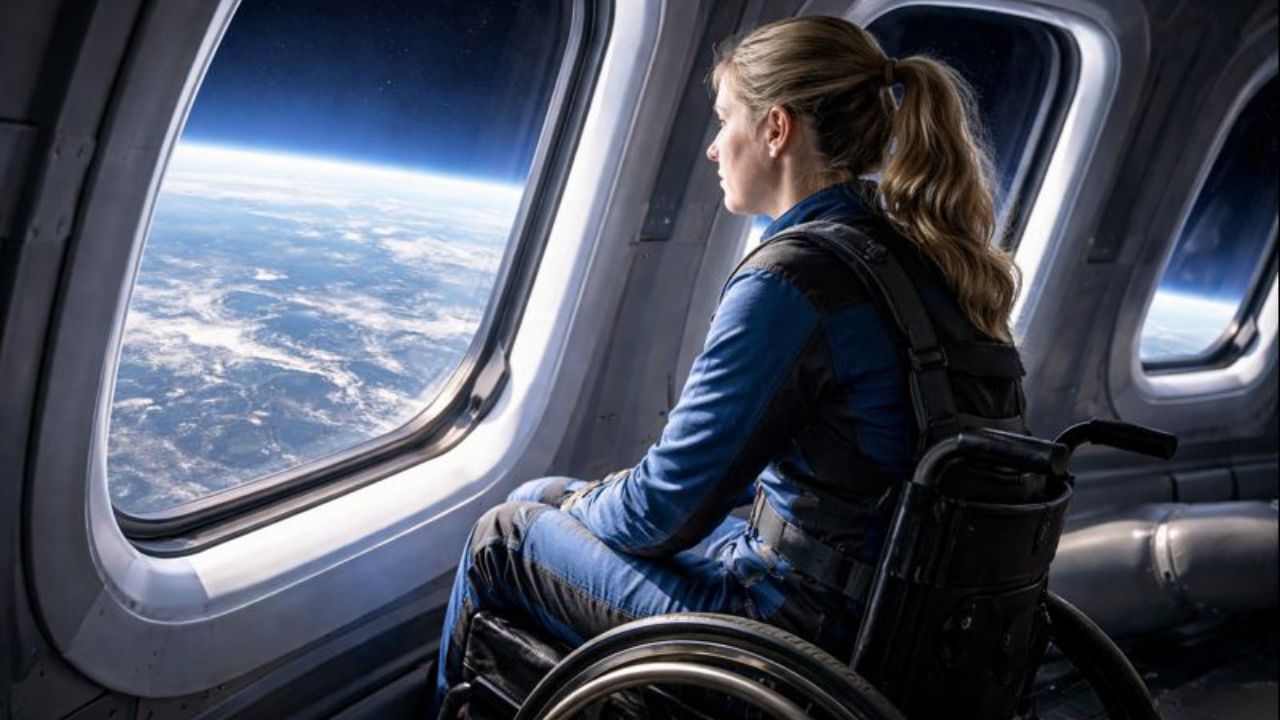
German Becomes First Wheelchair User to Participate in Space Flight on Blue Origin Mission with New Shepard Rocket in Texas.
A German aerospace engineer and wheelchair user made history by participating in a space flight this Saturday (12/20/2025) in the United States.
Michaela Benthaus became the first wheelchair user to cross the line that separates the atmosphere from space aboard the New Shepard rocket from Blue Origin, a company owned by billionaire Jeff Bezos.
The suborbital mission launched from Texas, lasted about 10 minutes, and included six passengers, marking a symbolic advancement for inclusion in space tourism.
-
A “silent skill” is allowing Brazilians to earn up to R$ 22,000 per month without a degree and become indispensable for companies that rely on millions of data to survive.

-
Researchers at the Toyota Research Institute found that if a human uses robotic arms to flip a pancake 300 times in an afternoon, the robot learns to do it on its own the next morning, and this is currently the most promising method to solve the biggest bottleneck in modern robotics.

-
Goodbye iron: a common item in households is starting to lose space to technology that smooths clothes in minutes without an ironing board and with less energy consumption.

-
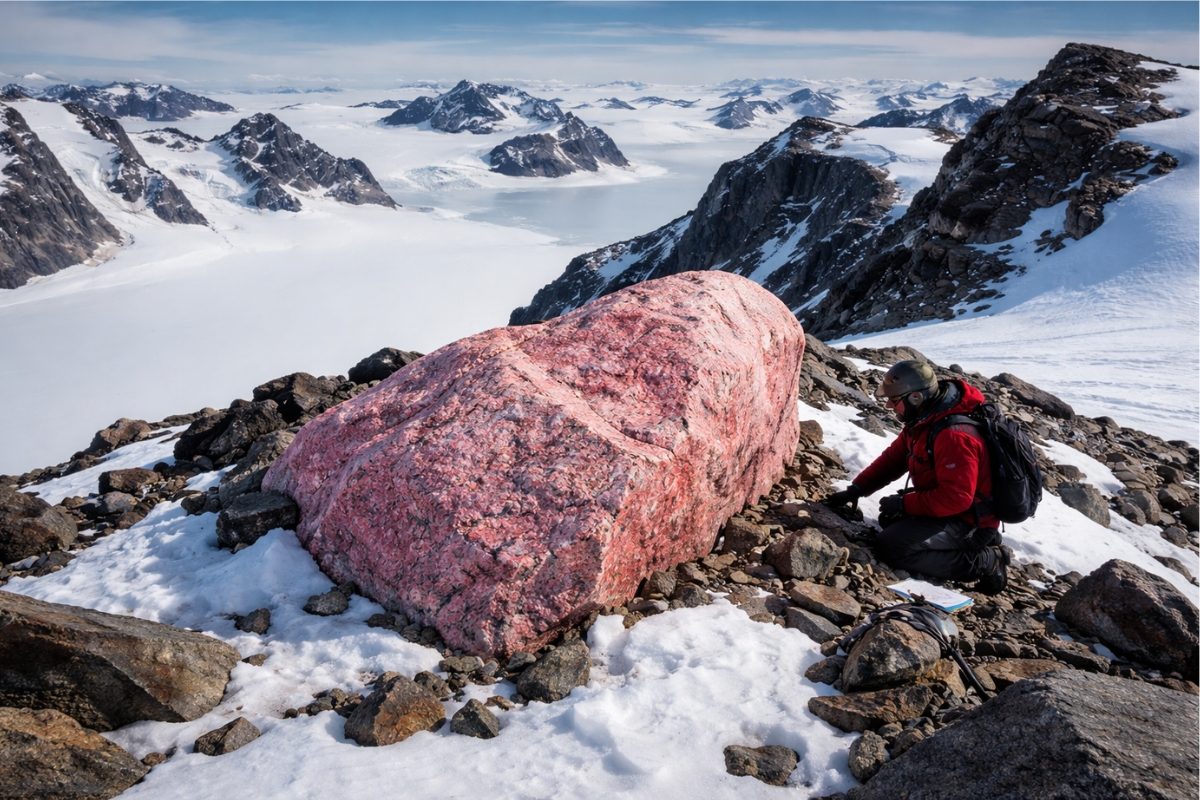
Antarctica reveals an unusual clue high in the Hudson Mountains, and what appeared to be just an isolated rock began to expose a secret hidden under the ice for ages.
The launch occurred at 8:15 AM local time (11:15 AM in Brasília) from the company’s facilities in western Texas.
During the trajectory, the capsule reached the Kármán line — an international reference that defines the beginning of outer space — and returned safely, slowed down by parachutes, in the Texas desert.
This feat placed Benthaus at the center of discussions on accessibility and diversity in space exploration.

Who is the German Who Made History in the Space Flight
Michaela Benthaus is an aerospace and mechatronics engineer affiliated with the European Space Agency.
Before becoming a symbol of inclusion in space flight, she led an active life until suffering a serious mountain biking accident that resulted in a spinal cord injury and caused her to use a wheelchair.
Even after the accident, Benthaus maintained her technical work and began publicly advocating for a more accessible world. In a video released by Blue Origin, she stated: “After my accident, I realized how inaccessible our world still is for people with disabilities”.

Inclusion Beyond Earth: The Mission’s Message
In addition to its technological nature, the space flight had a strong social impact. Benthaus emphasized that inclusion should not be selective or limited to discourse.
“If we want to be an inclusive society, we must be inclusive in all aspects, not just in those that are convenient to us”, she declared.
Her statement quickly resonated on social media and among aerospace industry experts. The episode expanded the debate on accessibility not only in urban environments but also in highly technological sectors, such as space exploration.
How the Mission with the New Shepard Rocket Worked
The New Shepard rocket is designed for short-duration suborbital flights, primarily aimed at space tourism and scientific experiments.
After launch, the booster separates from the capsule in mid-flight. While the rocket returns in a controlled manner, the capsule continues to the maximum point of the trajectory before beginning its descent.
During reentry, large parachutes are deployed to reduce speed and ensure a smooth landing.
The entire process occurred without incidents, reinforcing Blue Origin’s safety record in crewed missions.
International Repercussions and NASA’s Praise
The achievement of the first wheelchair user in a space flight was celebrated by authorities in the field. The new NASA director, Jared Isaacman, publicly praised the engineer. “She has just inspired millions of people”, he wrote on X, congratulating Benthaus on her perseverance.
The statement reinforced the symbolic weight of the mission, which transcended technical limits and gained social and cultural dimensions.
Blue Origin’s History in Space Tourism
This was the 16th crewed flight of Blue Origin, which has been conducting space tourism missions with the New Shepard for years. Although the ticket prices are not officially disclosed, dozens of people have already participated in these suborbital trips.
Among the well-known names who have been on board are singer Katy Perry and actor William Shatner, famous for playing Captain Kirk in the Star Trek series.
The presence of celebrities helped popularize the concept of commercial space travel.
Competition and Next Steps in the Space Sector
In the suborbital flight market, Blue Origin’s main competitor is Virgin Galactic, which offers a similar experience. However, Jeff Bezos’s company plans to go further.
The company aims to advance into the orbital flight segment and compete directly with SpaceX, led by Elon Musk.
This year, Blue Origin has already conducted two uncrewed orbital flights using the much more powerful New Glenn rocket compared to the New Shepard.
A Milestone for the Future of Space Flight
The participation of the first wheelchair user in a space flight represents more than just a record.
The episode signals a shift in mindset in the aerospace sector, showing that space exploration can — and should — align with values of inclusion and accessibility.
Thus, while space tourism advances technologically, missions like Michaela Benthaus’s reinforce that the future of exploration beyond Earth also includes those who have the right to be a part of it.







-

-

-

-

-

-

13 pessoas reagiram a isso.