





 Portuguese
  English
  Spanish
  6 min of reading
  1 comment


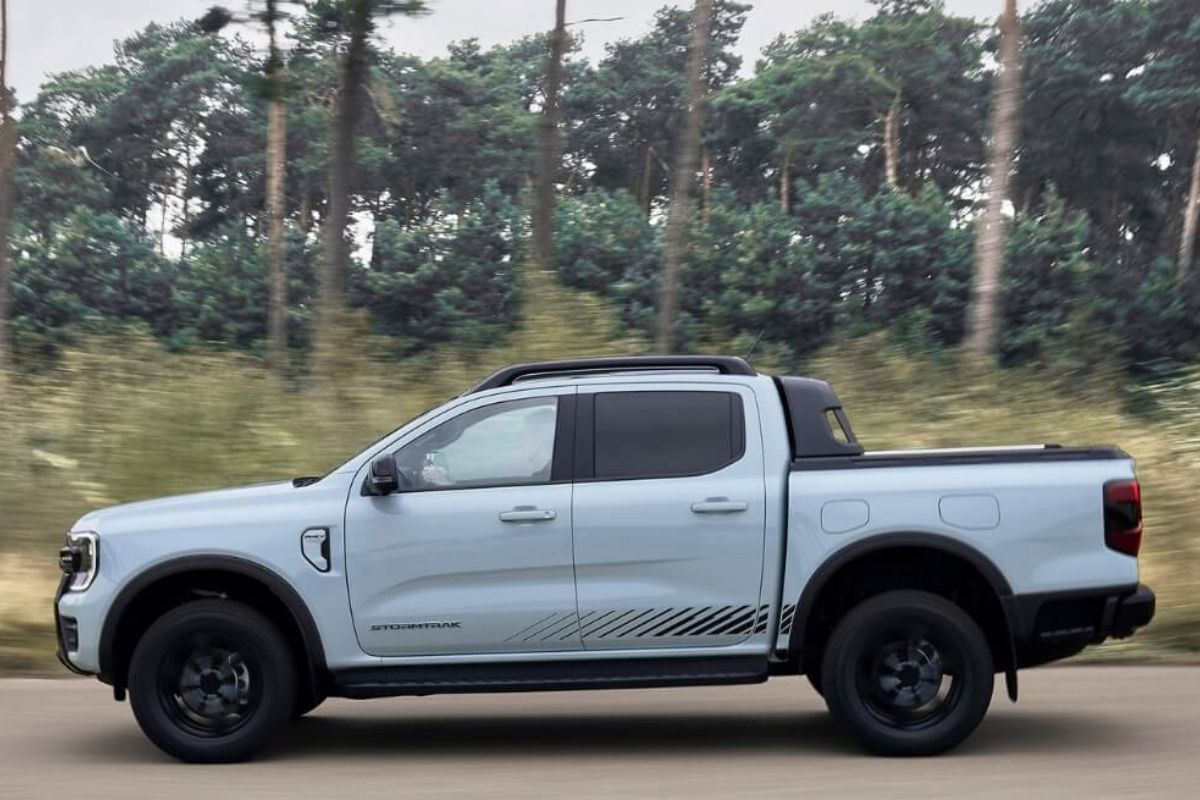


Presented At Ford Event In Brazil, The Hybrid Plug-In Flex Ranger Combines 2.3 Ecoboost Engine With 281 Horsepower, Medium Pickup Traction And Torque With Charging At Home, Prepares For Flex Transition In 2027 And Applies Extra Pressure On Hilux, Amarok And Other Diesel Rivals In The National Segment
The first appearance of the Hybrid Plug-In Flex Ranger on Brazilian soil previewed, at a year-end event with Ford guests, the brand’s strategy for 2027. The plug-in medium pickup, equipped with a 2.3 Ecoboost turbo engine with 281 horsepower and about 70 kgfm of torque on gasoline, was presented in a top configuration, with a look similar to the European Storm Track version, positioned below the Ranger Raptor in performance and image.
At the same time it confirms the arrival of the Hybrid Plug-In Flex Ranger for 2027, the brand signals that the model will have a flex engine in Brazil, with the possibility of increased power when fueled with ethanol. The context is a heated competition: the new Hilux is expected at the end of 2026, the next generation Amarok is also on the radar, and the transition of medium diesel pickups to electrified solutions is gaining momentum in a historically conservative segment.
First Appearance Of The Hybrid Plug-In Flex Ranger In Brazil

The unit displayed at the event, described in the video as Storm Track, maintains the structural base of the current generation of the Ranger produced in Argentina, identified in the material as platform BR27.
-
OMODA & JAECOO grows in Europe in 2026 with an integrated strategy of sales, innovation, local production, and technological advancement in the United Kingdom, Italy, and Spain.
-
OMODA & JAECOO expands after-sales service in Brazil with competitive maintenance, a 7-year warranty, and high availability of parts for technological SUVs.
-
OMODA & JAECOO appoints Alessandra Souza as executive marketing director in Brazil and accelerates brand expansion with a focus on innovation, networking, and hybrid portfolio.

-
Jaecoo 7 with super hybrid SHS system exceeds 1,200 km of combined range with a 1.5 turbo engine, high-density battery, and intelligent energy management.

Visually, the pickup repeats elements of the Ranger Limited sold in Brazil, with headlights borrowed from the Ranger Raptor, 18-inch wheels, and taillights identical to those of the conventional diesel version.
This is a hybrid plug-in, with a dedicated charging port and a separate fuel filler neck.
The presenter defines it as “vegetarian” to mark the difference from pure electric vehicles: it is not a 100% battery vehicle, but rather a PHEV system that allows for electric mode operation and, when necessary, engages the combustion engine.
The displayed model also features a functional roll bar integrated into the roof rack, with rails that allow for adjusting the support point for a board, kayak, or long cargo.
The unit shown uses a hard top, preparation for towing, and rear suspension with leaf springs, maintaining the expected robustness for carrying loads and off-road use.
2.3 Turbo, 281 Horsepower And Promise Of Flex Performance
According to the information in the video, the Hybrid Plug-In Flex Ranger uses the well-known 2.3 Ecoboost turbo four-cylinder engine, configured to deliver 281 horsepower and about 70 kgfm of torque in the gasoline calibration.
The transmission is a 10-speed automatic, the same as the current lineup, combined with the hybrid plug-in system.
Ford has already indicated that, in Brazil, the setup will be adapted to operate as flex, accepting ethanol.
The influencer notes that, in flex applications, it is common for power to be higher with ethanol, which opens the door for the pickup to approach or exceed the symbolic mark of 300 horsepower in the national version.
In the video, the presenter projects that, if the Hybrid Plug-In Flex Ranger can combine this power with a consumption of around 15 km/l, the pickup may inaugurate a new phase for users who currently rely on diesel for its range and torque.
This is an opinionated reading, but it illustrates Ford’s target: to maintain the performance of a medium pickup with a usage cost closer to that of an urban hybrid SUV.
Price, Equipment Package And Space In The Ranger Lineup
The price reference used in the analysis is the Ranger Limited With Package, mentioned in the video as a model that currently revolves around 376 thousand reais.
The presenter assesses that there is little room for the hybrid version to exceed this level, especially considering the profile of Ranger’s audience, historically linked to diesel.
In the presented reading, it would make sense for the Hybrid Plug-In Flex Ranger to be positioned in a similar range to the diesel Limited, replicating the logic of the Maverick, where the hybrid version was competitively priced compared to other versions of the lineup.
The strategy would be to offer the electrified alternative without a price penalty for those willing to migrate from diesel to the hybrid flex.
The displayed Storm Track unit comes with top equipment, headlights with more sophisticated signatures, and exclusive exterior finishes. The second configuration shown, referred to in the video as IO Track, appears with simpler headlights, distinctive wheels, and a look reminiscent of the European Ranger Black.
Internally, according to the account, this version adopts the Limited cabin without the package, featuring a 10-inch center screen instead of the 12-inch panel found in the more expensive versions.
Competition From Hilux And Amarok And The Transition From Diesel


The video contextualizes the arrival of the Hybrid Plug-In Flex Ranger with the movement of the competition. The new Hilux is expected at the end of 2026, with an effective arrival in the market in 2027, the same timeline projected for Ford’s hybrid.
The next Amarok, developed in partnership with global platforms, is also cited as a key player in this dispute.
There is speculation about the return of a V6 Amarok, which would keep Volkswagen strong in the field of raw diesel performance.
In this scenario, Ford seems to bet on an alternative path: to offer a “vegetarian” pickup with sports car power, more controlled fuel consumption, and a more favorable emissions label, aiming at the audience that currently prefers large, torquey engines but is starting to worry about cost per kilometer and potential future environmental restrictions.
The message is clear: the brand positions itself before the cycle change of the major rivals, using the launch of the Hybrid Plug-In Flex Ranger as a showcase for the technological transition in the medium pickup segment.
Signaling For The Rest Of The Ranger Line In Brazil
The panel presented at the event, according to the video, reinforces that the current generation of the Ranger BR27 is still based on Argentine production, with 3.0 V6, 2.0, and biturbo variations in external markets.
Abroad, Ford has already begun a process of standardization, abandoning the 2.0 biturbo configuration in favor of a simple 2.0 turbo with a 10-speed automatic transmission.
The influencer bets that this movement could be replicated in Brazil, even as a way to eliminate the controversial oil bath belt system in some versions, pointed out by some users as a sensitive maintenance issue.
The expectation is that from this standardization, Ford can expand the offer of automatic versions, including simple cab configurations focused on professional use.
In this context, the Hybrid Plug-In Flex Ranger serves as a technological showcase and, at the same time, as a signal that the Ranger lineup is likely to undergo powertrain and transmission adjustments starting from the next product cycle.
The combination of flex, electrification, and 10-speed transmission becomes the basis for a more competitive package against rivals that currently rely almost exclusively on diesel.
In the face of a medium pickup that promises to combine the performance of a 2.3 turbo with plug-in charging and flex use, do you think the Hybrid Plug-In Flex Ranger has the strength to convince those who have always sworn loyalty to traditional diesel pickups?







Com certeza! A minha já é flex das antigas motor durotec e é top!! Imagine com eletrificação!!