





 Portuguese
  English
  Spanish
  3 min of reading


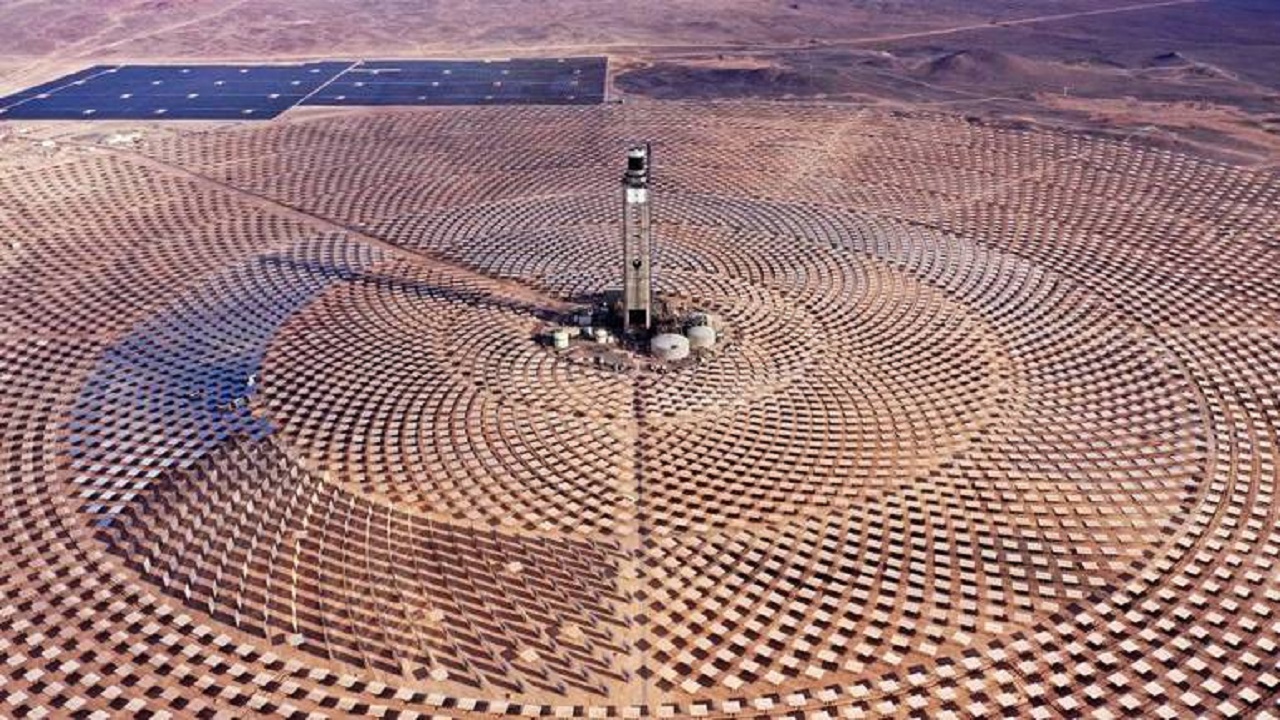
With the Aim of Achieving CO2 Emission Neutrality, Chile Created the First Solar Thermal Power Plant in Latin America, Located in the Atacama Desert, One of the Richest Regions in Solar Radiation in the World.
This Tuesday (8), Chile inaugurated the first solar thermal power plant in Latin America. The plant is known as Cerro Dominador and is located in the Atacama Desert, which is known to be the driest and has the highest solar radiation on the planet. The project aims to achieve CO2 emission neutrality by 2050.
Read Also
Meet the First Solar Thermal Power Plant in Chile


The project is in a circular area covering about 700 hectares, where approximately 10,600 heliostats have been installed surrounding a tower about 250 meters tall that reflects sunlight at the top.
-
Renewable energy advances over protected areas in Brazil, and a survey by the Energy Transition Observatory reveals silent impacts that challenge environmental conservation and pressure sensitive traditional territories.

-
Rio Grande do Sul accelerates energy transition: State invests in renewable technologies and consolidates decarbonization strategies and pathways to attract billions in new industrial investments.

-
With 160,000 m² of collectors, an area larger than 20 football fields, Silkeborg, in Denmark, hosts a solar thermal plant that heats 19,500 homes and could become the largest solar heating plant in the world.

-
A study reveals the expansion of renewable energy procurement in Brazil and shows how companies are taking advantage of opportunities to reduce expenses, ensure energy efficiency, and strengthen strategic environmental commitments.

There is also a receiver installed that contains molten salts, heating to over 560°C to generate steam, which turns a turbine with a capacity of about 110 megawatts of clean energy.

An important feature of the first solar thermal power plant in Latin America is that the molten salts have the capacity to store energy for up to 17.5 hours, allowing the system to continue operating even in the absence of direct light.
President of Chile Speaks About the Plant
According to Sebastián Piñera, President of Chile, the first solar thermal project in Latin America will save more than 600,000 tons of CO2 emissions annually. This reduction is equivalent to removing about 300,000 combustion cars from the streets.
The solar thermal plant, built by the Spanish companies Acciona and Abengoa, is located in the municipality of María Elena, which is 200 kilometers east of Antofagasta on the coast of Chile. During the inauguration of the first solar thermal power plant in Latin America, Piñera stated that this is a new significant step in the country’s commitment to renew its energy matrix by 2050.
He added that to fulfill this commitment, the country promises to focus its efforts on decarbonizing its energy matrix, replacing carbon derivatives with renewable energies, electrifying public transport, protecting and expanding the country’s forested area, among other actions.
The president added that Chile was poor in polluting energies, having little oil, natural gas, coal, and others, but in terms of renewable energies, the country is extremely rich. The country has excellent radiation, winds, geothermal energy, hydropower, and more.
Chile Gains Recognition as the First to Implement a Solar Thermal Power Plant
The country has several important initiatives, including the Chilean government’s commitment to be a reference in the generation of green hydrogen, which is seen as the future of fuels.
The idea is to utilize all the energy sources in the country for hydrogen production through an electrolysis process, making it sustainable by replacing fossil fuels with clean fuels.









-

Uma pessoa reagiu a isso.