





 Portuguese
  English
  Spanish
  3 min of reading
  4 comments


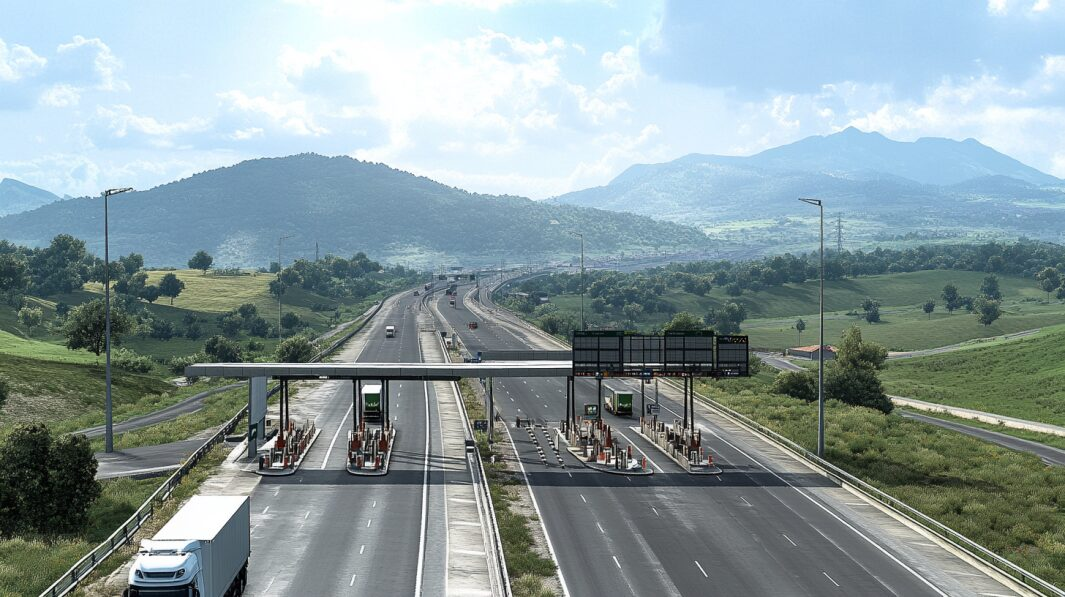


The Toll Without Barriers Has Arrived in Brazil, But It Still Faces Resistance from Delinquent Drivers. With Fines of Nearly R$ 200, the Free Flow System Challenges Drivers to Adapt to New Technologies and Rules That Promise Greater Efficiency and Fare Fairness. Will This Be the Future of Brazilian Roads?
Few advancements spark as much curiosity as free flow, the innovative toll system without barriers that promises agility on highways.
However, a shadow looms over the model: the high delinquency rate, which has already resulted in severe fines and sparked heated debates. After all, is Brazil capable of adopting this standard without bottlenecks?
According to the National Land Transport Agency (ANTT), the free flow system was inaugurated in March 2023 and is a pioneer in the country.
-
Brazilian city gains industrial hub for 85 companies that is equivalent to 55 football fields.

-
Peugeot and Citroën factory in Argentina cuts production by half and opens a layoff program for more than 2,000 employees after Brazil drastically reduced purchases of Argentine vehicles.

-
A Brazilian city gains a factory worth R$ 300 million with the capacity to process 200 thousand tons of wheat per year, a mill of 660 tons/day, silos for 42 thousand tons, and an industrial area of 276 thousand m².

-
OMODA & JAECOO grows in Europe in 2026 with an integrated strategy of sales, innovation, local production, and technological advancement in the United Kingdom, Italy, and Spain.


Located on BR-101, specifically in a stretch that connects Itaguaí, Mangaratiba, and Paraty, on the southern coast of Rio de Janeiro, the model recorded an 8% delinquency rate among drivers in its first year.
This occurs even in the face of advanced technologies that ensure 100% identification of vehicles passing through the arches, with extremely high accuracy in reading tags and license plates.
Despite covering 4,824.6 kilometers along BR-101, the system currently operates only in this trial stretch.
Payment evasion, however, represents a serious infraction according to Article 209-A of the Brazilian Traffic Code, subjecting drivers to a fine of R$ 195.23 and five points on their driving license.
How Does Payment Work?
The majority of drivers use electronic tags to ensure that toll payments are made conveniently and automatically.
Those who do not have the technology can use a specific app for the transaction, a newer alternative that accompanies the modernization of the system.
According to data released by ANTT and CCR, the average time for payment has significantly decreased over the 20 months of operation.
In March 2024, payments averaged 54 days to be made.
Between August and October 2024, this period was reduced to just six days, demonstrating that the system is gradually gaining greater acceptance.
Cleber Antonio Chinelato, executive manager of Technology at CCR, highlighted: “This is a relevant number, considering the region in which free flow is located, where tags are used, in most cases, only for toll payment.”
New Rules and Facilities
To optimize usage and increase adherence to the system, the National Traffic Council (Contran) approved a series of updated rules for free flow in October 2024.
The new set replaces previous regulations from 2022 and aims to promote greater transparency and convenience for users.
Among the changes, the following stand out:
Extended Deadline: the period for making payment has increased from 15 to 30 days after using the highway.
Flexibility in Due Dates: if the date falls on a holiday or weekend, payment may be made on the next business day.
Dispute of Charges: drivers can now contest charges they consider undue.
Centralized Information: data will be available in apps like the Digital Traffic Wallet, already known to drivers.
Education and Signage: new signs have been installed to guide usage, and concessionaires are running educational campaigns.
Another relevant innovation is that drivers now pay only for the distance traveled, instead of flat fees applied to long distances. This reinforces the concept of fare fairness, addressing a long-standing demand from users.
Implications and Future Challenges
Despite improvements, a major challenge persists: preventing payment evasion, which has already led the system to implement strict measures.
Images of vehicles are stored for 90 days for regular drivers and up to five years for delinquents.
In the case of vehicles registered abroad, departure from the country is blocked until all fees are settled.
For the future, the system is expected to expand to other Brazilian highways, with adaptations to minimize initial problems. Is the country ready to fully adopt this technology and overcome the resistance?







Sobre com ??????
Hoje, esse método ainda vai confundir o motorista.
Se você passar por um pedagio sem cobrador e sem cancela, vai pensar que a passagem está liberada e o susto da multa do pedágio vai vir só quando pagar o IPVA.
E os carros isentos de impostos? Eles nem vão saber que estão com essa multa.
Concordo com a cobrança do pedagio, mas discordo com a mencionada “multas severas” que já estão sendo aplicadas.
Se a pessoa não tem ciência da cobrança do pedágio, é injusto cobrar uma multa que é exorbitante e ainda correr o risco de perder a habilitação, por estourar os pontos sem saber. Afinal, ela não está infringindo a passagem, pois o acesso está livre.
Na minha opinião, isso pode funcionar quando100% dos veículos tiverem os tags de cobrança automática, ou seja, quando o uso de tag for obrigatório. E quando isso ocorrer, o valor do pedágio tem que reduzir, pois não terá despesa nenhuma.
Você tem carro. Vai viajar. Hoje, aonde você for, tem pedágio. Não é possível que com todas as pessoas comentando, todas as propagandas, alguém não saiba sobre esse tipo de pedágio. A não ser que você esteja mal intencionado. Uma coisa que eu reparei foi pouca sinalização. Enche de informação.
Olá, Dyl, tudo bem? Com todo respeito, acho equivocado você me acusar de ser mal intencionada, pois não é este o assunto da notícia. O assunto tratado não é sobre “onde você vai tem pedágio”, mas sim sobre a implantação de cobrança do pedagio sem cobrador e sem cancela para os usuários que não usam o tag de cobrança automática. Eu aprovo a ideia e uso o tag há mais de 20 anos, desde o ano 2000. Como eu disse, hoje o método irá confundir o motorista, justamente pela falta de informação. Estou certa de que nesses 8% incluem motoristas estrangeiros que desconhecem este fato específico do Rio de Janeiro. E estou certa que a CCR terá sucesso nesta empreitada, mas isso é questão de tempo.