





 English
  Francês
  Alemão
  Italiano
  Japonês
  Norueguês
  Portuguese
  Spanish
  3 min of reading
  0 comments


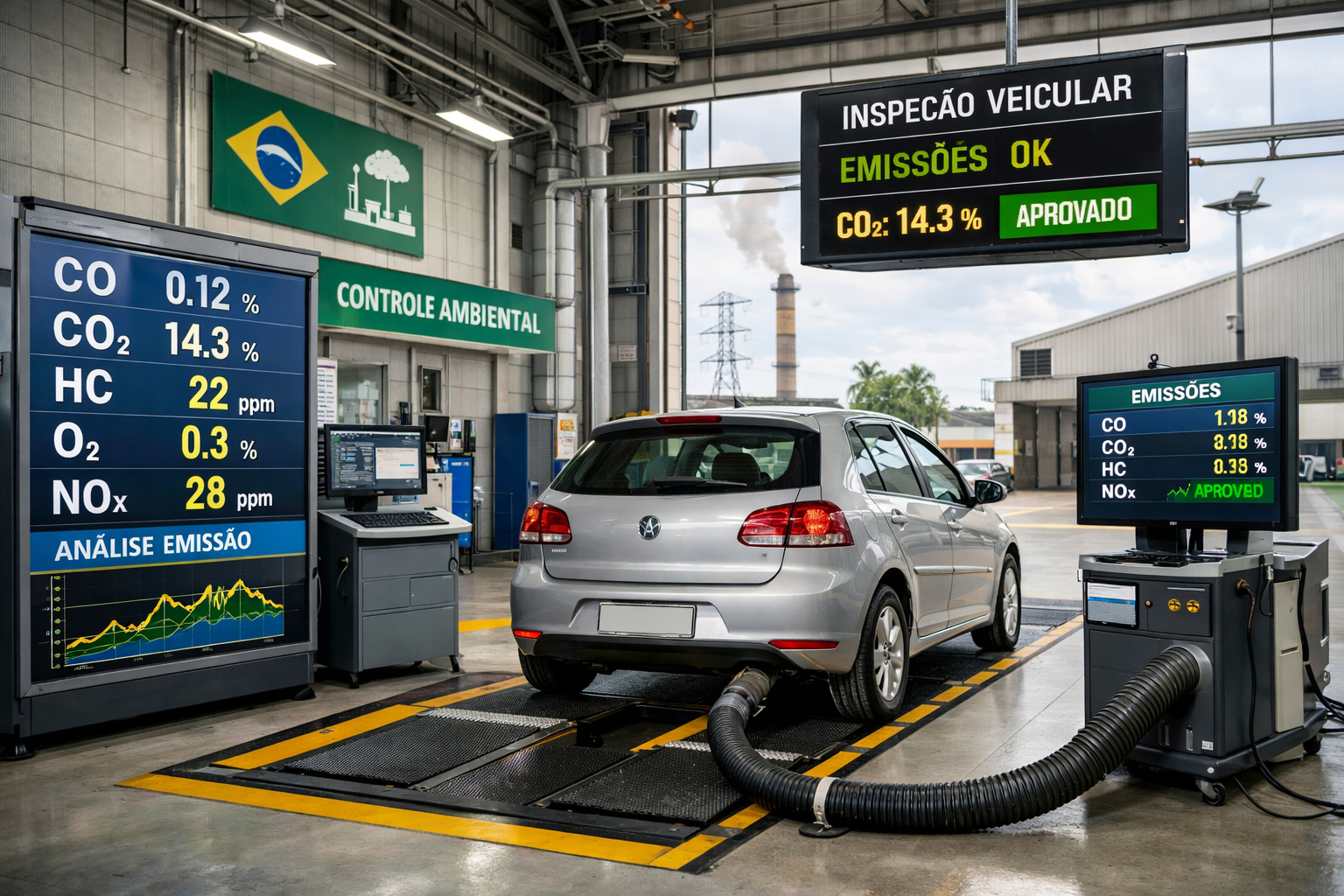
Created on May 6, 1986, Program Transformed the Brazilian Automotive Industry, Modernized Fuels, and Raised Environmental Standards in Large Cities
The Vehicle Emission Control Program (Proconve) transformed Brazil’s environmental history. Created by the Conama Resolution No. 18, of May 6, 1986, the program was born with a clear objective: to reduce the emission of pollutants generated by motor vehicles and improve air quality, especially in large urban centers.
Since then, Proconve has continuously evolved. Over the decades, the program tightened rules, imposed progressively stricter limits and drove profound changes in the national automotive industry. Furthermore, it stimulated technological development in automotive engineering and in pollution measurement methods.
The information was released by the Ibama, the agency responsible for implementing Proconve and Promot. According to official data, the program promoted one of the largest reductions of pollutants ever recorded in the country.
-
The Senate approves a bill that criminalizes misogyny, hatred, or aversion towards women, and includes the crime in the Racism Law with a penalty of up to 5 years.

-
Chamber Approves Bill That Allows Pepper Spray for Women Over 16 and Imposes Strict Rules for Purchase, Possession, and Use as Self-Defense
-
Chamber Approves Law to Combat Leucaena, Fast-Growing Plant That Dominates Land and Threatens Native Species in Various Regions of the Country
-
Asset Division: Know What Cannot Be Divided in Case of Divorce


Law 8.723/1993 Strengthened Control and Expanded Environmental Goals

Initially, the Conama Resolution No. 18 defined the foundations of the program. However, later, Law 8.723, of October 28, 1993, reinforced the requirements and set specific reductions in the emission of:
- Carbon monoxide (CO)
- Nitrogen oxides
- Hydrocarbons
- Alcohols
- Aldehydes
- Soot
- Particulate matter
- Other polluting compounds
As a result, Brazil began to require that vehicles sold in the country comply with increasingly stringent standards. Consequently, manufacturers had to invest in new technologies, upgrade engines, and improve combustion systems.
Additionally, Proconve structured a phased schedule, gradually lowering emission limits for light and heavy vehicles. Among the latest phases implemented are:
- MAR-1, for agricultural and road machines, initiated on January 1, 2015;
- L-7, for light vehicles, initiated on January 1, 2022;
- P-8, for heavy vehicles, also initiated on January 1, 2022.
Subsequently, the Conama Resolution 492, of December 20, 2018, established the Proconve L7 and Proconve L8 phases, further increasing the requirements for new light vehicles.
In this way, the program stayed in tune with technological advances and with the environmental needs of the country.
Promot Expanded Control for Motorcycles and Reduced Noise
While Proconve focused on light and heavy vehicles, the government created the Promot through Conama Resolution No. 297/2002. This program began to control the emissions of polluting gases from mopeds, motorcycles, and similar vehicles.
Moreover, Promot also incorporated noise control, a topic that was already addressed in Conama Resolution No. 02/1993. Thus, the legal framework became even more complete.
With the advancement of standards, Brazil initiated the Promot M5 phase on January 1, 2023, as established by Conama Resolution 493, of June 24, 2019. Therefore, new motorcycles began to meet even stricter standards for emissions and noise.
98% Reduction in Emissions Shows Historical Impact
The results prove the program’s effectiveness. According to Ibama, Proconve and Promot reduced 98% of pollutants emitted from the mobile source (vehicle).
To understand the impact, just observe the case of carbon monoxide (CO). Before the implementation of the standards, a light vehicle emitted, on average, 54 g/km of CO. Currently, this number has dropped to about 0.4 g/km.
Furthermore, even with the significant growth of the Brazilian fleet in recent decades, the country has managed to maintain greater control over atmospheric pollution. Consequently, large cities have begun to report improvements in air quality.
At the same time, the program generated significant economic impacts, such as:
- Modernization of the automotive industrial park;
- Development and adoption of new technologies;
- Improvement of fuel quality;
- Formation of specialized technical labor;
- Attraction of new investments and emission laboratories;
- Creation of jobs;
- Industrial diversification.
Therefore, in addition to drastically reducing vehicular pollution, Proconve strengthened the national industry and consolidated Brazil as a reference in automotive environmental control.
And you, do you believe that the next phases of Proconve should become even tougher to accelerate the transition to increasingly less polluting vehicles?










Seja o primeiro a reagir!