





 Portuguese
  English
  Spanish
  5 min of reading
  0 comments


The Latest Report from ANP Reveals Strong Advancement in Brazilian Oil and Natural Gas Production in October 2025, Featuring Significant Growth from Petrobras and a New National Record
The Brazilian production of oil and natural gas reached an unprecedented mark in October 2025. According to data released by the ANP, the country reached 5.255 million barrels of oil equivalent per day (boe/d), consolidating the highest volume ever recorded. According to Agência Eixos and several other outlets on Tuesday (2), within this total, Petrobras accounted for about 3.269 million boe/d, representing a substantial growth of 26.4% compared to the same month in 2024, primarily driven by pre-salt production.
Highlights from Petrobras: Key Numbers Released by ANP
This performance reinforces Brazil’s prominence in the global energy market and positions the country among the largest producers in the world. According to the official report, Brazil consolidates another historical record in oil and gas production. The data show the continuous improvement in operational efficiency, the maturity of the pre-salt fields, and the positive impact of new production platforms.
- Total production of Brazil (oil + natural gas): 5.255 million boe/d
- Oil production: 4.030 million barrels per day
- Natural gas production converted into boe/d: consistent growth compared to 2024
- Petrobras production: 3.269 million boe/d, increase of 26.4%
- Share of pre-salt in total results: absolute predominance
ARTICLE CONTINUES BELOWSee also
Brazilian giant expands borders in the Southeast: Petrobras confirms new oil discovery in ultra-deep waters in the pre-salt of the Campos Basin.

Alert in the global energy market: Severe tropical cyclone hits the coast and disrupts gas production at major plants in Australia, threatening global supply.

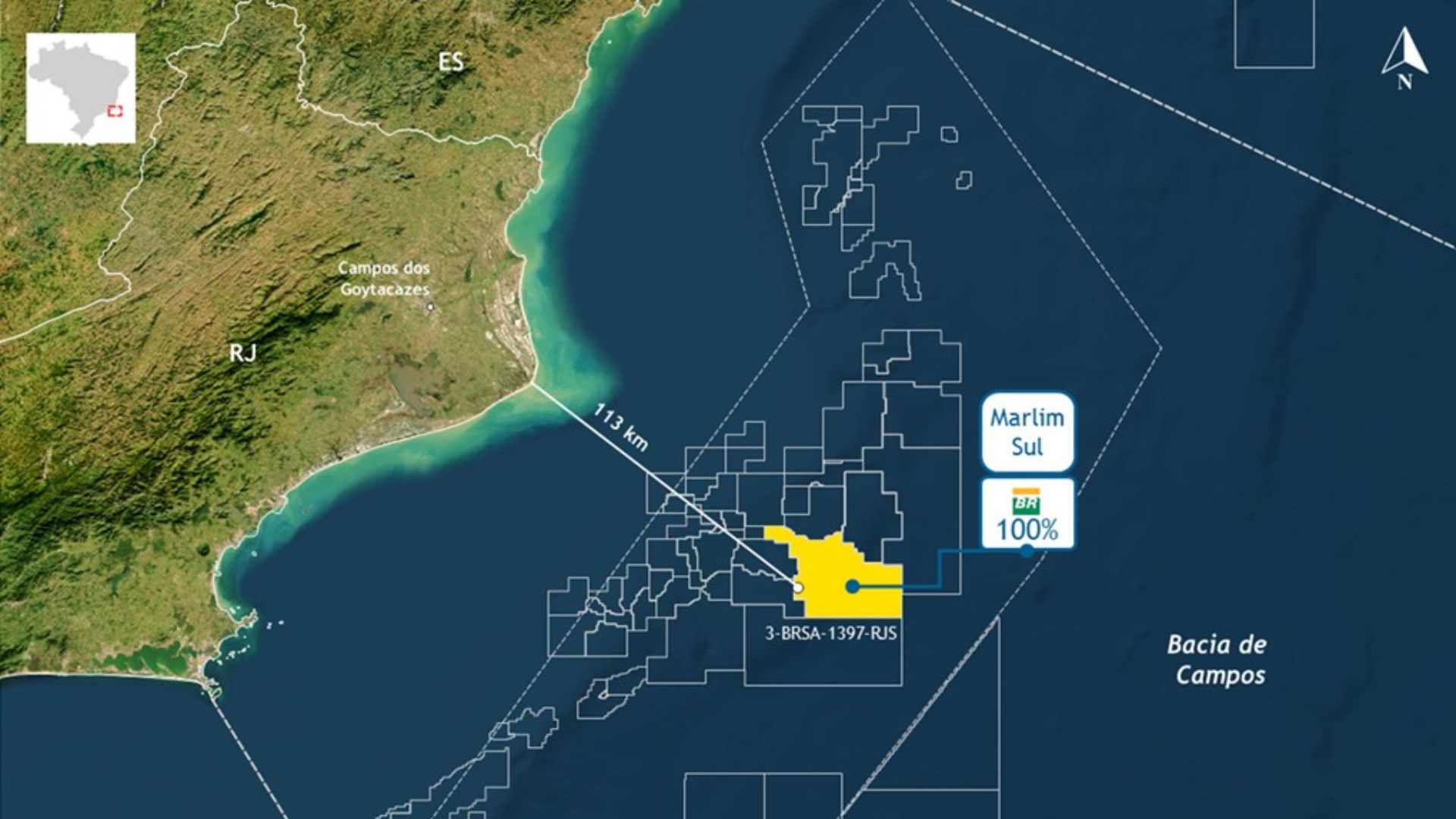
Petrobras finds high-quality oil in the pre-salt at 113 km from RJ and reignites expectations about strategic reserves in the Campos Basin.

Ocyan opens registrations for startups focused on innovation in the oil and gas sector and will select projects for Innovation Day with the support of Nexio.

Evolution of National Production This Year
The growth trajectory did not begin in October. Since July 2025, the country has reported numbers above 5 million boe/d, indicating that a new record was approaching. The continuation of positive performance shows an alignment between technical capacity, operational expansion, and stability of active platforms.

In September 2025, Brazil had already reached 5.114 million boe/d, a figure that pointed to further advancement. The previous month, July had recorded 5.160 million boe/d, until then the highest volume in the historical series. The series of high recordings shows that the country’s installed capacity — especially in the pre-salt layer — is experiencing its best moment since the beginning of operations in these deep areas.
Oil Production: Pre-Salt Continues Leading Growth
Oil production was the main component of the October record. With 4.024 million barrels per day, the volume keeps Brazil ahead of other emerging producing countries and reinforces the extraction capacity in deep waters.
The pre-salt remains the main driver of this growth. The platforms installed in high productivity fields, such as Búzios, Tupi, and Mero, continue to deliver solid results. According to ANP, more than 75% of all national production came from this geological layer, confirming the region’s centrality in the country’s energy development.
Natural Gas Production: Stability and Reinforcement of Energy Security
Natural gas extraction also registered growth in October, contributing to the increase in total production. The expansion of processing units and the integration between offshore and onshore systems facilitated the flow and reduced operational losses.
The growth of natural gas reinforces internal energy security and contributes to strategic uses such as:
- Supply for thermal plants
- Supply to industries
- Fertilizer production
- Vehicle use in some regions
The larger supply is also expected to positively impact pricing policy in the medium term, providing more market predictability.
The Role of Petrobras in October’s Record
As usual, Petrobras remained at the center of national performance. The company accounted for 62% of total production recorded in October, a percentage that demonstrates the concentration of the country’s operations under its leadership.
The state-owned company has accelerated projects in the pre-salt and has brought new platforms into operation, such as large FPSOs capable of producing over 150,000 barrels daily. In addition, the company has intensified:
- Modernization of the equipment fleet
- Expansion of flow capacity
- Adoption of real-time monitoring technologies
The increase of 26.4% in its production in just 12 months highlights the operational efficiency and strategic planning that support the advancement.
The report reinforces that Petrobras maintains a consistent pace of expansion, aligned with the entry of new units and improved performance of pre-salt wells.
Economic and Strategic Impact of the New Record
Influence on the National Economy
The extraction sector has been pivotal for industrial growth in 2025. According to data from IBGE, the extractive industry — especially oil and natural gas — was one of the drivers of the industrial production growth recorded in the country in October.
The positive economic effect occurs on multiple fronts:
- Increase in revenue from royalties and special participations
- Strengthening of producing states such as Rio de Janeiro and Espírito Santo
- Expansion of the supplier chain
- More direct and indirect jobs
- Greater surplus in the trade balance with exports
Strategic Role for the Energy Matrix
The diversification of the Brazilian energy matrix is widely recognized, and natural gas continues to play a fundamental role in this process. With greater domestic supply, the country reduces risks of shortages, broadens maneuvering margins, and policies aimed at a gradual energy transition.
International Competitiveness and Projections
Brazil consolidates its position among the world’s major producers and increases its negotiation capacity in international markets. The growth in production opens up space for:
- Attraction of foreign investments
- Expansion of international partnerships
- Greater presence in Asian and European markets
With new projects expected for 2026 and 2027, trends indicate that Brazil could consistently surpass the mark of 5.3 million boe/d in the coming years.
Challenges and Points of Attention for the Next Months
Despite the impressive results, there are factors that need to be observed closely by the government, market, and operators:
- International volatility of oil prices, impacting revenues and investments
- Need for high operational performance in high-complexity regions
- Attention to sustainability goals and emission reductions, especially in offshore operations
- High dependency on Petrobras activities, which concentrate a large part of production
The balance between expansion, stability, and sustainability will be crucial to maintaining positive momentum.
The Future of the Brazilian Energy Sector and Petrobras with the Record
The historical record set in October 2025 symbolizes more than a numerical milestone. It represents the consolidation of a robust operational model, supported by the efficiency of Petrobras, technological expertise in the pre-salt, and national capability to operate in highly complex environments.
With continuous investments, new platforms entering operation, and regulatory stability, the country is well-positioned to advance even further in 2026. For consumers, the scenario points to greater energy security; for the market, it opens opportunities; and for Brazil, it strengthens its presence on the global oil and natural gas map.








Seja o primeiro a reagir!