





 English
  Francês
  Alemão
  Italiano
  Japonês
  Norueguês
  Portuguese
  Spanish
 4 min of reading
  0 comments


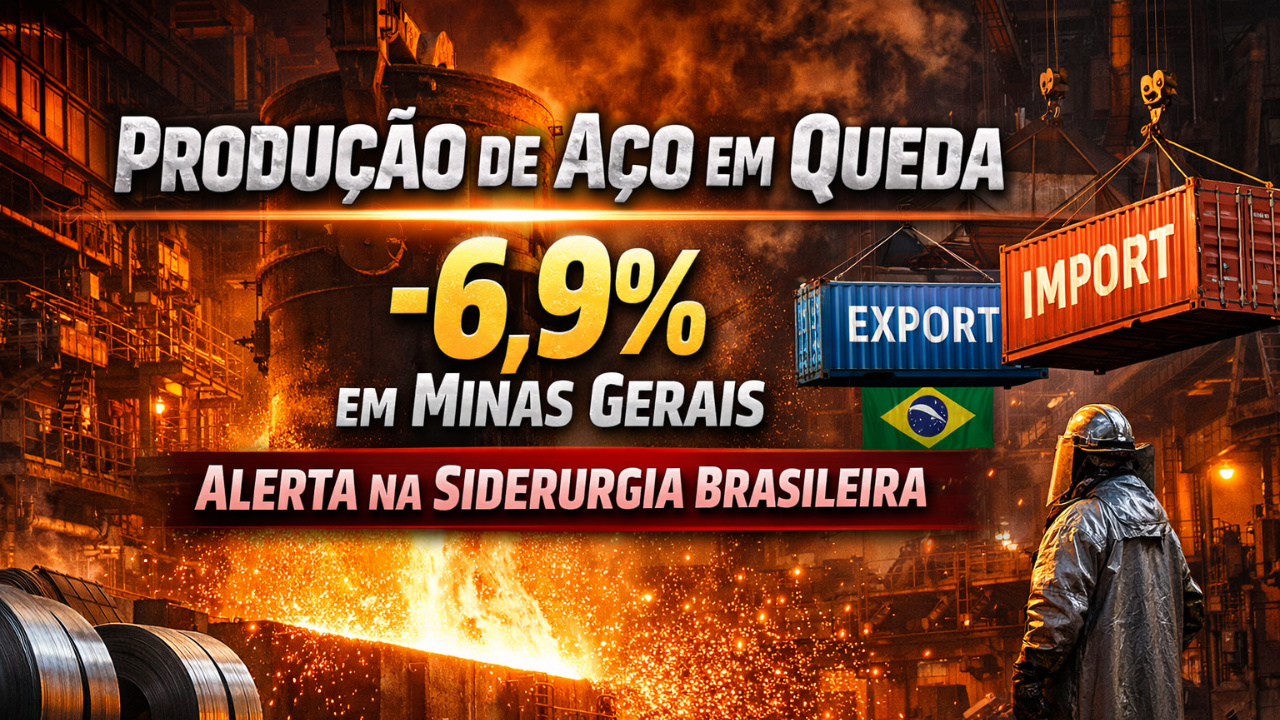
Steel Production in Minas Gerais Falls 6.9%, While Steel Exports Grow Over 30%. Steel Imports Also Decline in Brazil.
Steel production in Minas Gerais recorded a 6.9% drop in January, according to data released this Tuesday (24) by the Brazilian Steel Institute.
In total, the state’s mills produced 822 thousand tons during the period.
The decline, marking the third consecutive drop, occurs in the context of adjustments in the Brazilian steel industry, influenced by both the dynamics of the internal market and the behavior of steel exports and steel imports.
-
Recent Studies on Ancient Metallurgy Reveal That Various Tools Made Over Three Thousand Years Ago Used Iron from Rare Material That Fell from the Sky Long Before Humanity Mastered Iron Production

-
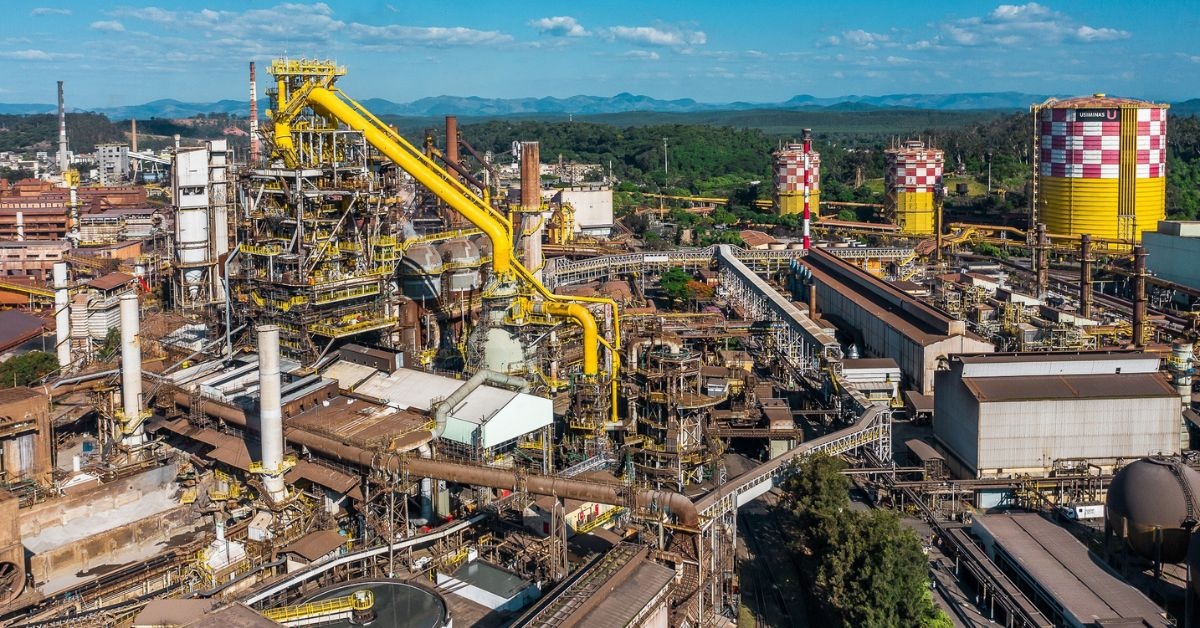
Brazilian Steel Industry Grows in Third Quarter of 2025, Maintains Margins, Reduces Costs, and Faces Imported Steel Surge Amid Commercial Uncertainties
-
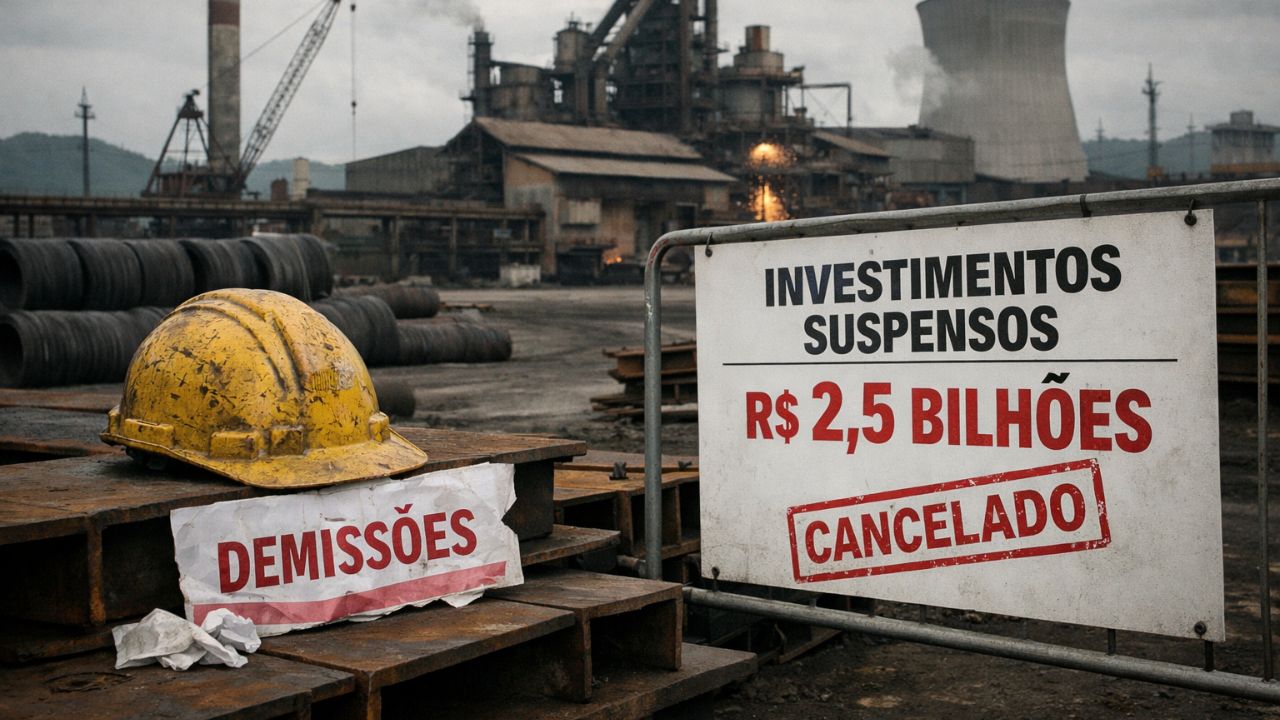
Brazil’s Steel Industry Records Cut of 5,100 Jobs and Suspension of R$ 2.5 Billion in Investments
-
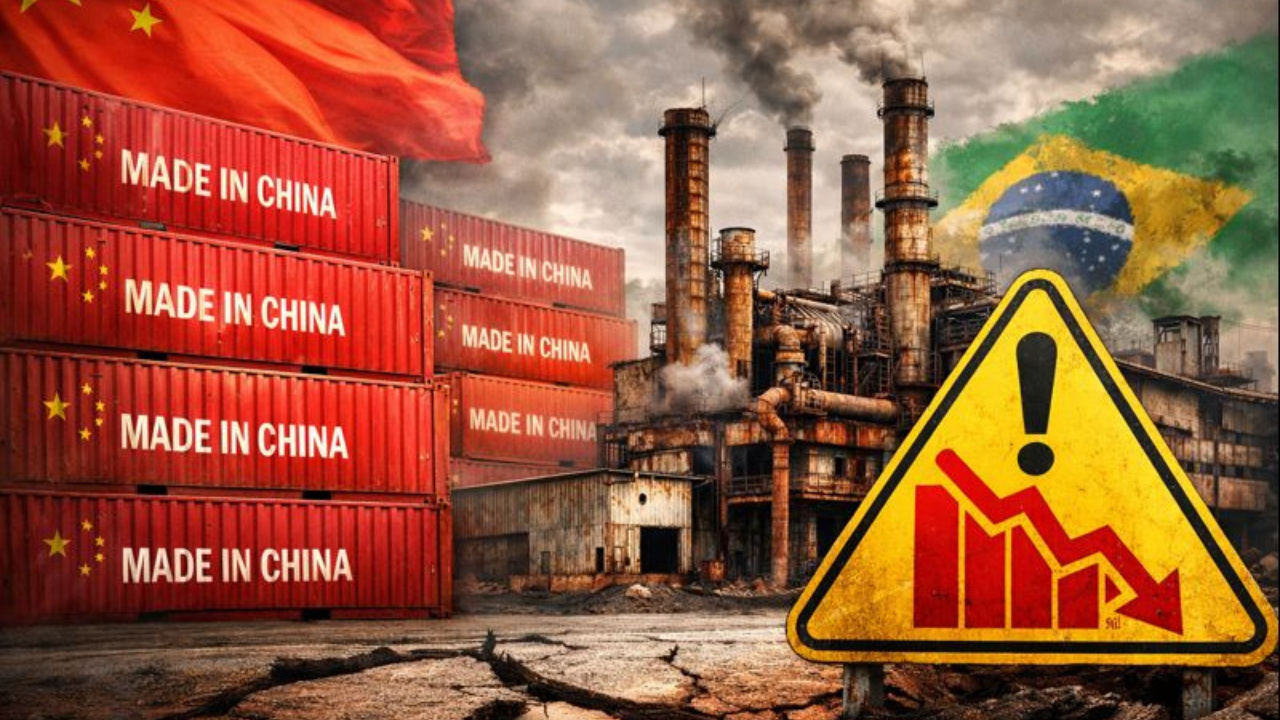
Predatory Steel Imports Accelerate Brazilian Deindustrialization

Despite the downturn, Minas Gerais maintained its national leadership in crude steel production, accounting for 30.1% of participation in the first month of 2026.
Nonetheless, the numbers raise a warning signal for the sector, which has already been accumulating weaker results in previous months.
Steel Production in Minas Gerais Accumulates Third Consecutive Drop
The new decline confirms a negative trend that began at the end of last year. In November, steel production had fallen by 0.6%.
In December, the drop was more intense, at 4.4%. Now, in January, the decrease reached 6.9% compared to the same month in 2025.
In the accumulated data for 2025 compared to 2024, the mining steel industry also showed inferior performance, with a contraction of 1.1% and a total volume of 10.1 million tons.
This movement reflects, in part, the slowdown in demand and the challenges faced by the base industry.
On the other hand, even with the negative result, Minas Gerais remains the main hub of the Brazilian steel industry.
The state surpassed Rio de Janeiro, which accounted for 24.9% of the national production (681 thousand tons), and São Paulo, with 7.2% (196 thousand tons).
National Scenario of the Brazilian Steel Industry
In Brazil, crude steel production totaled 2.7 million tons in January.
This volume represents a 1.4% decline compared to the annual comparison, marking the second consecutive contraction in this type of analysis.
Additionally, considering the 12 months of last year compared to 2024, the sector had already recorded a decrease of 1.6%, with production of 33.3 million tons.
Thus, the performance of Minas Gerais aligns with a broader trend in the Brazilian steel industry.
This context highlights the need for attention to the economic variables that directly impact the sector, such as internal consumption, international competitiveness, and operational costs.
Semi-Finished and Rolled Products See Slight Increase in Minas Gerais
In contrast to the decline in crude steel production, the semi-finished and rolled product segment showed slight growth in the state.
In January, 762 thousand tons were produced, a rise of 0.8% compared to the same month of the previous year.
With this, Minas Gerais accounted for 30.6% of the national production of these products, maintaining its leadership among the federative units.
Rio de Janeiro came in second place, with 23.3% (579 thousand tons), while São Paulo reached 9.6% (239 thousand tons).
In the national scenario, however, there was a retraction of 4.3%, with a total volume of 2.5 million tons.
In other words, the slight advancement in Minas Gerais was not enough to reverse the downward trend in the country.
Steel Imports Decline and Steel Exports Surge
One of the most sensitive points for the Brazilian steel industry is the volume of steel imports, often cited as a factor of competitive pressure.
In January, external purchases totaled 516 thousand tons, a 6.5% decline compared to the annual comparison.
China, often mentioned by the sector for practices considered predatory, reduced its shipments to Brazil by 8.6%, totaling 304 thousand tons.
This reduction brings some relief to the national mills.
Meanwhile, steel exports performed impressively.
There was a growth of 34.2% compared to the same period in 2025, reaching 1.2 million tons.
Only to Latin American countries, 544 thousand tons were sent, a jump of 366.3%.
However, the Brazilian Steel Institute itself warned that the numbers may undergo adjustments.
“In the January 2026 data, export volumes were recorded through operations with advance shipment, which usually register volumes above what is effectively exported.
The correction of these exports will likely occur in the upcoming releases of Comex data,” it points out.
Domestic Sales and Consumption Show Weakening
In the domestic market, the signals are also of deceleration.
The internal sales of the Brazilian steel industry totaled 1.6 million tons in January, representing a 6.3% decrease compared to the same month of the previous year.
Meanwhile, apparent consumption — an indicator that adds national production to imports, subtracting exports — reached two million tons, a decrease of 7%. This data helps to measure the real level of demand for steel products in the country.
Thus, the performance of steel production in Minas Gerais fits into a broader context of adjustments in the industry.
Although steel exports provide some breathing room, the combination of weaker domestic demand and fluctuations in foreign trade keeps the sector on alert in the first months of the year.
See more at: Crude Steel Production Falls 6.9% in Minas Gerais in January









Seja o primeiro a reagir!