





 Portuguese
  English
  Spanish
  5 min of reading
  0 comments


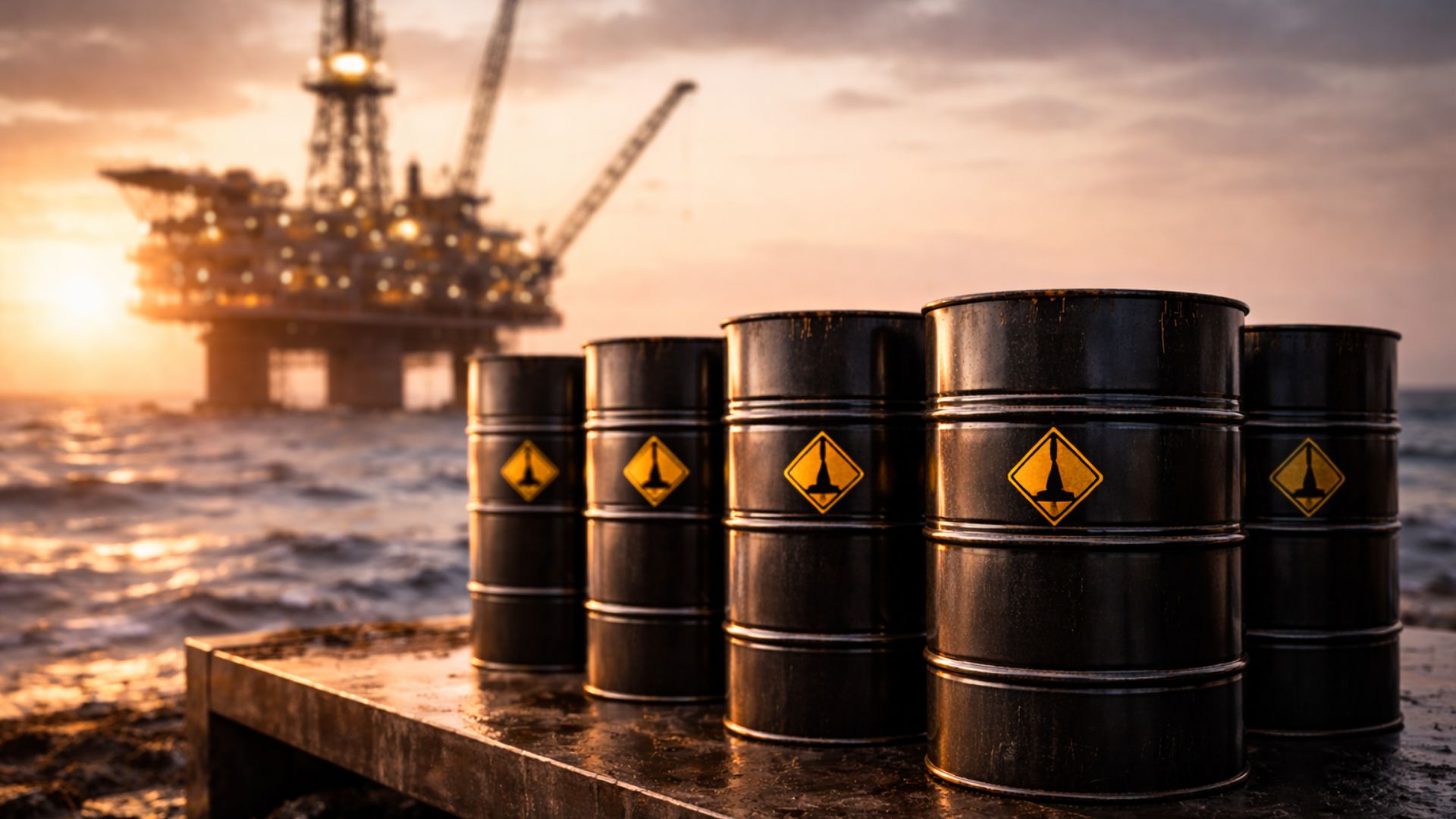
Data Released by ANP Reveals Growth in Oil Production and Increases Brazil’s Relevance in the Energy Scenario, with Direct Impact on the Economy and National Market
The production of oil and gas in Brazil reached in 2025 the highest level ever recorded in the historical series, according to official data released by the ANP in the December Monthly Bulletin. The significant advancement of the pre-salt highlighted the country as a key player in the energy sector, strengthening the national market, enhancing energy security, and boosting the economy. The record marks a structural milestone for Brazil in the global energy scenario.
Oil and Gas Production in Brazil Hits Historic Record
Right at the beginning of the report, the consolidated numbers show that oil and gas production reached an annual average of 4.897 million barrels of oil equivalent per day (boe/d). This volume surpasses the previous record of 2023 by 12.7% and represents a 13.3% growth compared to 2024. The data confirms a consistent and sustained expansion, reflecting technological investments, an increase in productive capacity, and operational stability in the main offshore basins of Brazil.
The production of oil and gas in Brazil performed above analysts’ expectations in the energy sector and market specialists. According to the ANP, the growth did not occur in isolation, but rather as a result of long-term planning, technological development, and maturity of offshore operations.
-
Offshore industrial demand in Macaé skyrockets with the recovery of oil and gas and could grow by up to 396% by 2026 in the Campos Basin.
-
Offshore industrial demand in Macaé surges with the recovery of oil and gas and could grow by up to 396% by 2026 in the Campos Basin.
-
Brazilian giant expands borders in the Southeast: Petrobras confirms new oil discovery in ultra-deep waters in the pre-salt of the Campos Basin.

-
Alert in the global energy market: Severe tropical cyclone hits the coast and disrupts gas production at major plants in Australia, threatening global supply.


In the exclusive cut of oil, the daily average reached 3.770 million barrels per day, which represents an increase of 12.3% compared to 2024. Meanwhile, natural gas reached 179 million cubic meters per day, an annual growth of 17%. These indicators reinforce the strategic relevance of the energy produced in Brazil, especially at a global moment marked by energy transitions and the search for more efficient sources.
Moreover, the performance reinforces the reliability of national production and may increase the interest of international investors, who see in Brazil a stable and technically prepared productive environment. The expansion of Brazilian energy production generates direct reflections on the economy and the specialized labor market.
Advancement of Pre-Salt Boosts Energy in Brazil
The main driver of this record was the pre-salt, responsible for 79.63% of the entire national oil and gas production throughout 2025. This percentage highlights the high degree of technological efficiency applied in deep and ultra-deep offshore operations. The pre-salt remains the central engine of Brazilian energy.
Meanwhile, the post-salt represented 15.45% and onshore production accounted for 4.92% of the total. These figures demonstrate that, although there is productive diversification, pre-salt continues to be the main axis of growth and stability. The impact goes beyond the volume extracted, reflecting in royalty revenue, technical job creation, logistical expansion, and strengthening of the industrial chain.
Therefore, oil and gas production is not limited to internal supply. It also influences exports, trade balance, and economic competitiveness of Brazil. The advancement of pre-salt redefines the country’s positioning in the international energy market.
December Data Reinforces Growth of Oil and Gas Production
The December 2025 figures reinforced the positive trend presented throughout the year. In that month, national oil and gas production totaled 5.237 million boe/d, indicating operational stability and consistent monthly expansion. The performance confirms continuity and productive predictability.
In oil, production reached 4.015 million barrels per day, an increase of 6.4% compared to November and a growth of 17.4% compared to December 2024. In natural gas, the average was 194.33 million cubic meters per day, showing an increase of 20.6% over the same month the previous year. These data demonstrate technical efficiency and capacity for productive response.
Another relevant point was the utilization of natural gas, which reached 97.5%, an index considered high by international standards. Gas flaring was reduced by 14% compared to the annual comparison, reinforcing more responsible practices within the energy sector in Brazil. The reduction in flaring indicates environmental and operational evolution.
Pre-Salt Production Dominates the Brazilian Energy Scenario
In December, the pre-salt accounted for 4.164 million boe/d, representing 79.5% of national production. This monthly growth of 6.4% demonstrates operational continuity and efficiency in exploration. A total of 3.211 million barrels of oil per day and 151.56 million cubic meters of natural gas were produced from 175 active wells.
The maritime predominance also stood out. Offshore fields produced 97.9% of the country’s oil and 86.5% of natural gas. This scenario highlights Brazil’s technological dominance in high-complexity operations. Petrobras, acting alone or in consortia, was responsible for over 90% of the total produced, reinforcing the weight of large operators in oil and gas production.
This dominance of the pre-salt not only sustains the record volume but also expands long-term predictability for the energy sector. Stable production strengthens market confidence and broadens national strategic planning.
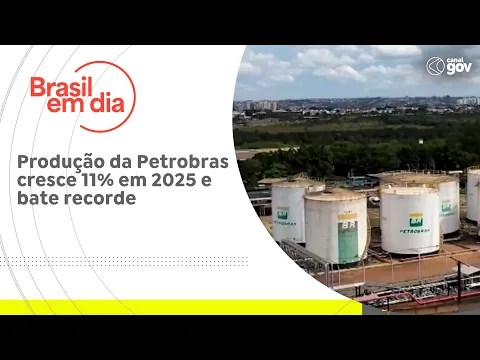

Highlights of Oil and Gas Production Fields and Installations
Among the producing fields, the Tupi Field, located in the Santos Basin, led national extraction with 838.98 thousand barrels of oil per day and 41.79 million cubic meters of natural gas. This performance reaffirms the continuous potential of the pre-salt and its importance to the energy supply of Brazil.
In the installations, the FPSO Almirante Tamandaré, in the Búzios field, recorded the highest oil production, while the FPSO Guanabara, in the Mero field, stood out in natural gas production. These units represent the technological advancement and structural modernization of Brazilian energy.
The productive volume of these structures demonstrates the capacity for technological adaptation and operational efficiency of the floating platforms, which are essential to maintain the growing pace of oil and gas production. Furthermore, these installations symbolize the ongoing investment in innovation and operational safety.

Transparency of ANP and Public Access to Energy Data
The ANP provides the Oil and Gas Production Bulletin both in PDF format and on an interactive Business Intelligence platform. This tool allows queries by basin, producing field, period, and state, enhancing the transparency of the information. Open access strengthens institutional credibility and market trust.
Researchers, investors, and journalists can dynamically and in detail track the evolution of energy in Brazil. This data openness contributes to more accurate analyses and strategic decisions based on real numbers.
Moreover, the digitization of information facilitates the understanding of the general public, bringing society closer to national energy indicators. Transparency reinforces the authority and reliability of the ANP.
Panorama That Redefines Energy in Brazil
Monthly variations in oil and gas production are expected and are part of the natural cycle of the sector. Scheduled maintenance shutdowns, the entry of new wells, and operational adjustments are common practices aimed at stability and gradual production increase. These fluctuations do not indicate a crisis, but rather continuous evolution.
The record of 2025 demonstrates technological maturity, productive efficiency, and the strategic relevance of the pre-salt for the future of energy in Brazil. The country is expanding its position as a reliable supplier in the global market, attracting investments and strengthening its internal economy. Brazilian oil and gas production enters a phase of sustainable prominence and structured growth.







Seja o primeiro a reagir!