





 Portuguese
  English
  Spanish
 3 min of reading
  0 comments


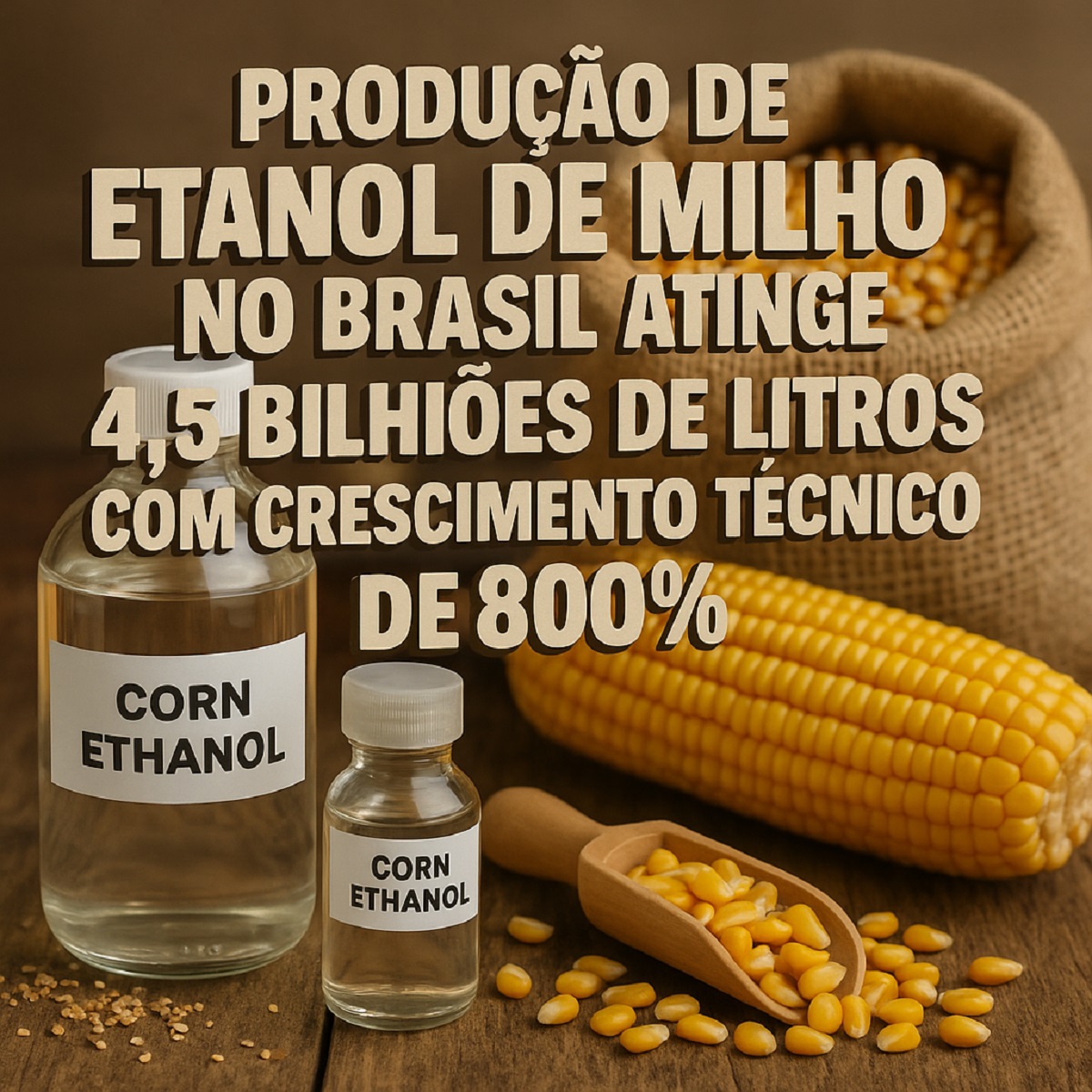
Corn Ethanol Grows Consistently and Solidifies as Part of the National Energy Matrix
According to the National Union of Corn Ethanol (Unem), Brazil’s production of the biofuel increased from 520 million liters in 2017 to 4.5 billion in 2022. This growth of 800% was recorded over five years, reflecting the gradual and sustained advancement of the production chain. Currently, the country has 20 plants dedicated to processing corn into ethanol, totaling an installed capacity of around 6 billion liters per year. Mato Grosso is responsible for more than 80% of this production, according to Unem’s own data. This figure shows that regional concentration remains a relevant logistical factor for the sector’s competitiveness.
Mato Grosso Leads Production with Solid Agricultural Base and Favorable Logistics
The strategic location of the plants in northern Mato Grosso favors transportation and distribution logistics. According to the National Supply Company (Conab), the state harvested more than 45 million tons of corn in 2022. This volume was responsible for ensuring the supply of raw material for various plants. According to Embrapa Corn and Sorghum, the second corn harvest has shown ideal performance for energy use, even in integrated systems. The agricultural vocation of the region reinforces Mato Grosso’s role in consolidating corn ethanol in Brazil.
Private Sector Expands Investments with Goal to Double Capacity by 2030
Companies in the sector, such as FS Bioenergia, announced in 2023 the duplication of their units in cities like Sorriso. New projects are also underway in Mato Grosso do Sul, Goiás, and Paraná. According to projections updated by Unem in January 2024, national production could reach 10 billion liters per year by 2030. This data was corroborated by surveys from the National Agency of Oil, Natural Gas, and Biofuels (ANP). Although the goal depends on economic and political variables, the ongoing actions indicate a trend of continued growth.
-
Brazil accelerates hydrogen and biofuel projects to consolidate the fuel of the future and reduce dependence on oil by 2026.

-
CNPE strengthens policy and prevents imported biodiesel from being mixed with diesel, aiming to strengthen the Brazilian industry and protect jobs by reducing external dependence amid tensions in the global market.

-
Revolution in public transport: Goiânia puts into circulation the first articulated buses powered by biomethane in Brazil and promises to drastically reduce pollution on the Anhanguera Corridor.

-
From the field to the pipelines: Mato Grosso do Sul accelerates the energy transition and consolidates a new axis in renewable energy with the arrival of a giant biogas plant.

Production Generates Positive Environmental Impacts and Utilizes Corn Byproducts
Corn ethanol has lower greenhouse gas emissions. According to the Ministry of the Environment, its use can reduce CO₂ emissions by up to 70% compared to gasoline. The industrial process also generates DDG, a byproduct used for animal feed, as validated by Embrapa. Another byproduct is corn oil, utilized in the food and biodiesel industries, diversifying the production chain. In this way, corn ethanol has generated environmental and economic benefits with technical support and practical application in agribusiness.
Logistics Improves, and Internalization of Production Becomes a Reality
Since 2021, public and private initiatives have been promoting infrastructure improvements. The Ministry of Infrastructure cites expansion projects for highways and railroads that serve agro-industrial hubs in the Midwest. This movement has facilitated the arrival of new plants in regions previously outside the production circuit. Reports from the Brazilian Confederation of Agriculture and Livestock (CNA) from 2023 point to the generation of thousands of jobs in the sector. The internalization of production contributes to integrated and sustainable economic development, with results already perceptible in various states.
Sector Challenges Involve Regulatory Safety and Storage Improvement
Despite the advances, the sector faces structural challenges. A study by the Getulio Vargas Foundation (FGV) from September 2023 indicates that the regulatory environment still lacks greater predictability to attract new investments. Storage capacity also needs to keep pace with the expansion of production. Since 2022, a proposal to modernize the legal framework for biofuels has been pending in the National Congress. In the meantime, cooperatives and companies have been developing local solutions focused on sustainable supply and operational safety.
International Trends Boost Future Prospects for Corn Ethanol
Data from the Institute of Applied Economic Research (IPEA) released in 2024 indicate that global demand for biofuels is expected to double by 2030. This scenario reinforces Brazil’s positioning as a strategic supplier of renewable energy. The International Energy Agency (IEA) and the United Nations (UN) are pushing for low-carbon solutions. Corn ethanol stands out as one of the most viable options in countries with strong agricultural production, such as Brazil. The Brazilian Cooperatives Organization (OCB) states that the national productive structure is prepared to keep up with this growth.









Seja o primeiro a reagir!