





 Português
  Inglês
  Espanhol
 3 min de leitura
  0 comentários


Larissa Dantas, Manager of Brava Energia, Details How Onshore Exploration Has Improved Life in the Municipalities of the State and Boosted the Local Economy in an Interview with the Energia que Transforma Project.
The independent production of oil and gas on land is transforming the reality of municipalities in Rio Grande do Norte. This is stated by Larissa Dantas, Manager of Brava Energia. In an interview with the Energia que Transforma project, a series produced by the Eixos studio in partnership with Abpip, she highlighted the increase in the Municipal Human Development Index (IDHM) and the creation of hundreds of direct jobs.
Brava Energia: Operations on Land Boost IDHM and Jobs in the State
Brava Energia operates in more than 40 municipalities in the state. According to Larissa Dantas, in these locations, “whenever we have oil and natural gas exploration activity or a CHO on land, the IDHM has been revised and notably increased.” This indicator, which captures advances in health, education, and income, reflects the improvement of living conditions in regions impacted by Brava Energia’s operations. Furthermore, the activities generate hundreds of direct jobs.
The Relevance of the Oil Industry to the Local Economy
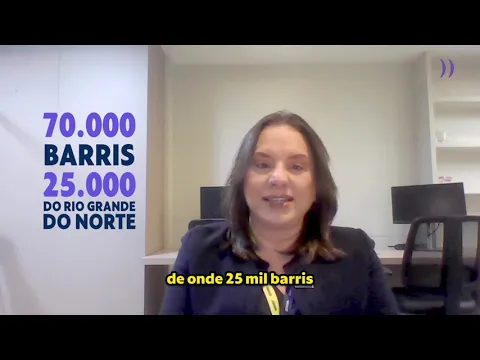

The importance of the activity for the state is noteworthy. “We currently have a recent production of about 70,000 barrels, of which 25,000 barrels come from my Rio Grande do Norte,” Dantas explained. The oil and gas industry, also boosted by Brava Energia, accounts for more than half of the industrial GDP of Rio Grande do Norte.
-
Offshore industrial demand in Macaé skyrockets with the recovery of oil and gas and could grow by up to 396% by 2026 in the Campos Basin.
-
Offshore industrial demand in Macaé surges with the recovery of oil and gas and could grow by up to 396% by 2026 in the Campos Basin.
-
Brazilian giant expands borders in the Southeast: Petrobras confirms new oil discovery in ultra-deep waters in the pre-salt of the Campos Basin.

-
Alert in the global energy market: Severe tropical cyclone hits the coast and disrupts gas production at major plants in Australia, threatening global supply.


Overcoming Distrust with Investment and Modernization
The operational transfer of the Potiguar Hub was initially met with some skepticism. “At first, there was some resistance to the change of operator, but those in the field know there was a programmed divestment back then,” said the manager of Brava Energia. However, the situation gained new momentum after investments in new drilling and modernization of facilities. Today, cities like Mossoró, Macau, Areia Branca, Alto do Rodrigues, and Carnaubais showcase transformed landscapes due to this revival.
Multiplicative Economic Effects
The economic effect of the activities of companies like Brava Energia goes beyond the energy sector. “In front of the building where I live in Natal, there is a restaurant that originated from Macau, which was our first operation in Rio Grande do Norte. Today they even opened a branch in Natal,” exemplified Larissa Dantas. She also highlighted that the recovery of access roads to Guamaré “made local tourism viable,” attracting visitors and increasing the circulation of income.
The Vision of Brava Energia for the Future of RN
For the manager of Brava Energia, being part of this transformation is a great source of satisfaction. “It is extremely rewarding to be part of this story and build it in Rio Grande do Norte, which is my homeland,” concluded Larissa Dantas. In this way, she reinforces the role of independent oil operations as an important driver of regional development, with Brava Energia playing a central role in this process.








Seja o primeiro a reagir!