





 Portuguese
  English
  Spanish
 4 min of reading
  1 comment


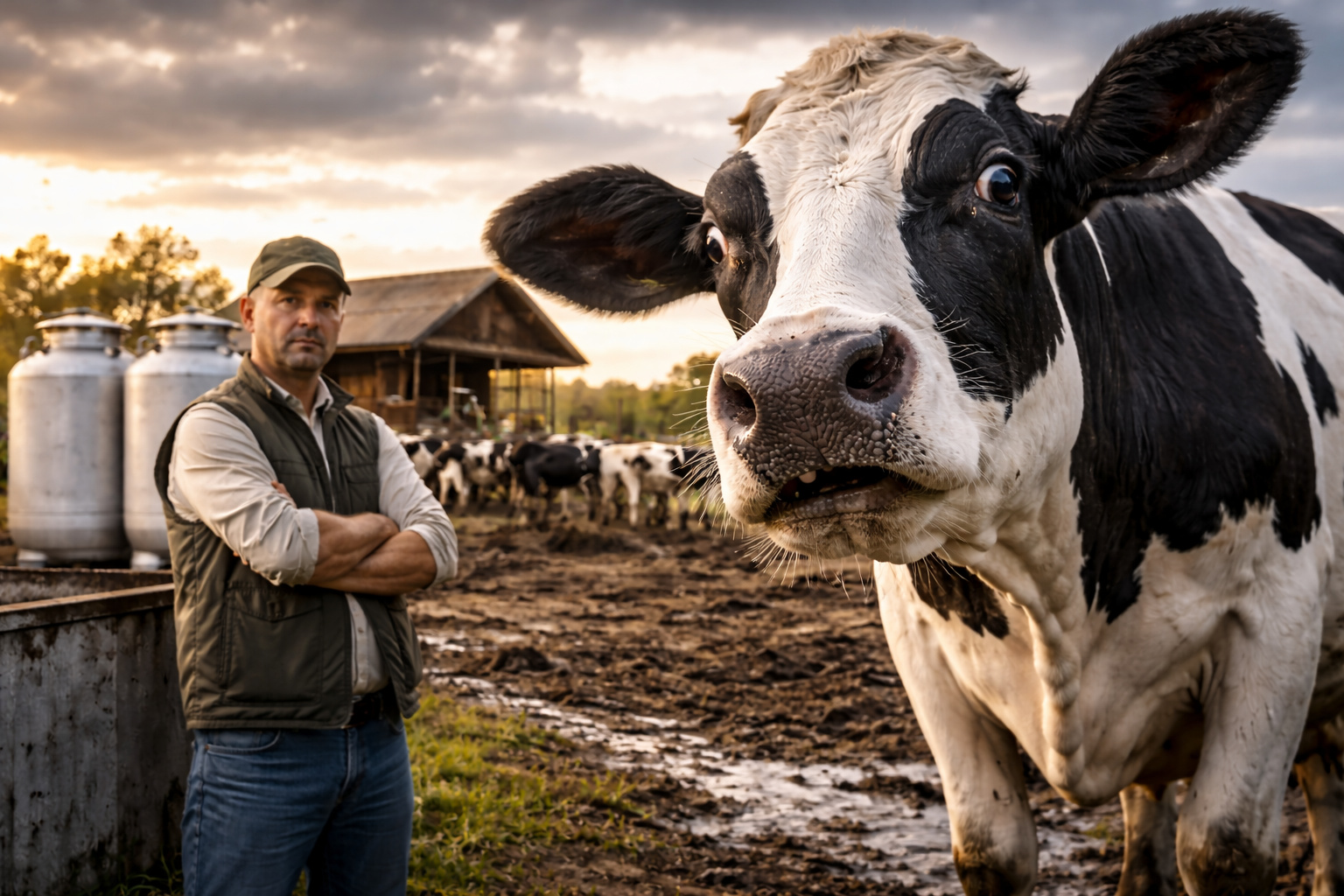


While The Producer Receives Less, The Milk Does Not Become Cheaper In The Market
The Brazilian Milk Producer Is At The Limit. With the sharp drop in the price paid to the producer, high costs, and no noticeable reduction in the price charged to the consumer, the milk chain is experiencing one of its most delicate phases in recent years. The result is a scenario of financial tightening that has led many producers to operate at a loss — and some to abandon the activity.
The Price Of Milk Fell For Those Who Produce — But Not For Those Who Buy
Currently, the price of milk paid to producers is around R$ 2.01 per liter in various regions of the country, a value considered insufficient by a large part of the sector to cover production costs.
One of the main points of outrage in the sector is the disconnection between the price paid to the producer and the final price on the shelves. While raw milk suffers devaluation in the field, consumers rarely notice relief at the supermarket.
-
Unemployment rises again to 5.8% at the beginning of 2026, raising alarms about the end of temporary positions and its impact on the Brazilian job market.

-
Document organization can cut invisible costs in small businesses, a simple step that prevents waste, rework, and losses in daily operations.

-
While Russia dominates the global wheat market, Brazil emerges as an unexpected competitor in the Cerrado, offering grain available in July and August when stocks in the Northern Hemisphere are at their lowest point of the year.

-
China returned almost 20 Brazilian ships with soybeans, but now everything could change: the country that buys 80% of the grain is considering relaxing regulations after impurities held up shipments of thousands of tons and caused million-dollar losses.

This distortion generates a simple yet powerful question — that has been reiterated by producers and industry experts:
Who, after all, decides the price of milk in Brazil?
Who Controls The Price Of Milk: Producer, Industry, Or Retail?
In practice, the producer is the weakest link in the chain. Milk is a highly perishable product: within a few days, it needs to be collected, processed, and sold. This removes any bargaining power from the producer.
On the other hand, the industry and retail operate with more negotiation margin. When the market tightens and the final price cannot rise for the consumer, the adjustment usually happens at the source — that is, in the amount paid to the producer.
The Result Is A Scenario Where:
- the producer sells cheaper;
- production costs remain high;
- and the consumer continues paying a lot.


High Costs Push Producers Into Losses
Even with the falling price of milk, the costs of production remain pressured. Animal feed, corn, soy, fertilizers, electricity, fuel, and maintenance continue to weigh heavily on those in the field.
In practice, many producers report being “in the middle of the sandwich”:
- buying expensive inputs;
- selling milk for a continuously lower price;
- and not being able to pass on costs.
This scenario mainly affects the average producer, who does not have enough scale to dilute costs or the structure to verticalize production.
Milk Imports Enter The Radar And Increase Pressure
Another factor that generates strong debate in the sector is the importation of milk and derivatives, especially from Mercosur countries. When there is a risk of scarcity or inflationary pressure, the introduction of imported products is often used as a tool to stabilize prices.
In practice, this increases the supply in the domestic market and further pressures the price paid to the national producer, who is already facing high costs and reduced competitiveness.
For many producers, the feeling is that the market reacts quickly to contain increases, but does not act with the same intensity to ensure profitability in the field.

And The Role Of The Government And Taxes?
The debate also involves public policies. Milk is a staple food, present in almost every Brazilian home, which means the government has an interest in preventing significant price increases for consumers.
However, producers point out that:
- there are no consistent policies to protect producers;
- there are no effective mechanisms to guarantee a minimum price;
- the tax and bureaucratic burden makes value addition difficult.
For small producers, trying to escape reliance on dairy processing — by producing cheese, yogurt, or other derivatives — often runs into sanitary, tax, and logistical requirements that make the process unfeasible.
Why Do Some Survive And Others Do Not?
Producers who manage to verticalize production, controlling from the farm to the final sale, tend to suffer less from price fluctuations. These producers can set their own selling price and better absorb costs.
On the other hand, the vast majority, especially small and medium family producers, depend exclusively on the collection truck and the price imposed by the industry. These are the ones who feel the effects of the crisis first — and most strongly.
Milk Affects All Brazilians, Not Just Those Who Produce

Although it seems to be a problem restricted to the field, the milk crisis impacts the whole society. Milk is an essential food, present on the tables of millions of families and a base for numerous derivative products.
When the producer fails:
- the future supply is compromised;
- the production chain weakens;
- and the risk of new increases in final prices grows.
What today seems like a producer’s crisis may tomorrow become a direct problem for the consumer.
An Alert For The Future Of The Milk Chain
The drop in milk prices exposes a structural problem in the Brazilian production chain: those who produce assume the greatest risk but receive the smallest share. Without adjustments, clear policies, and greater balance among the links in the chain, the trend is for more producers to leave the activity.
And the question that remains is simple — and uncomfortable:
if the producer continues to fail, who will produce tomorrow’s milk?









O produtor, desculpem a comparação, é a “galinha dos ovos de ouro” como na famosa fábula. Alguns comportamentos ajudaram muito esta discrepância entre os elos, onde o mais importante é o menos remunerado. Nos meus quase 50 anos como assistente técnico aprendi muito com a ****, mas ainda não entendi como ela pode ser fortalecida.