





 Portuguese
  English
  Spanish
  4 min of reading
  0 comments


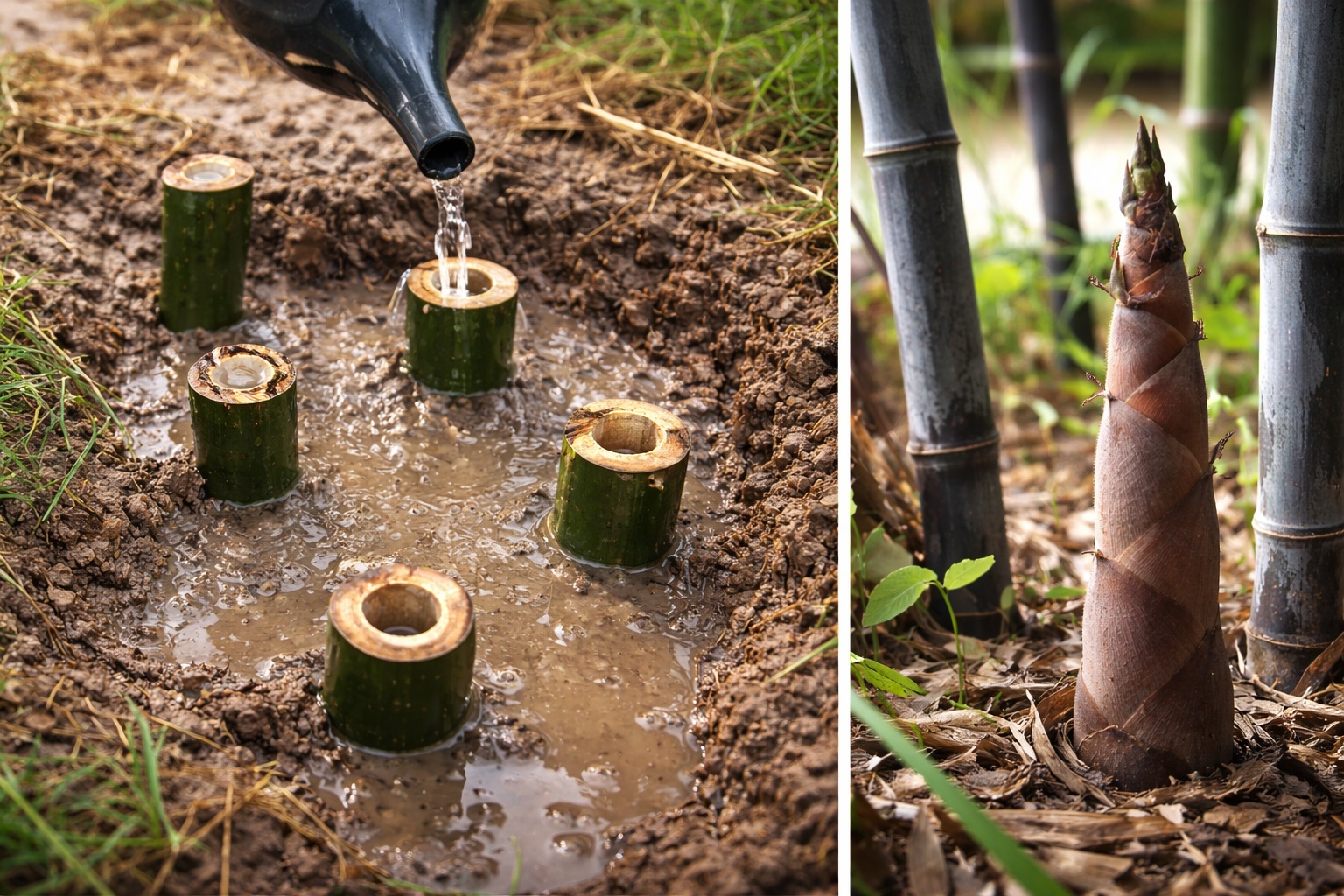
Cup System for Propagating Bamboo Seedlings Uses Culm Cuttings in Small Containers with Moist Substrate to Stimulate Rooting. Understand How the Technique Works and Its Limits.
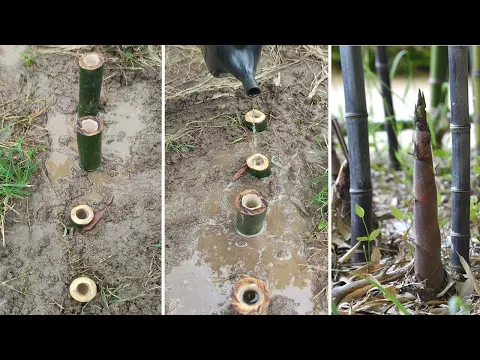
The propagation of bamboo by seeds is rare in most commercial species, as many flower only at long intervals, which can exceed decades. Therefore, nurserymen and farmers predominantly resort to vegetative propagation, a technique that uses parts of the plant itself to generate new seedlings genetically identical to the mother plant. Within this context, the so-called “cup system” has gained ground as a practical alternative to stimulate the rooting of culm cuttings on a small scale. The method consists of using culm segments containing active nodes, inserted in substrate within small containers, such as plastic cups or nursery pots.
The technique stands out for requiring simple structure, low cost, and allowing individualized control of seedlings during the initial rooting period.
Why Bamboo Is Propagated by Cuttings
Bamboo belongs to the Poaceae family and has a rhizomatous growth. Many species flower synchronously at long intervals, which makes seedling production by seeds unpredictable.
-
The sugar-energy sector advances with agricultural technology, but agricultural productivity still raises concerns.

-
The eggshell that almost everyone throws away is made up of about 95% calcium carbonate and can help enrich the soil when crushed, slowly releasing nutrients and being reused in home gardens and vegetable patches.

-
This farm in the United States does not use sunlight, does not use soil, and produces 500 times more food per square meter than traditional agriculture: the secret lies in 42,000 LEDs, hydroponics, and a system that recycles even the heat from the lamps.

-
The water that almost everyone throws away after cooking potatoes carries nutrients released during the preparation and can be reused to help in the development of plants when used correctly at the base of gardens and pots, at no additional cost and without changing the routine.

For this reason, vegetative multiplication is considered the most reliable method for commercial production. By using parts of the culm with viable buds, it is possible to induce the formation of new roots and shoots.
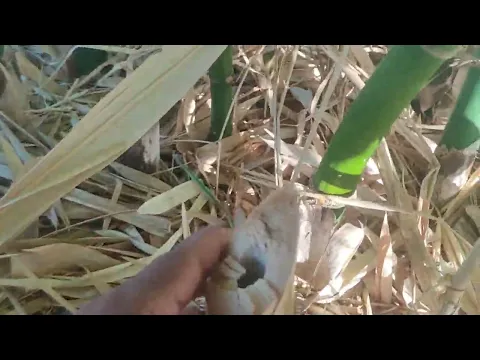

This technique preserves the genetic characteristics of the original plant, which is important in crops intended for wood production, civil construction, handicrafts, or biomass.
How the Cup System Works
The cup system is based on using small containers filled with light and well-drained substrate. Culm segments with at least one active node are positioned so that the bud is close to the surface of the substrate.
The node of bamboo contains meristematic tissues capable of giving rise to roots and new shoots, provided there is adequate moisture and favorable temperature.
The use of individual containers facilitates:
- Irrigation control
- Monitoring of root development
- Reduction of competition between seedlings
- Ease of transport
In artisanal nurseries, reused plastic cups are often used as an economical alternative to commercial tubes.
Importance of Adequate Substrate
The success of rooting depends on the choice of substrate. Common mixes include:
- Screened garden soil
- Washed sand
- Organic compost
- Light commercial substrates
The substrate must maintain constant moisture without waterlogging. Excess water can cause the cutting to rot, while low moisture compromises root emission.
Proper aeration is essential to stimulate healthy root growth.
Ideal Environmental Conditions
Propagation of bamboo by cuttings responds better to mild temperatures and environments with good indirect light. Direct sun exposure in the first weeks can cause water stress.
Nursery environments with partial shading usually offer better results.
The relative humidity of the air also influences the success of rooting, as it reduces water loss from the cutting before root formation.
Rooting Time
The period for root emergence varies depending on the species and environmental conditions, but generally occurs within a few weeks to a few months.
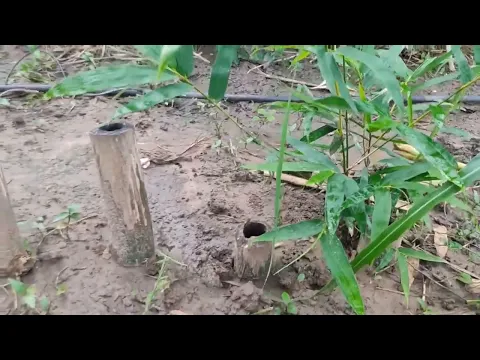
After the initial development of roots, shoots emerge from the buds present at the node of the culm. This stage marks the beginning of the formation of the independent seedling.
Advantages of the Cup System
Among the main observed benefits are:
- Low implementation cost
- Use of reused materials
- Ease of handling on a small scale
- Decentralized seedling production
The method allows small producers to multiply mother plants without the need for sophisticated infrastructure.
Limitations of the Technique
Despite its simplicity, the cup system is not the most efficient method for large-scale commercial production.
In industrial nurseries, techniques such as clump division, use of rhizomes, or micropropagation can present greater uniformity and speed.
Moreover, the success of rooting can vary depending on the bamboo species. Some have an easier propagation by culm, while others require specific management.
Difference Between Culm Cutting and Clump Division
Clump division involves removing part of the already rooted rhizomatous system, which increases the survival rate. However, it requires more physical effort and can damage the mother plant.
On the other hand, the culm cutting used in the cup system allows for multiplication with less structural impact.
This characteristic makes the method attractive for gradual multiplication on rural properties.
Economic Applications of Bamboo
The expansion of bamboo cultivation is associated with multiple uses:
- Civil construction
- Furniture production
- Handicrafts
- Renewable energy
- Environmental recovery
The ability to multiply seedlings with low initial investment increases access for small producers to this market.
Management After Rooting
After the formation of roots and initial shoots, seedlings should remain in a protected environment until they reach sufficient vigor for transplanting.
Transplanting to the field should occur when the root system is well established, reducing the risk of mortality.
The correct timing of transplanting directly influences the survival rate in the definitive field.
The cup system for producing bamboo seedlings is based on vegetative propagation by culm cuttings with active nodes. The technique takes advantage of bamboo’s regenerative capacity and allows for multiplication with low investment and minimal infrastructure.
Although it does not replace large-scale commercial methods, it represents a viable alternative for artisanal nurseries and small producers interested in gradually expanding plantings.
The practice demonstrates how simple techniques can enable seedling production on rural properties, leveraging fundamental biological principles of the species.










-

-

-

-

16 pessoas reagiram a isso.