





 Portuguese
  English
  Spanish
  6 min of reading
  0 comments


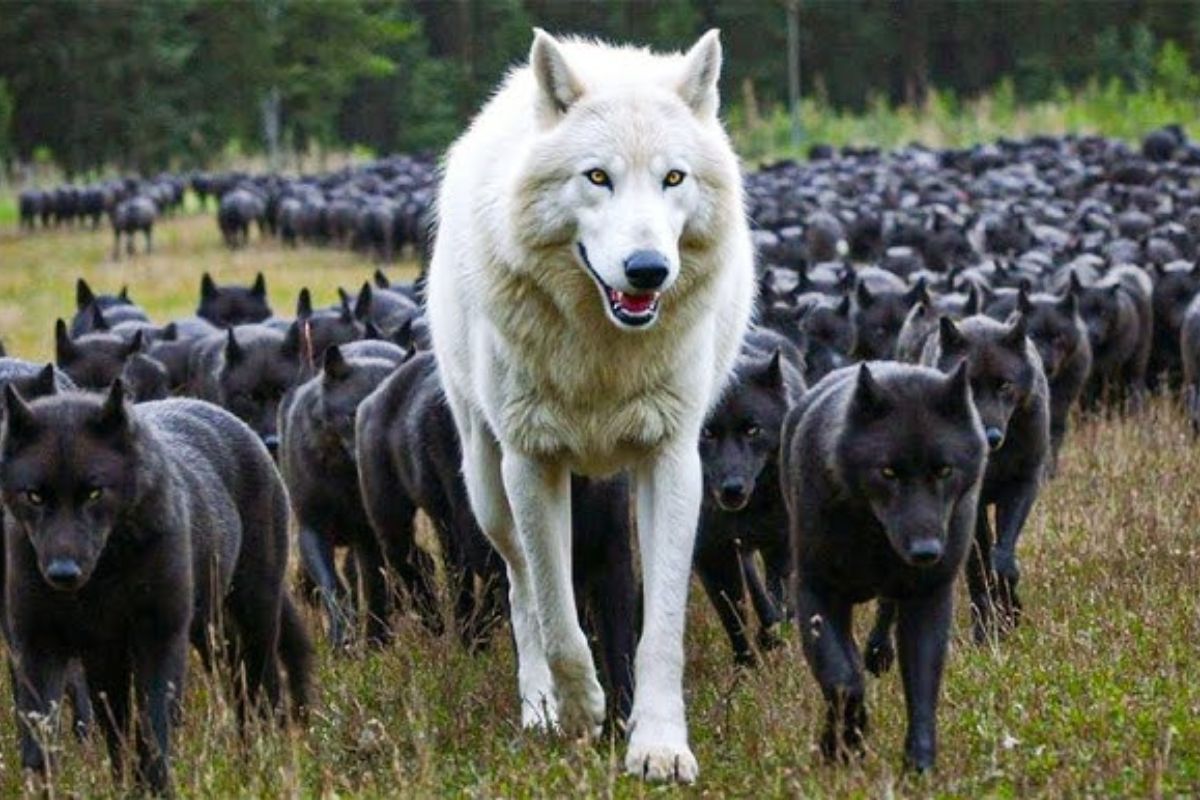
Non-Lethal Mitigation Advances In The State Of Washington With Support From WDFW And Federal Agencies: Portable Electric Fences, Fladry With Flags Every 45 Cm, Pens During Lambing, Anatolian Shepherd Dogs, And Daily Human Presence Reduce Conflicts Between Wolves And Cattle, Avoiding Deaths And Losses In The Rural Field.
The coexistence between wolves and livestock has returned to the center of decisions in the field with a package of practical measures to reduce attacks on herds without eliminating predators. The focus is on prevention, monitoring, and management, reducing deaths, legal tension, and operational losses.
In practice, producers adapt non-lethal strategies to the type of livestock, terrain, and time of year, while the Washington Department of Fish and Wildlife (WDFW) directly acts on conflict mitigation and coordinates recommendations in partnership with agricultural and environmental agencies.
Why Attacks Happen And Which Animals Are At Greater Risk

Although wolves primarily feed on elk, deer, and moose, there are cases where they injure or kill livestock. Additionally, wolves also scavenge carcasses, making dead animal remains a significant attraction for their approach.
-
A “silent skill” is allowing Brazilians to earn up to R$ 22,000 per month without a degree and become indispensable for companies that rely on millions of data to survive.

-
Researchers at the Toyota Research Institute found that if a human uses robotic arms to flip a pancake 300 times in an afternoon, the robot learns to do it on its own the next morning, and this is currently the most promising method to solve the biggest bottleneck in modern robotics.

-
Goodbye iron: a common item in households is starting to lose space to technology that smooths clothes in minutes without an ironing board and with less energy consumption.

-
Antarctica reveals an unusual clue high in the Hudson Mountains, and what appeared to be just an isolated rock began to expose a secret hidden under the ice for ages.


The risk is not uniform within the herd. Sheep, goats, and calves are most frequently targeted, while adult bulls, cows, and horses tend to face lower risks. Type, age, and number of animals directly influence the potential for conflict and shape the choice of mitigation measures.
The Role Of Territory And The Farmer’s Routine In Risk With Wolves

Vulnerability increases when daily observation of cattle is limited. Remote pastures or rugged terrain make monitoring difficult for producers and managers, hindering the early detection of conflicts between wolves and cattle.
Therefore, one proposed measure is the temporary change of grazing areas to avoid contact during critical moments, such as when wolves are in dens with pups or in meeting places. This temporary exchange acts as a risk reduction tool, especially when topography and distance impede consistent monitoring.
Removal Of Attractants: Carcasses, Separation Of Vulnerable Animals, And Sanitary Management

The removal of attractants is seen as a structural action, not just corrective. Since wolves consume carcasses and have a keen sense of smell, the disposal of dead animals should occur whenever possible to reduce attracting wolves and other scavengers.
Operational guidelines include three approaches for carcasses, depending on local viability: processing, burial at a few meters depth, or burning safely and appropriately, always respecting local restrictions before any burning. For carcass pits, there is an objective parameter: at least 2.4 meters deep, with an additional requirement for complete fencing to prevent scavenger animals from entering.
Management also includes paying attention to the most exposed individuals. Sick or injured animals should be temporarily separated from the rest of the herd and taken to a safe location, such as a barn, protected structure, or pasture near a residence while receiving care. The logic is to reduce the vulnerability of individuals that attract predators and complicate the defense of the group.
Pens And Fencing: When To Confine, When To Release, And Why Timing Matters
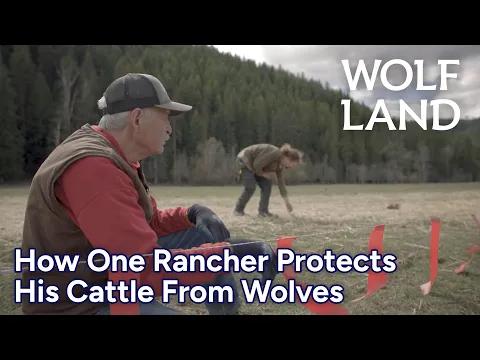

Strategic confinement is recommended especially during the lambing season, as it facilitates monitoring and reduces opportunities for attack. The guidance is to keep cows and sheep in fenced areas or pens where monitoring is straightforward whenever possible. Calves and lambs, in turn, should remain in secure pens until they reach larger sizes.
There are also calendar recommendations for release. Delaying the cattle’s exit from fenced areas to open and remote pastures can be beneficial until lambing is complete or until the birth of deer and moose calves, which typically occurs in early June. This timing adjustment decreases exposure during a sensitive period for the herd and for the dynamics of surrounding predators.
Electric Fences And Fladry: Physical Barrier, Psychological Effect, And Duration Limit
Permanent or portable fences are a central resource, especially at night when herd protection relies less on direct observation. Among them, electric fences are described as effective against wolves.
Fladry appears as a complementary measure with a strong deterrent effect. This technique uses brightly colored flags, usually red or orange, hung along a rope or fence at intervals of 45 cm. Wolves tend to hesitate to cross this visual barrier, creating a behavioral block.
The gain is greater when electricity is combined with flags, in a configuration referred to as turbo-flag, because contact reinforces conditioning to maintain distance. If, after prolonged use, wolves begin to test the flags, installing repellent lights can help prolong effectiveness. Still, there is an important operational limitation: fladry is temporary, and the producer needs to be selective about when, where, and for how long to deploy it.
Guard Dogs And Human Presence: Territorial Deterrence And Active Protection
Human monitoring emerges as a critical variable. The frequency and intensity of monitoring the cattle can be decisive because wolves are territorial and tend to avoid humans. This makes regular presence a form of behavioral deterrence, reducing opportunistic approaches.
The use of herd guard dogs, along with a shepherd, can protect sheep, goats, or confined cattle. Breeds noted as effective include Anatolian Shepherd, Mastiff, and Pyrenean Mountain Dog, especially when the system combines dogs and people. However, there is a sensitive operational point: it is important to keep guard dogs away from active wolf dens to avoid direct conflict with adults protecting pups.
In open pastures, shepherds or cowboys can enhance protection by monitoring the herd and keeping animals in small groups. Daily checks, along with keeping calves in small groups with adults, increase responsiveness and reduce vulnerabilities. The routine of frequent human presence is considered a risk reduction factor.
Controlled Intimidation: Light, Sound, And Non-Lethal Ammunitions With Official Coordination
When the goal is to deter wolves near herds, a set of intimidation devices is proposed, but with a rule: their use must occur in coordination with WDFW and federal authorities.
Among the resources mentioned are light and sound devices to deter wolves from confined herds while alerting shepherds to their presence. There is also reference to the use of non-lethal ammunition, such as propane cannons, noise-making bombs, rubber bullets, paint balls, and bean bag rounds, as alternatives to scare away wolves in conflict areas, within a control and coordination approach.
The Institutional Gear Behind Mitigation In The Field
The mitigation described does not depend only on the producer but on a chain of technical support. WDFW works directly with producers to adapt strategies to specific conditions and has support from the Washington Department of Agriculture, the U.S. Fish and Wildlife Service, the USDA Wildlife Service, the U.S. Natural Resources Conservation Service, the U.S. Forest Service, as well as other state and federal agencies and pasture managers.
This institutional design reinforces the logic of prevention based on fine-tuning: the combination of measures changes according to the species raised, age of the herd, terrain, distance, accessibility, and time of year, avoiding one-size-fits-all solutions that fail in the field.
The action package brings together physical barriers, management of attractants, increased surveillance, and deterrent techniques to reduce conflicts between wolves and cattle without resorting to predator elimination. The strategy relies on objective operational choices, such as 2.4-meter pits for carcasses, flags every 45 cm in fladry, confinement during lambing, daily checks, and coordination with official agencies for the use of intimidation devices.
In the rural scenario, the expected effect is twofold: fewer losses in the herd and lower risk of conflict escalation, preserving productivity and the stability of the surrounding ecosystem.
In your experience or opinion, which of these measures against wolves works best in the real world: electric fence, fladry, guard dogs, or daily human presence?









-

-

-

-

-

-

16 pessoas reagiram a isso.