





 Portuguese
  English
  Spanish
  5 min of reading
  0 comments


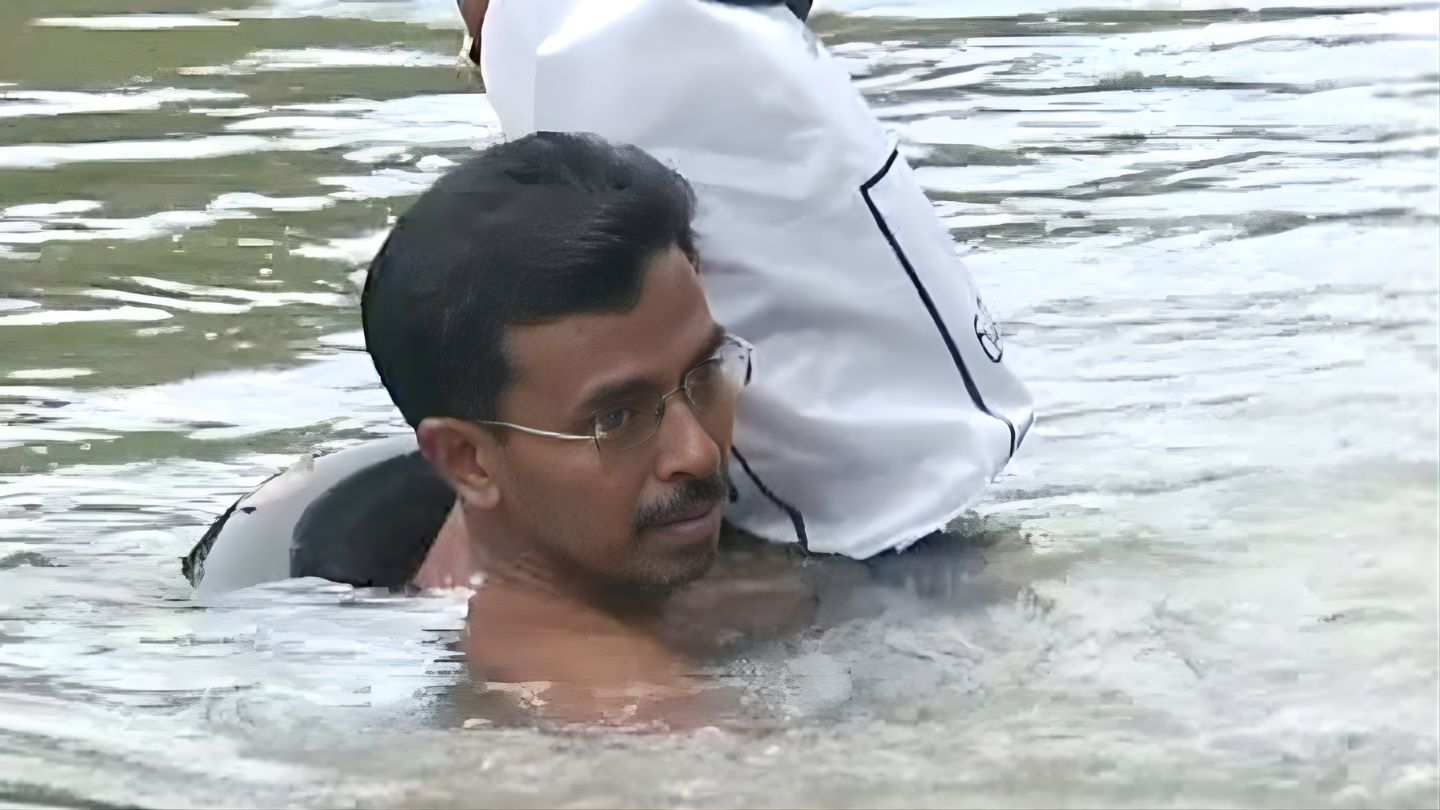
Professor Abdul Mallik swam across a river for over 20 years in India to teach, becoming a global symbol of dedication to education.
In 2016, Indian professor Abdul Mallik, a resident of the state of Kerala in southern India, gained international attention after reports published by outlets such as NDTV revealed a routine that defies any conventional work standard. For about 20 years, he swam daily across a river to reach the school where he taught, carrying his materials in plastic bags and using an air chamber as an improvised float. The case quickly became one of the most emblematic examples of dedication to education ever recorded.
The story is not just uncommon; it brutally exposes the reality of regions where access to education literally depends on the physical endurance of those who teach.
Professor swims across river to teach: the extreme routine that lasted two decades
Abdul Mallik’s routine began early. Every day, he had to choose between two options: face a long and time-consuming land journey or swim directly across the river that separated his home from the school.
-
A couple buys an old chalet, breaks the kitchen floor for renovation, and finds over a thousand coins of gold and silver hidden since the English Civil War over 4 centuries ago.

-
Rigid bags with their days numbered: new trend prioritizes comfort in 2026.

-
YouTuber creates an excavator equipped with a giant 4.5-meter sword to challenge his brother to a rematch, and the invention quickly goes viral on social media.

-
The U.S. Army surprises the world by presenting the UH-60MX Black Hawk helicopter capable of flying without pilots, controlled by a tablet, featuring the MATRIX system, smart sensors, and full autonomy in real combat and rescue missions.


The road journey could take up to three hours, passing through uneven paths and with limited transportation. The alternative he chose was faster — but much riskier.
Mallik chose to swim across the river.
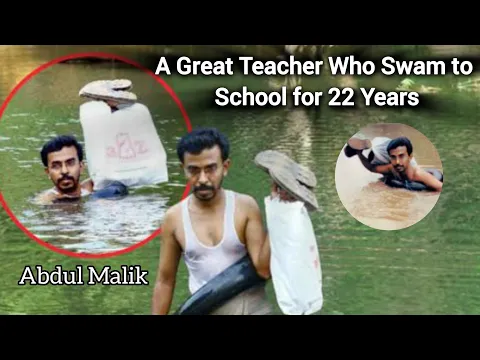

For this, he used an inflated tire inner tube as a float, and placed clothes, notebooks, and books inside waterproof plastic bags to prevent damage. He then entered the water and made the crossing daily, regardless of weather conditions.
This choice significantly reduced travel time but required discipline, physical preparation, and courage.
Why Abdul Mallik decided to swim every day to work
The decision was not impulsive. It arose from a practical need. In rural areas of India, transportation infrastructure can be extremely limited. In Mallik’s case, there was no nearby bridge that directly connected his home to the school. Access by land involved long and time-consuming detours.
By opting for the river crossing, he drastically reduced travel time, managing to arrive at school more quickly and regularly. This ensured that his classes were held without frequent delays, something essential for students who already faced difficulties accessing education.
The crossing, therefore, was not just an act of courage — it was a logistical solution to a structural problem.
Plastic bags, improvised float, and discipline: how the crossing worked
The method used by Abdul Mallik was simple but effective. He placed his materials inside well-sealed plastic bags to protect against water. He then used an inflated air chamber as a flotation aid, which reduced physical effort during the crossing.
This system allowed him to maintain stability in the water, carry his belongings, and cross the river with relative safety, even without professional equipment.
The daily repetition of this practice for over two decades demonstrates not only adaptation but operational consistency, something rare in such adverse conditions.
The impact of the story: how the case gained international attention
Abdul Mallik’s routine remained virtually unknown outside his community for years. It was only when local journalists became aware of the story that it began to gain visibility.
The coverage by NDTV, one of India’s leading media outlets, brought the case to a wider audience. The response was immediate.

The story began to circulate internationally, being shared as an extreme example of professional commitment and dedication to education. In a global scenario where school dropout and lack of teachers are recurring problems, the case drew attention precisely for showing the opposite: a professional who overcomes physical obstacles daily to ensure that teaching takes place.
Poor infrastructure and access to education: the context behind the story
The case of Abdul Mallik cannot be analyzed in isolation. It reflects a structural problem present in various regions of the world: the lack of basic infrastructure for access to education.
In rural areas of India, such as parts of Kerala, schools may be located in hard-to-reach regions, without paved roads, efficient public transportation, or bridges connecting communities.
This creates a scenario where both students and teachers must travel long distances or face natural obstacles to participate in the educational system.
Mallik’s crossing is, therefore, a symptom of a larger reality — and not a completely isolated exception.
Dedication to education in remote regions: a pattern that repeats itself worldwide
Although Abdul Mallik’s case is one of the most emblematic, it is not unique. Various reports around the world show teachers facing extreme conditions to practice their profession.
In countries across Asia, Africa, and even Latin America, there are records of educators who walk for hours daily, swim across rivers, climb difficult terrains, or use improvised means to reach schools.
These stories reveal a pattern: in regions where infrastructure fails, the educational system often directly depends on the individual effort of its professionals.
The symbolism of the story: more than a physical crossing
Abdul Mallik’s story gained prominence not only for the physical effort involved but for the meaning it carries.
It represents a direct contrast to more common narratives about difficulties in the education sector. Instead of abandonment or giving up, the case shows continuous persistence over decades.
The daily crossing of the river became a concrete symbol of commitment to teaching, illustrating how far an individual can go to keep an essential activity running.
After the case gained attention, Abdul Mallik’s situation began to receive more focus. Public recognition brought visibility to his story and, in some reported cases, institutional support.
Over time, and now at an older age, he stopped making the daily swim crossing. However, the legacy of his routine remains one of the most striking examples of professional dedication in the field of education.
A true story that exposes the limits between individual effort and structural failure
Abdul Mallik’s journey is not just a curiosity. It highlights a critical point: how far can individual effort compensate for the absence of infrastructure?
For over 20 years, a single teacher managed to maintain a functional routine under adverse conditions. But this solution is not replicable at scale.
The story serves, at the same time, as an example of extreme dedication and as evidence of a system that depends, in some cases, on improvised solutions to continue operating.
And it is exactly this duality that keeps the case relevant to this day.








Seja o primeiro a reagir!