





 Portuguese
  English
  Spanish
 3 min of reading
  0 comments


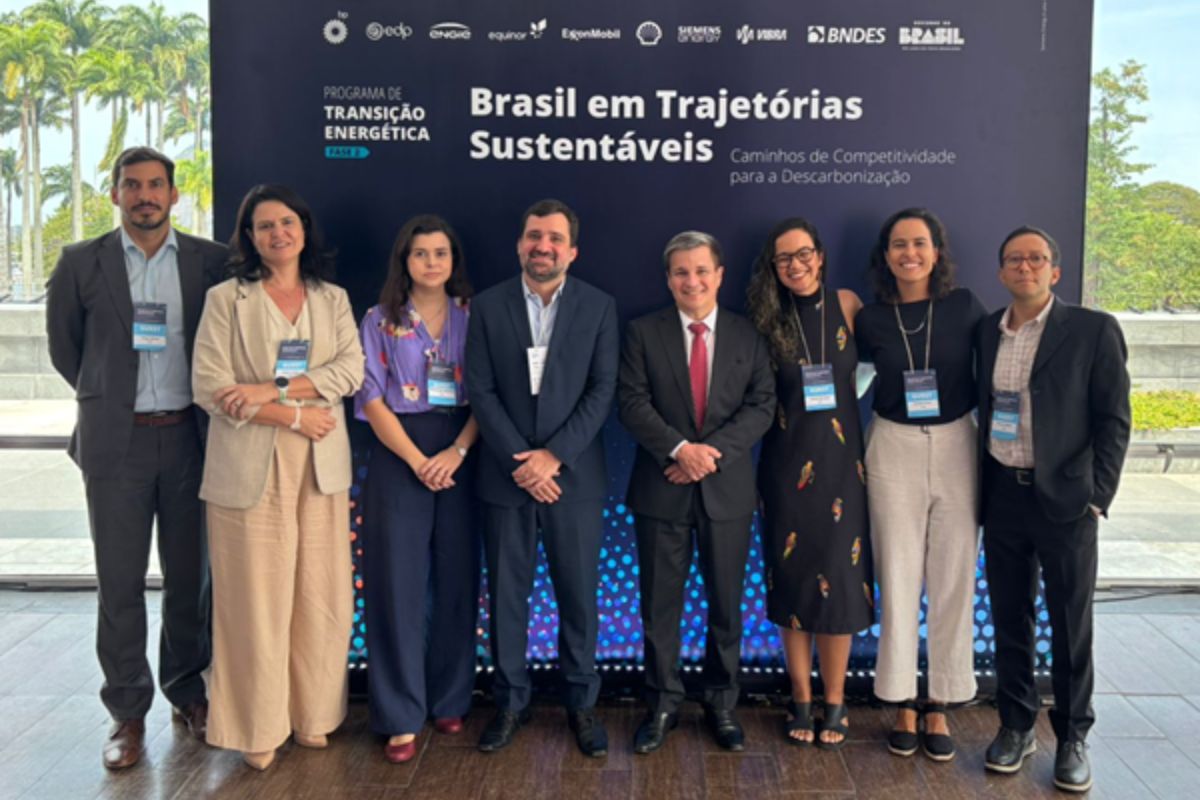
The Second Phase of the Energy Transition Program Marks a New Chapter for Brazil, Uniting Strategic Institutions Such as EPE, BID, and BNDES Around Sustainable Public Policies. Focusing on Clean Energy and Innovation, the Project Creates Scenarios for Climate Neutrality by 2050
The Energy Transition Program (PTE) entered its second phase with an ambitious purpose: to accelerate Brazil’s path toward climate neutrality by 2050, according to a report published.
The Brazilian Energy Research Company (EPE) actively participated in the launch, held on October 3rd at the Museum of Modern Art in Rio de Janeiro (MAM).
The action, coordinated by the Brazilian Center for International Relations (Cebri), gathers strategic partners such as BID, BNDES, Cenergia/UFRJ, Fipe, and MRTS Consulting, strengthening the technical and scientific basis of the transition.
-
Renewable energy advances over protected areas in Brazil, and a survey by the Energy Transition Observatory reveals silent impacts that challenge environmental conservation and pressure sensitive traditional territories.

-
Rio Grande do Sul accelerates energy transition: State invests in renewable technologies and consolidates decarbonization strategies and pathways to attract billions in new industrial investments.

-
With 160,000 m² of collectors, an area larger than 20 football fields, Silkeborg, in Denmark, hosts a solar thermal plant that heats 19,500 homes and could become the largest solar heating plant in the world.

-
With earth, bamboo, straw, and lime mortar, a specialist builds a house for just over $460 and draws attention for its cost being much lower than traditional construction.


The project proposes sectoral roadmaps and macroeconomic scenarios that align energy, transport, industry, and land use, always focusing on sustainable innovation and efficient public policies.
The results promise to generate positive impacts on GDP, jobs, and national investments, consolidating Brazil as a global leader in clean energy.
Collaborative Governance and Sustainable Innovation Drive Clean Energy
During the event, EPE’s Corporate Management Director, Carlos Cabral, highlighted the innovative nature of the program, emphasizing that PTE reflects the complexity of decision-making in public policies.
He stated that the initiative is a “valuable governance exercise,” essential for managing the uncertainties and convergences of the Brazilian energy transition.
EPE, acting as an institutional articulator, strengthens partnerships that enhance technical capacity and integration among different sectors.
This collaborative governance becomes essential for clean energy and sustainable development to advance in a structured and lasting manner in the country.
Public Policies and Renewable Energy as Engines of Decarbonization
The second phase of the program presents technical subsidies for governments and companies, based on detailed economic analyses and energy projections.
The focus is on identifying viable paths for the decarbonization of the Brazilian economy, uniting renewable energy and strategic public planning.
Industries, cities, and transportation sectors are included in the new roadmaps, with goals that support innovation and reduce carbon emissions.
The alignment between BNDES, Cebri, BID, and EPE ensures a solid foundation for green and sustainable growth.
Energy Planning and Green Development Guide the Future
Among the most significant results of the second phase are the sectoral roadmaps that address topics such as AFOLU (Agriculture, Forestry, and Other Land Use), Industry, Transport, and Energy.
These studies detail emission mitigation strategies and identify economic opportunities. Based on this data, the program projects energy scenarios until 2050, helping the country achieve global neutrality goals.
The proposals also reinforce EPE’s role as a reference in energy planning, supporting public policies that balance growth and sustainability.
Energy Scenarios and Technological Innovation in the Brazilian Transition
The creation of energy and macroeconomic scenarios by the PTE allows for an integrated view of the economic and environmental impacts of ongoing transformations.
The initiative shows that the energy transition is not only an environmental issue but also a strategy for technological innovation and economic growth.
By integrating research institutions and public bodies, the program reinforces the importance of cooperation and science for advancing clean energy in Brazil.
In this way, the Energy Transition Program consolidates a governance model capable of inspiring other nations seeking low-carbon solutions.








Seja o primeiro a reagir!