





 English
  Francês
  Alemão
  Italiano
  Japonês
  Norueguês
  Portuguese
  Spanish
  4 min of reading
  0 comments


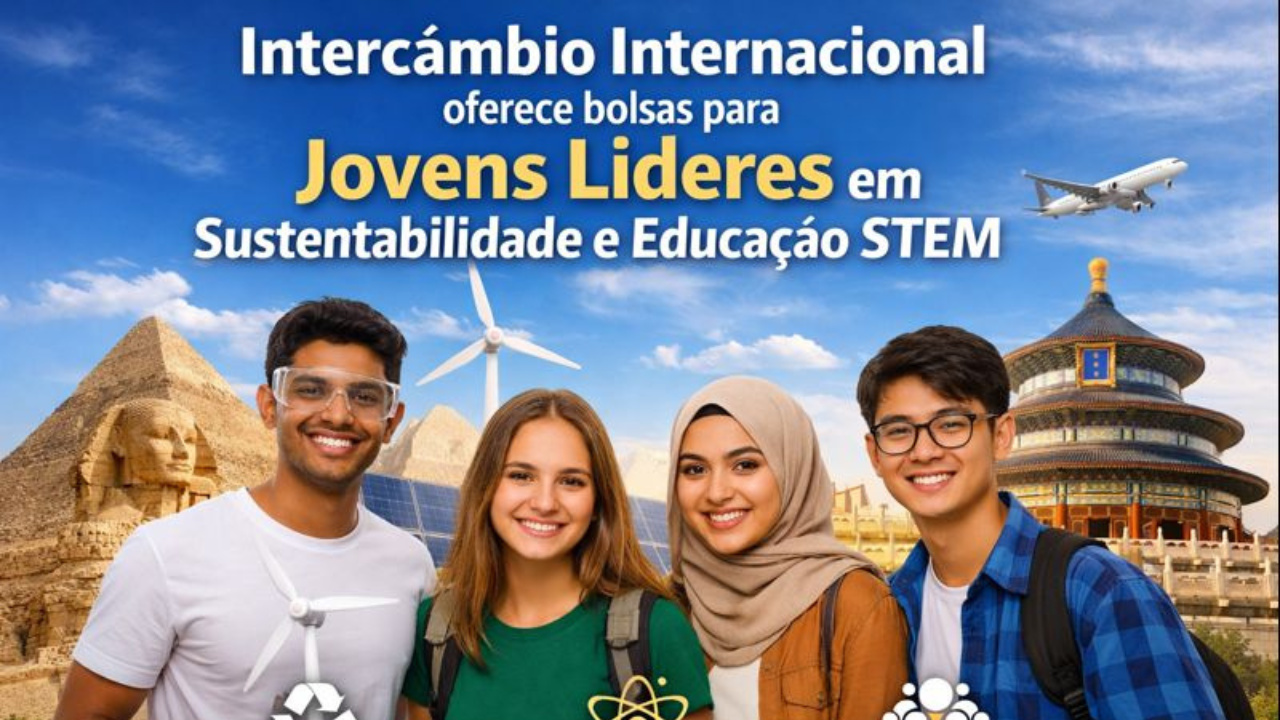
Program Opens Applications for International Exchange Focused on STEM Education, Sustainability, and Youth Leadership Development.
The international exchange focused on STEM education, sustainability and energy transition is transforming the education of young leaders in Brazil.
The initiative is promoted by AFS Intercultural Programs in partnership with the integrated energy company bp, which has opened applications for the 2026 edition of the AFS Global STEM Academies.
The program offers ten full scholarships for high school students from all over Brazil, with online training and in-person immersion in strategic countries such as China, Egypt, and India.
-
Technology, Data, and Logistics Drive Competitiveness in the Oil and Gas Sector in 2026 with Operational Efficiency, Digitalization, and Smart Management
-
GoodWe Launches SEMS+ and Solidifies Digital Energy Management with Intelligent Monitoring, Artificial Intelligence, and Data Analysis in the Brazilian Electric Sector

-
Digital Transformation in Industry by 2026: Prescriptive Maintenance, Massified IoT, Integrated Asset Management 4.0, and All-in-One Solutions Accelerate Operational Efficiency

-
Nomus Start Industrial Expands Access to Industrial ERP for Companies under Simples Nacional with Free Implementation, Low Operating Costs, and Video Training

The proposal combines technical learning, intercultural coexistence, and practical experiences linked to global challenges.
The goal is to prepare adolescents to understand complex problems of today’s world and participate in decisions involving science, technology, and sustainable development.
STEM Education Connects Theory and Practice in a Global Context
One of the most recent examples of the program’s impact is the experience of Vitória Cinquini, a 16-year-old student from Ituiutaba (MG).
After returning from Egypt, where she participated in the in-person stage of the international exchange, she reported a profound change in how she perceives daily life.
“I returned with a more critical and global perspective,” said the student, who is entering her second year of high school in 2026.
Before the trip, Vitória participated in 12 weeks of virtual training focused on STEM education, sustainability, energy transition and social impact.
Sustainability Becomes a Concrete Concept
During the immersion in Egypt, the studied content gained practical application. “We visited Giza, Cairo, and Alexandria.
We had technical visits and discussions about the UN [United Nations] goals.
I learned that social impact is not theory; it is work, listening, and adaptation,” reported Vitória.
According to her, the experience reinforced the perception that sustainability requires concrete actions, dialogue with local communities, and understanding of cultural realities.
Contact with youth from other countries broadened the understanding of how environmental and social issues manifest differently around the world.
Young Leaders and Protagonism in Global Decisions
The training also strengthened the sense of youth leadership. For Vitória, the exchange showed that adolescents can and should participate in discussions about the planet’s future.
“Young people can participate in decisions about the planet’s future, as long as they have access to education and opportunities,” she stated.
This vision is at the heart of the program’s proposal, which aims to train young leaders capable of engaging in social, environmental, and technological projects.
Applications Open for the 2026 Edition
The AFS Global STEM Academies has opened applications for the 2026 edition, with ten full scholarships aimed at Brazilian students from public and private schools.
Youths aged between 15 and 17 years and six months at the time of application may apply.
Therefore, applications must be submitted by January 15, 2026, through the website of the organization responsible for the program.
The initiative is funded by bp and executed by AFS Intercultural Programs.
Energy Transition and Social Impact at the Core of Education
According to bp’s external affairs director in Brazil, Simone Guimarães, the program aims to broaden access to transformative experiences.
“The scholarships allow young people interested in global issues to develop projects related to sustainability and expand their education in international contexts,” she emphasized.
Thus, the energy transition emerges as one of the central axes of the education, addressing everything from renewable sources to the social impacts of changes in energy production and consumption systems.
How the International Exchange Works
The program is divided into two complementary phases.
The first consists of 12 weeks of online training, covering content on global competencies, intercultural living, sustainability, and STEM skills — science, technology, engineering, and mathematics.
The second phase is in-person and lasts four weeks.
Thus, in 2026, the expected destinations are China, Egypt, or India, with the exchange taking place in the second semester of the year.
During the immersion, students participate in technical visits, volunteering activities, and practical activities.
International Certification and Program History
At the end of the program, participants receive international certification granted by AFS and the Social Impact Center at the University of Pennsylvania, in the United States.
Since 2012, over 150 Brazilians have participated in the AFS Global STEM Academies.
Application of Learning in Daily Life
For the Minas Gerais student, the exchange solidified the idea that technical knowledge, multicultural coexistence, and global debates can guide future choices.
“I want to apply what I learned in my daily life,” she said.
Thus, the expectation of the organizers is that participants bring the knowledge back to their communities, amplifying the impact of STEM education, sustainability, and energy transition in Brazil.









Seja o primeiro a reagir!