





 Português
  Inglês
  Espanhol
 3 min de leitura
  41 comentários


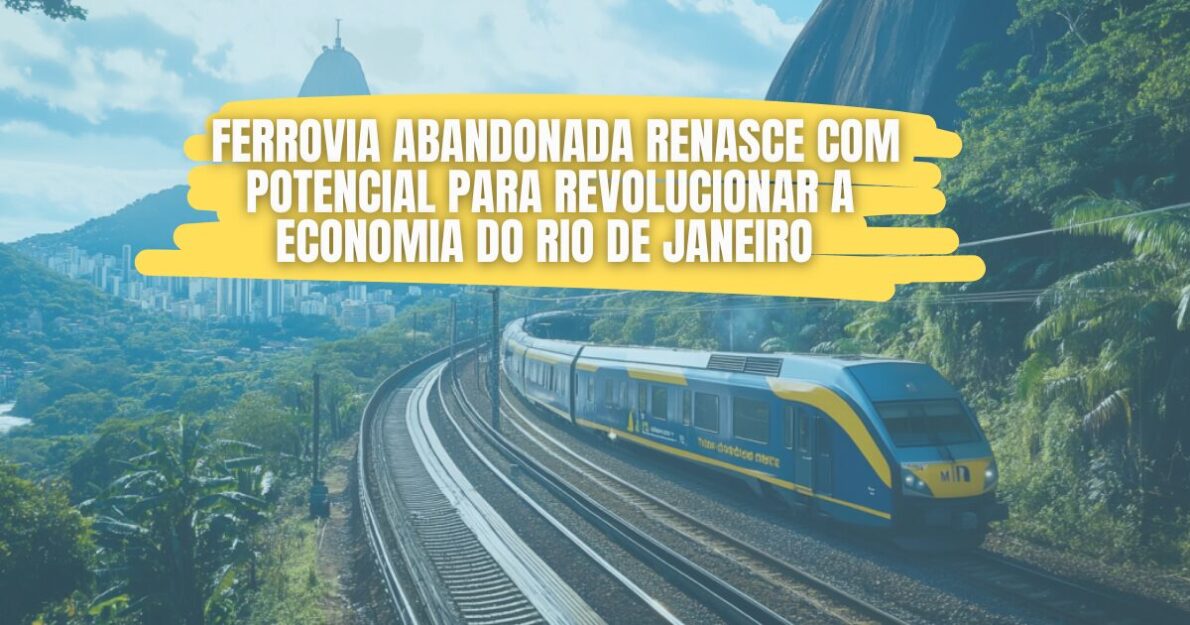

The Project of the EF-118, Abandoned Railway, Is Reviving with Potential to Revolutionize the Economy of Rio de Janeiro. Discover How!
The Revolution in Brazilian Railways Is About to Happen! What seemed like a distant dream, a long-abandoned railway project, gains new life and could significantly change the economy of the state of Rio de Janeiro.
With the growing mobilization of various social and political actors, the future of the state’s railway infrastructure is being reconfigured, promising a vital connection to the Port of Açu and the national railway network.
On October 9th, Firjan (Federation of Industries of the State of Rio de Janeiro) held a crucial public hearing, where demands regarding the execution of the Estrada de Ferro 118 (EF-118) were presented.
-
Brazilian city gains industrial hub for 85 companies that is equivalent to 55 football fields.

-
Peugeot and Citroën factory in Argentina cuts production by half and opens a layoff program for more than 2,000 employees after Brazil drastically reduced purchases of Argentine vehicles.

-
A Brazilian city gains a factory worth R$ 300 million with the capacity to process 200 thousand tons of wheat per year, a mill of 660 tons/day, silos for 42 thousand tons, and an industrial area of 276 thousand m².

-
Havan will leave the shopping mall in Blumenau to inaugurate something that the chain has never done before: a megastore in half-timbered style in the Historic Center of the city, which is expected to be completed in May and change the landscape of local retail.

Lead: The return of the railway project is a significant milestone, as with the indemnity regarding the return of the former railway network, from the concession of the Ferrovia Centro Atlântica (FCA), the state of Rio conditions its realization on the implementation of the EF-118.
This initiative is not just a desire for improvements in logistics but an urgent necessity to revitalize the regional economy.
Historic Mobilization
The president of Firjan Norte Fluminense, Francisco Roberto de Siqueira, emphasized the importance of this mobilization:
“Firjan is preparing a public document to be signed with various Fluminense entities. This proposal will be sent to ANTT, to demonstrate the seriousness of the issue to the organized civil society of Rio.”
Vital Connection
The EF-118 is a project aimed at connecting the Port of Açu and Northern Fluminense to the national railway network, becoming a key element for the development of the state’s infrastructure.
With the inclusion of Rio de Janeiro in public hearings on the early renewal of FCA, ANTT (National Land Transport Agency) recognizes the relevance of the project, which also implies the return of part of the former railway network to the Federal Government.
Political Strategy
The infrastructure manager of Firjan, Isaque Ouverney, highlighted the fierce dispute for the indemnity of the old railway, which involves the active participation of other states: “There is significant political weight in this process, and we see other states participating more robustly.”
He stressed the urgency of a joint mobilization: “Firjan is engaging in dialogue with Fluminense political forces to try to sensitize them in this regard.
This is a crucial discussion for the success of the EF-118; a window of opportunities that we need to seize.”
Phase of Public Hearings
The public hearings, taking place until the end of October, are fundamental for the project’s future. After the phase of debates, the contributions will be analyzed by ANTT before the publication of the result with the proposals that will or will not be considered.
The Federal Court of Accounts will also make its assessment before the signing, with a deadline for completion in the second half of 2025.
Espírito Santo Takes the Lead
The neighboring state, Espírito Santo, is already ahead in the process, having received in July 2024 the basic engineering project of the Kennedy railway, the first section of the EF-118.
This section, which connects Anchieta to Presidente Kennedy, on the border with Rio de Janeiro, was donated by Vale and encompasses 92.8 km in length, interconnecting with the federal railway network.
With a Fluminense stretch of 160 km still to be developed, the expansion of the EF-118 to the Port of Açu could be the key to connecting the state to regions such as the Midwest, North, and Northeast of Brazil.
A New Horizon
The resurgence of the discussion surrounding the EF-118 represents a new hope for the Fluminense economy. Expectations that railway infrastructure could boost regional economic development are high.
With the support of civil society, local authorities, and the business community, the project could finally come to fruition, transforming the economic landscape of the state of Rio de Janeiro.
Final Question: Do you believe that the return of the EF-118 project can truly transform the economy of Rio de Janeiro?








Sem dúvida.
Sim.
A malha ferroviária nacional foi sucateada p interesse das empresas de transportes rodoviário.
O modal ferroviário é importante e urgente. Lamentável num país como o nosso, ainda se discutir importância.
Deveriam discutir projetos e implantações.
Penso em lobbies contrários, o que causa espanto num país tão grande e diverso.
Por exemplo, os aeroportos de Guarulhos e Congonhas ainda, em 2024!, não tem conexões férreas aos seus terminais.
Aeroportos são mini cidades, com diversas demandas.