





 Portuguese
  English
  Spanish
  5 min of reading
  0 comments


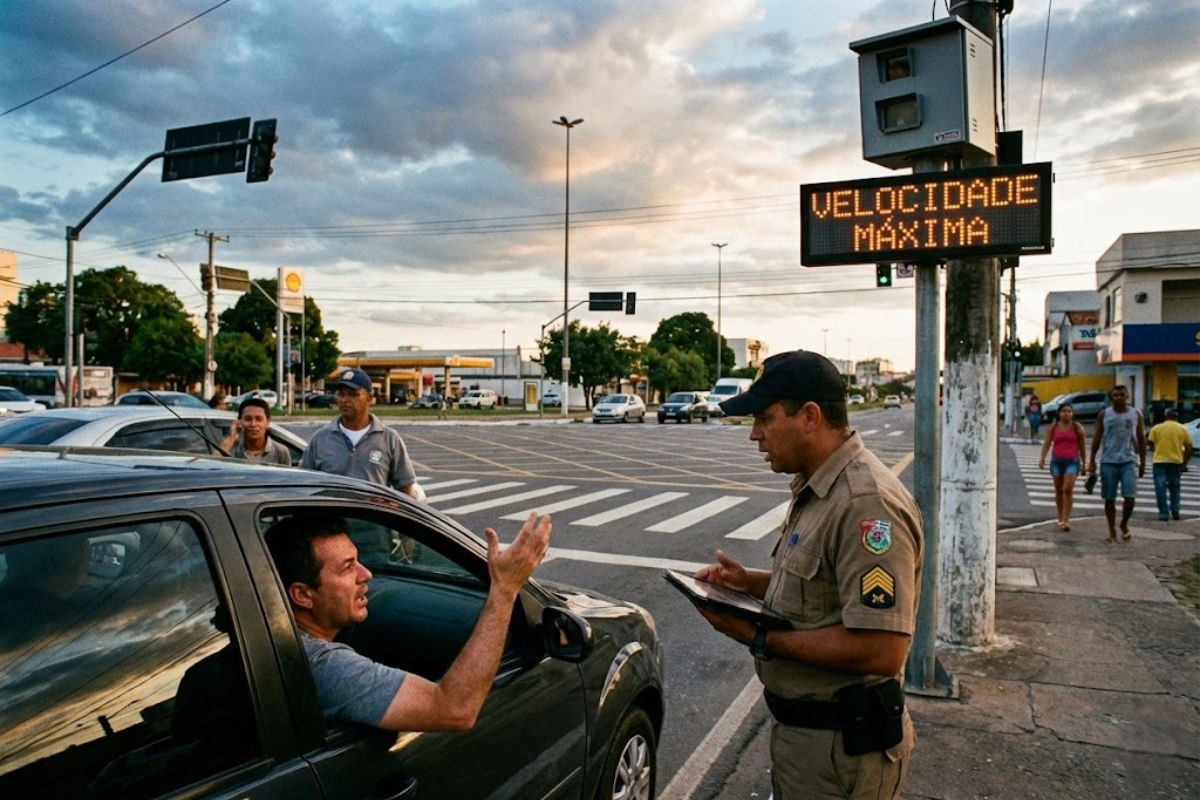
Radar Fines May Stop Burdening Wallets and Become Just Points on the CNH if Bill 266/2025 Advances in the Chamber, Redesigning Punishments for Electronic Offenses and Reviving the National Debate on Road Safety and the Alleged Fine Industry in Brazil.
In December 2025, the topic returned to the center of discussions among drivers, traffic experts, and lawmakers after the release of Bill 266/2025, which aims to change how radar fines impact family budgets. The proposal maintains penalties for drivers but seeks to shift the focus from monetary charges to direct consequences on the CNH record.
By turning radar fines into penalties of just points, the text attempts to diminish the perception that electronic radars primarily serve to collect revenue and views the suspension of the right to drive as a more effective tool against habitual offenders. The challenge is to balance this financial relief with the preservation of traffic safety on highways and urban areas.
What Exactly Does Bill 266/2025 Propose

Bill 266/2025 specifically targets offenses recorded by electronic equipment, such as speed cameras and traffic signal controllers.
-
The Senate approves a bill that criminalizes misogyny, hatred, or aversion towards women, and includes the crime in the Racism Law with a penalty of up to 5 years.

-
Chamber Approves Bill That Allows Pepper Spray for Women Over 16 and Imposes Strict Rules for Purchase, Possession, and Use as Self-Defense

-
Chamber Approves Law to Combat Leucaena, Fast-Growing Plant That Dominates Land and Threatens Native Species in Various Regions of the Country

-
Asset Division: Know What Cannot Be Divided in Case of Divorce


Under the proposal, radar fines would stop generating payment invoices and would only produce points on the CNH, following the grading already provided for in the Brazilian Traffic Code.
In practice, a driver caught speeding or running a red light would still be fined, but the impact would be solely on their record: accumulation of points, risk of suspension, and potential need for a recycling course.
The stated logic is to punish behavior and not to turn radar fines into a permanent revenue source for states and municipalities.
The text also seeks to reinforce the distinction between a driver who commits occasional slips and a habitual offender.
Those who accumulate many points in a short time would still be subject to suspension of the right to drive, which, in the view of the bill’s supporters, is more effective than simply collecting amounts that some drivers can absorb without changing their behavior behind the wheel.
What Changes and What Remains the Same in Financial Penalties
The proposal does not cover all infractions.
Fines related to high-risk behaviors, such as driving under the influence of alcohol, participating in street racing, or disregarding direct orders from enforcement, would retain a strong financial component and additional administrative measures.
The focus of PL 266/2025 is on the universe of automated sanctions, recorded exclusively by electronic equipment.
The differentiation is based on the premise that the radar operates impersonally, without direct contact, and concentrates a significant portion of complaints regarding the so-called fine industry.
At the same time, it raises questions: without the immediate impact on wallets, some drivers might feel freer to test limits until they approach the CNH point limit, increasing the risk of speeding in critical areas.
Critics of the proposal argue that radar fines help modulate behavior in historically dangerous areas and that removing the monetary charge may weaken this psychological barrier.
Supporters insist that the combination of strict scoring, quicker suspensions, and visible enforcement would be sufficient to maintain discipline in traffic.
Other Projects That Could Change Electronic Surveillance
The discussion about radar fines is not limited to Bill 266/2025.
Other texts under discussion in Congress aim to redesign how public authorities control speed and finance traffic safety policies.
One of them is PL 2162/2024, which proposes replacing radars with speed bumps on roads with a limit of up to 60 kilometers per hour.
The idea is to force a real reduction in speed through physical obstacles, reducing dependence on radar fines and avoiding surprise penalties for drivers.
Another initiative is PL 78/2025, which suggests linking the value of fines to the price of the vehicle.
Under this model, owners of luxury cars would pay higher amounts, while owners of popular models would face penalties proportional to their economic capacity.
The stated objective is to align charges with a criterion of social justice, preventing the same fine from disproportionately impacting different budgets.
Despite the variety of proposals, all converge on the same sensitive point: how to balance the need to discipline traffic without transforming radar fines and other penalties into a mechanism perceived as purely revenue-generating.
What is Already in Effect Today to Reduce the Impact of Fines
While Bill 266/2025 and other proposals are under analysis in committees, drivers continue to be subject to the current rules of the Brazilian Traffic Code.
This means that radar fines continue to generate points and monetary charges until any legislative change is approved and sanctioned.
Nevertheless, there are already legal instruments that alleviate the financial impact in certain situations.
For light or medium offenses, Article 267 of the CTB allows for the conversion of the fine into a written warning, provided the driver is not a repeat offender for the same violation within a period of 12 months.
In such cases, the amount is no longer charged, although the record of the occurrence remains on the driver’s history.
Another mechanism in effect is a discount of up to 40 percent for those who choose to pay the fine early through the Electronic Notification System, accessible via the Digital Driver’s License.
By acknowledging the infraction and waiving the appeal, the driver reduces the amount paid without depending on future bills.
Possible Impacts on Driver Safety and Wallets
If Bill 266/2025 advances, the first visible impact would be on the budgets of families that accumulate radar fines over the year.
Urban areas with a concentration of electronic equipment and highways under intense surveillance would stop generating repeated invoices, which would ease the cash flow of drivers who comply but occasionally exceed limits.
On the other hand, the points system would gain even more weight as the central axis of traffic policy, requiring the driver to closely monitor their record.
Just a few successive infractions would be enough to bring the CNH closer to the suspension limit, which becomes the main threat to offending drivers in a scenario without automatic monetary charges.
From a public management perspective, the change would also shift part of the revenue source linked to electronic surveillance, forcing states and municipalities to revise budget forecasts that currently rely on revenue from radar fines.
This reconfiguration could pressure governments to better justify the placement of equipment and the purpose of resources collected in other types of offenses.
In a divided opinion environment, the future of Bill 266/2025 will depend on Congress’s ability to demonstrate that it’s possible to reduce dependence on monetary charges without compromising the reduction of accidents and deaths on the roads.
The boundary between education, punishment, and collection will remain at the heart of public hearings and political negotiations.
Do you think radar fines should continue charging money or should they only count as points on the CNH, as long as the driver runs the real risk of losing their right to drive in case of repeat violations?










-

Uma pessoa reagiu a isso.