





 Portuguese
  English
  Spanish
  3 min of reading
  0 comments


Alphabet, the company responsible for Google, is revolutionizing global connectivity with the Taara project. The initiative aims to bring high-speed internet to remote and hard-to-reach locations using innovative technology based on light beams. With the promise of speeds of up to 20 Gbps, this solution represents a viable alternative to traditional fiber optics, eliminating the need for physical cables and lengthy construction.
The Taara project is an initiative by Alphabet that uses a state-of-the-art chip to transmit data through invisible light beams, ensuring a fast, stable, and accessible connection. This technology emerges as an efficient alternative to fiber optics, allowing the internet to reach places where traditional infrastructure is not viable.
With a focus on accessibility, Google’s solution aims to democratize connectivity, offering internet at competitive costs and simplified deployment.
How Does Taara Work?
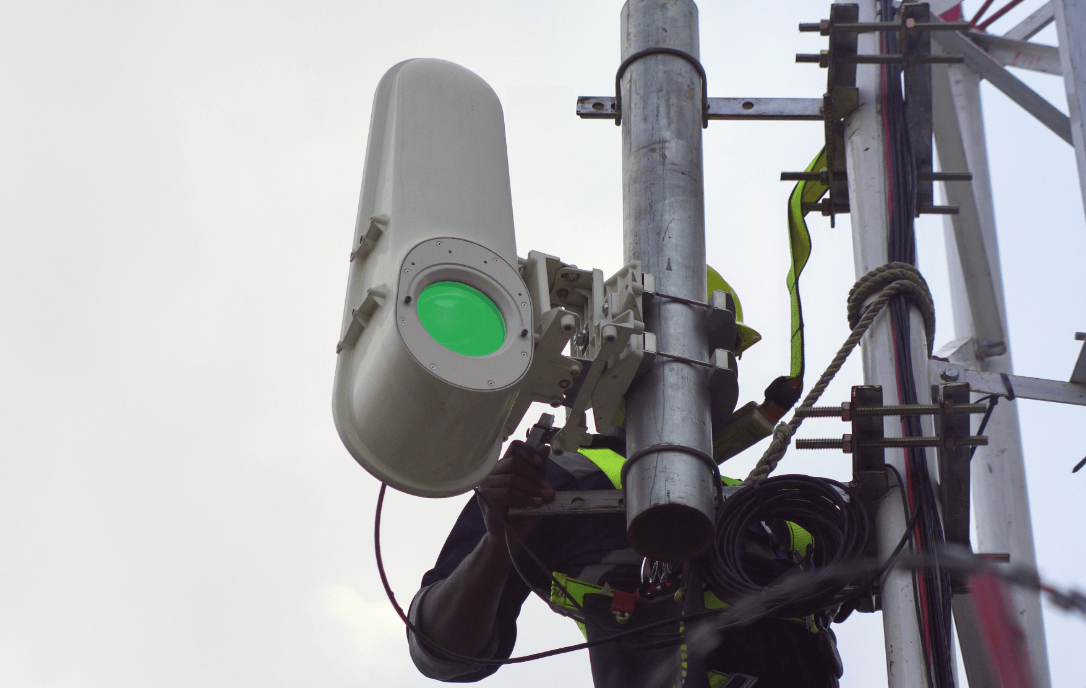
Unlike fiber optics, which rely on underground cables, the Taara project uses narrow beams of infrared light to transmit data between two terminals. This approach eliminates the need for extensive construction and allows for installation in just a few hours.
-
China accelerates global science and may surpass the United States in 2 years with increased public investment, continuous growth, and direct impact on the global technological competition.

-
Scientific studies indicate that drought may be strengthening a much greater silent threat: more resistant superbugs.

-
Man builds functional 5-meter submarine in his garage using gas cylinders, PVC pipes, and a refrigerator motor, and navigates with the vessel on a lake in Colombia.

-
Millions of people have been eating yam for centuries without knowing that this humble tuber contains a compound called diosgenin, which scientists have now discovered can improve memory and help control blood sugar levels.


Each Taara chip contains hundreds of light emitters, controlled by software, that automatically adjust the beams, ensuring a stable connection resistant to interference. This technology can overcome geographical challenges, connecting points separated by rivers, mountains, and other natural obstacles.
Benefits of Taara Technology
The Taara project offers various advantages over conventional internet technologies. Among the main benefits are:
Isolated locations, such as rural areas, mountainous regions, and forests, can finally enjoy high-speed internet without the need for complex infrastructure installation.
In densely populated cities, Taara reduces the reliance on physical cables, avoiding lengthy construction and high costs for network expansion.
Alphabet aims to provide an affordable solution, with an estimated cost of “one dollar per gigabyte,” making connectivity cheaper for millions of people.
The technology is also essential in emergency situations, such as natural disasters, where rapid restoration of connection can be crucial for rescue operations and communication.
Where Has the Taara Project Been Tested?
The Taara project has been successfully tested in various regions around the world, demonstrating its effectiveness in overcoming geographical barriers. One of the most impressive examples was connecting cities separated by the Congo River, where the installation of submarine cables would be unfeasible or extremely costly.
Google is exploring expanding the tests to new markets, establishing Taara as one of the leading connectivity solutions for the future.
When Will Taara Be Launched?
Alphabet plans to launch the Taara project in 2026, with a gradual adoption over the following years. Initially, the technology will be applied in industrial and corporate projects, but experts believe that, over time, it could also be used in homes.
Although large-scale implementation depends on various factors, the potential of Taara to transform internet access is undeniable. In an increasingly connected world, this innovation promises to bring the internet to places previously unimaginable.







Seja o primeiro a reagir!