





 Portuguese
  English
  Spanish
  4 min of reading
  0 comments


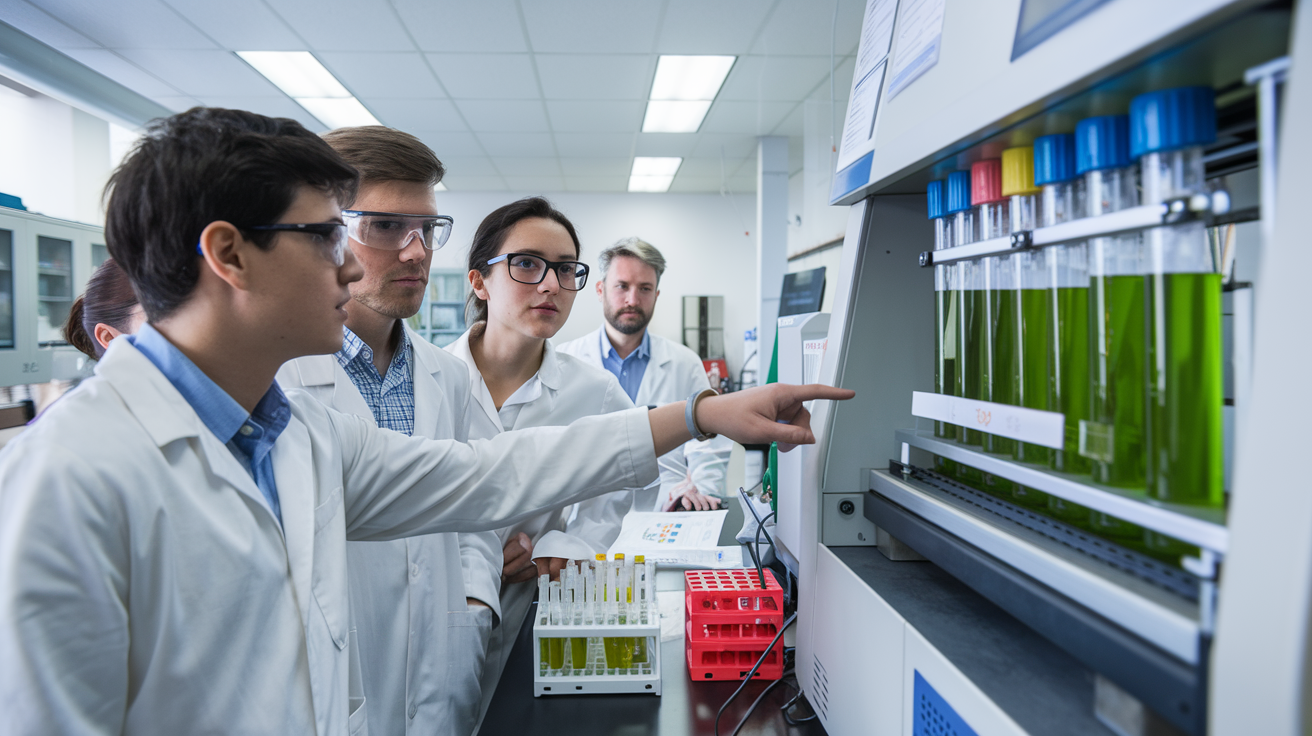
Researchers from CePeCAM Are at the Forefront of Creating a Clean Fuel That Can Transform the Global Energy Sector and Drive Sustainability.
The future of sustainable energy is closer than we think, and one of the institutions leading this movement is PUC-Rio. Researchers from the Advanced Research and Characterization Center for Materials (CePeCAM) at the Department of Chemical and Materials Engineering (Deqm) are developing an innovative method to produce green hydrogen, a clean fuel that can revolutionize the energy sector.
What Is Green Hydrogen and Why Is It So Important?
Green hydrogen is produced from processes that do not generate carbon emissions, being one of the most promising alternatives for the global energy transition. Unlike other types of hydrogen, such as gray and blue, green hydrogen is completely sustainable, contributing to the reduction of greenhouse gases and combating climate change.
In the case of PUC-Rio’s research, the fuel is generated through photocatalytic water dissociation, a process that uses light, preferably solar, to break down water molecules and release oxygen and hydrogen. This approach eliminates the need for fossil fuels or harmful chemicals, making the method even more eco-friendly.
-
Renewable energy advances over protected areas in Brazil, and a survey by the Energy Transition Observatory reveals silent impacts that challenge environmental conservation and pressure sensitive traditional territories.

-
Rio Grande do Sul accelerates energy transition: State invests in renewable technologies and consolidates decarbonization strategies and pathways to attract billions in new industrial investments.

-
With 160,000 m² of collectors, an area larger than 20 football fields, Silkeborg, in Denmark, hosts a solar thermal plant that heats 19,500 homes and could become the largest solar heating plant in the world.

-
A study reveals the expansion of renewable energy procurement in Brazil and shows how companies are taking advantage of opportunities to reduce expenses, ensure energy efficiency, and strengthen strategic environmental commitments.


The Technological Innovation Led by PUC-Rio
The highlight of the work done at PUC-Rio is the use of a unique nanomaterial, based on titanium dioxide (TiO2) decorated with nickel oxide (NiO) nanoclusters. According to Professor Bojan Marinkovic, the project coordinator, this is the first time this type of photocatalyst has been used in a green hydrogen generation system.
“The photocatalytic generation of green hydrogen is an innovative process that eliminates or significantly reduces CO2 emissions,” explains Marinkovic. Besides being efficient, the method is safe as it does not use chemical substances that could harm the environment or humans.
The initial results of this research have already been published in the International Journal of Hydrogen Energy, one of the most renowned journals in the field of sustainable energy. This reinforces the relevance of the work developed by the CePeCAM team, positioning PUC-Rio as one of the centers of excellence in clean fuel research.
How Does the Green Hydrogen Generation Process Work?
The method developed by PUC-Rio researchers uses light to activate the nanometric photocatalysts. These materials act as “facilitators,” helping break down water molecules into oxygen and hydrogen. Solar light, being abundant and renewable, is the primary energy source in this process, making it highly sustainable.
Moreover, the developed nanomaterial is capable of increasing the efficiency of the reaction, which may open doors to industrial and commercial applications in the future. The expectation is that the method will be scaled up to pilot plants, allowing its integration into large-scale energy processes.
Collaborations and Funding
The research is supported by important Brazilian institutions such as CNPq, CAPES, and FAPERJ, as well as international partnerships. One of the highlights is the collaboration with the Polytechnic University of Catalonia (UPC) in Spain, represented by Professor Jordi Llorca, who also actively participates in the project.
In addition to Marinkovic, other researchers from PUC-Rio play crucial roles in the initiative, such as Dr. Emanuel Pessanha, whose thesis was directly related to the project, and Dr. Khrissy Medeiros, who is part of the CePeCAM team. This multidisciplinary partnership is essential for the development of innovative and effective solutions.
The Future of Green Hydrogen at PUC-Rio
Currently, the CePeCAM team is testing new systems in the laboratory to make the nanophotocatalysts even more efficient. These advancements could enable the large-scale production of green hydrogen, integrating it into industrial and energy processes in a viable and sustainable manner.
The impact of this work goes beyond the academic realm. The production of clean fuels such as green hydrogen has the potential to transform entire sectors, from transportation to energy generation, drastically reducing dependency on fossil fuels.
Why Is This Research So Important?
The work of PUC-Rio is a clear example of how science and innovation can contribute to a more sustainable future. The production of green hydrogen is one of the most promising solutions to address the climate and energy challenges of the 21st century. In addition to reducing carbon emissions, this clean fuel can be integrated into various applications, from vehicle engines to industrial plants.
With the support of renowned institutions and a dedicated team of researchers, PUC-Rio is helping to place Brazil on the global map of renewable energy research. The future of green hydrogen is being shaped now, and the university is at the forefront of this journey.










-

Uma pessoa reagiu a isso.