





 Portuguese
  English
  Spanish
  4 min of reading
  0 comments


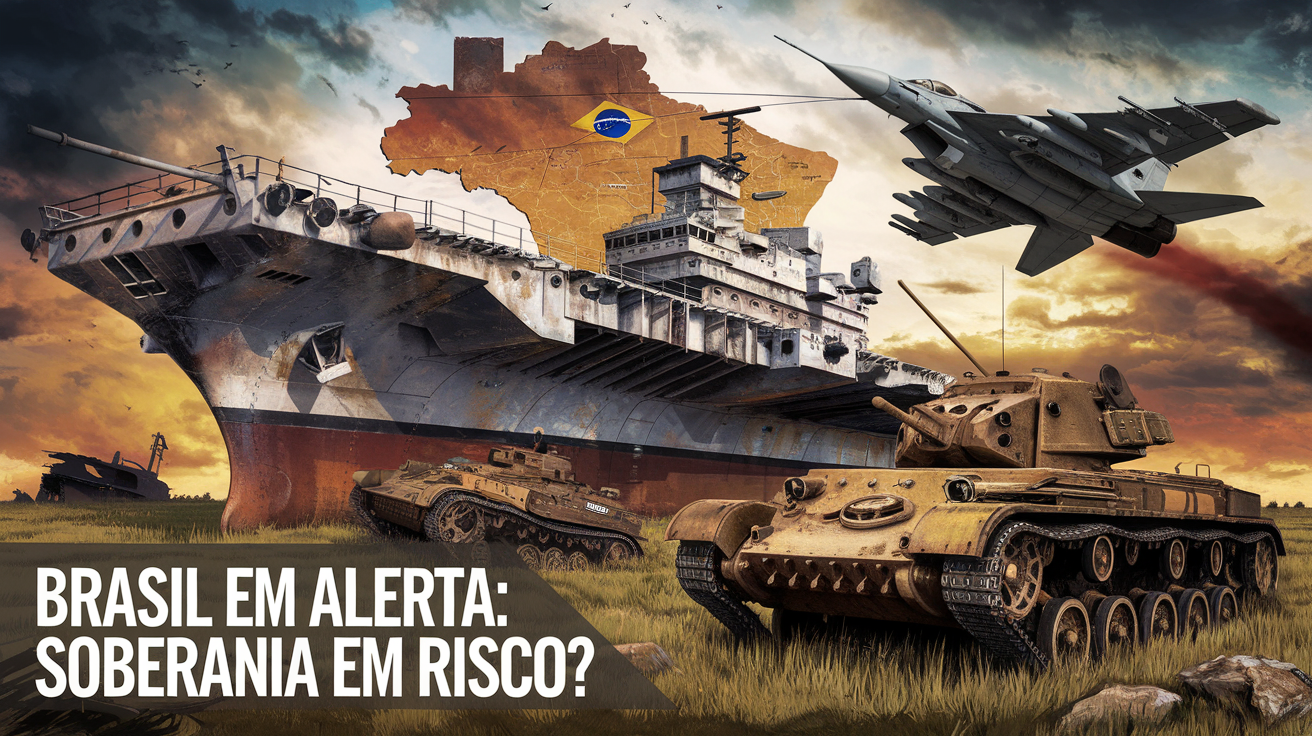
The Deterioration of the Brazilian Armed Forces Exposes Serious Structural Flaws. A Navy Lacking Sufficient Fleet, an Army with Obsolete Armored Vehicles, and an Air Force with Few Aircraft Leave Brazil Vulnerable in a War Scenario. Can the Country Defend Its Territorial Sovereignty?
In a country of continental dimensions, where vast territory should be synonymous with power and security, the reality of the Brazilian Armed Forces paints an alarming picture.
Behind the appearances of a peaceful nation lies an unsettling truth: Brazil may be unprepared to face a large-scale armed conflict.
Decades of controversial decisions, budget cuts, and poorly executed projects have led our military forces to a critical state.
-
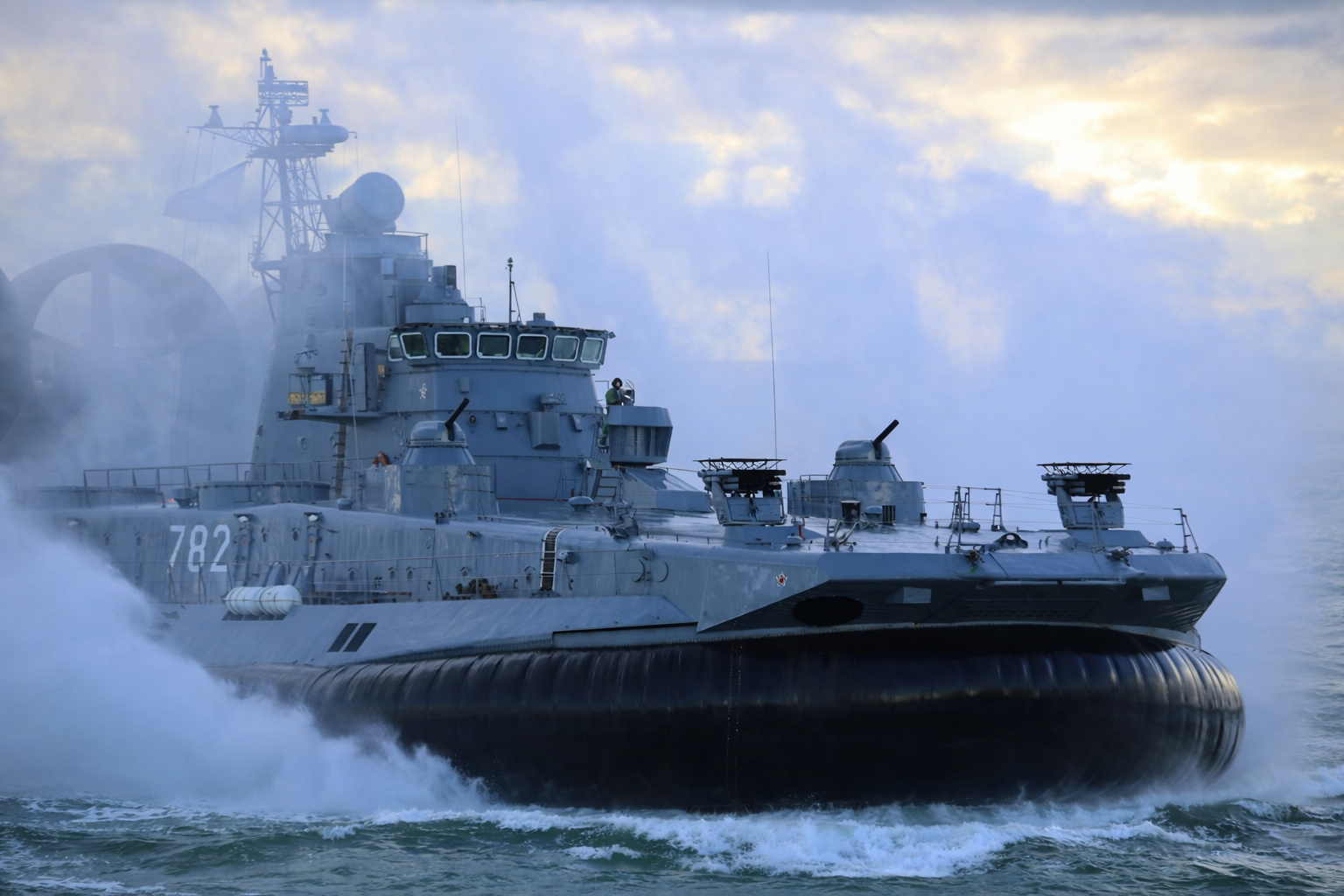
Classified as a “amphibious monster” weighing 555 tons, 57 meters long, and featuring three propellers with a diameter of 5.5 meters, the Zubr is the largest military hovercraft ever built, capable of transporting 3 tanks or 500 soldiers at speeds exceeding 100 km/h over water, ice, and sand, and China has resumed production of it to project power in the South China Sea.
-
The U.S. Army receives the first Black Hawk helicopter that can fly without pilots, be controlled by a tablet, and even land on its own during high-risk missions.

-
With 11,000 tons and sensors capable of hunting submarines at long distances, the Type 055 has become one of the most feared floating arsenals of the Chinese navy.

-
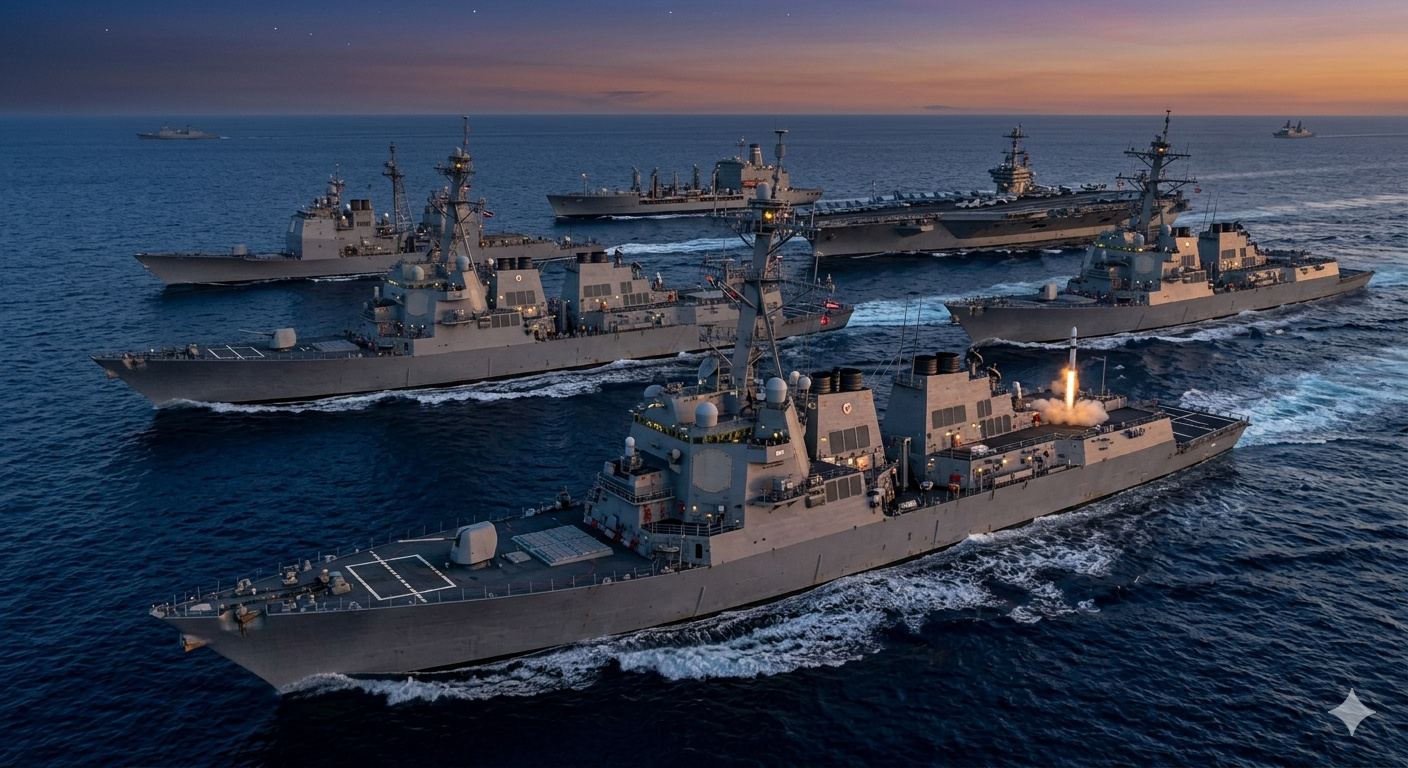
With over 15,000 tons, radars capable of tracking hundreds of targets simultaneously, and more than 120 missiles ready for launch in seconds, modern destroyers cease to be escorts and begin to dominate the naval battlefield.

According to Militant Society Magazine, analysts point out that the deterioration of the Brazilian Armed Forces becomes more evident each year.
With a territory of 8.5 million square kilometers, Brazil would not have sufficient armed forces to defend its own territory in the event of war.
Navy: An Rusty Giant
The Brazilian Navy, responsible for protecting one of the largest coastlines in the world, faces significant challenges.
Recently, it announced the retirement of 40% of its fleet, decommissioning nearly half of its vessels.
Among the remaining assets are the helicopter carrier Atlântico, the landing ship Bahia, and modern submarines in the integration phase.
However, experts consider these resources insufficient for adequate naval defense.
Strategic errors have also contributed to the current situation.
The acquisition of the aircraft carrier São Paulo, which became scrap without fulfilling its function, and investments in obsolete A-4 Skyhawk jets, out of production since the 1970s, are examples of poorly allocated resources.
According to specialists, in a current conflict scenario, a large part of the 80,000 Navy personnel would operate on land, supporting the Army, due to a lack of operational naval assets.
Air Force: Modern, but Insufficient
The Brazilian Air Force (FAB) is considered the most organized and technologically advanced of the country’s armed forces.
The acquisition of F-39 Gripen fighters, equipped with long-range Meteor missiles, along with aircraft like the KC-390 and the E-99, represents a significant advancement.
However, the limited quantity of these aircraft is a cause for concern.
Analysts suggest that Brazil would need at least 200 fighters and a larger fleet of transport aircraft like the KC-390 to ensure robust air defense.
Currently, the FAB does not reach these numbers, which overloads its operations.
The Gripen, for instance, accumulates interception, ground attack, and maritime patrol functions, compromising its efficiency.
Another critical point is the absence of medium- and long-range air defense systems.
Recent acquisitions have been limited to Gepard guns and RBS-70 and Igla systems, all of short range, unable to neutralize threats at high altitudes.
It is like trying to protect a house with short fences while the thief enters through the roof.
Army: The Deterioration of the Armored Force
The Brazilian Army faces serious structural problems, especially in its armored force. The main battle tanks, the Leopard 1A5, have been outdated for years.
Obtaining parts for maintenance has become a saga, as the model has not been produced for decades.
Additionally, the use of biodiesel in the engines, an attempt to reduce costs, has resulted in frequent breakdowns, worsening the situation.
The alternative would be to rely on light armored vehicles, such as the Cascavel and Guarani, which do not have the capability to face modern tanks in combat.
The scarcity of attack helicopters also leaves the armored vehicles more vulnerable.
These aircraft, equipped with cannons, anti-tank missiles, and rockets, are crucial for a defense strategy, but they are insufficient in Brazil.
Logistics is another serious problem. The reduction in the acquisition of KC-390 aircraft by the FAB hinders the rapid transportation of troops and equipment across the country, a fundamental task in a territory of continental dimensions.
Controversies and Lack of Planning
The current state of the Brazilian Armed Forces is not a matter of chance. Military management has been marked by questionable choices and a chronic dependence on insufficient budgets.
Expensive and prestigious projects have been prioritized but have proven to be impractical.
The case of the aircraft carrier São Paulo is emblematic: acquired as a symbol of power, it was never fully functional and ended up as scrap.
Similarly, the A-4 Skyhawk, purchased for the Naval Aviation, is obsolete and ineffective in a modern war scenario.
Furthermore, the political involvement of the Armed Forces in recent years has brought more criticism.
During the Bolsonaro government, military influence grew significantly, but it did not lead to improvements in troops or equipment.
The budget remained limited, and many question whether military presence in the government was utilized more for political purposes than to strengthen national defense.
In light of this scenario, it is evident that, in the event of conflict, Brazil would rely more on luck than on strategy to defend itself. And this, in the current context, is simply unacceptable.








-

-

2 pessoas reagiram a isso.