





 Português
  Inglês
  Espanhol
  4 min de leitura
  0 comentários


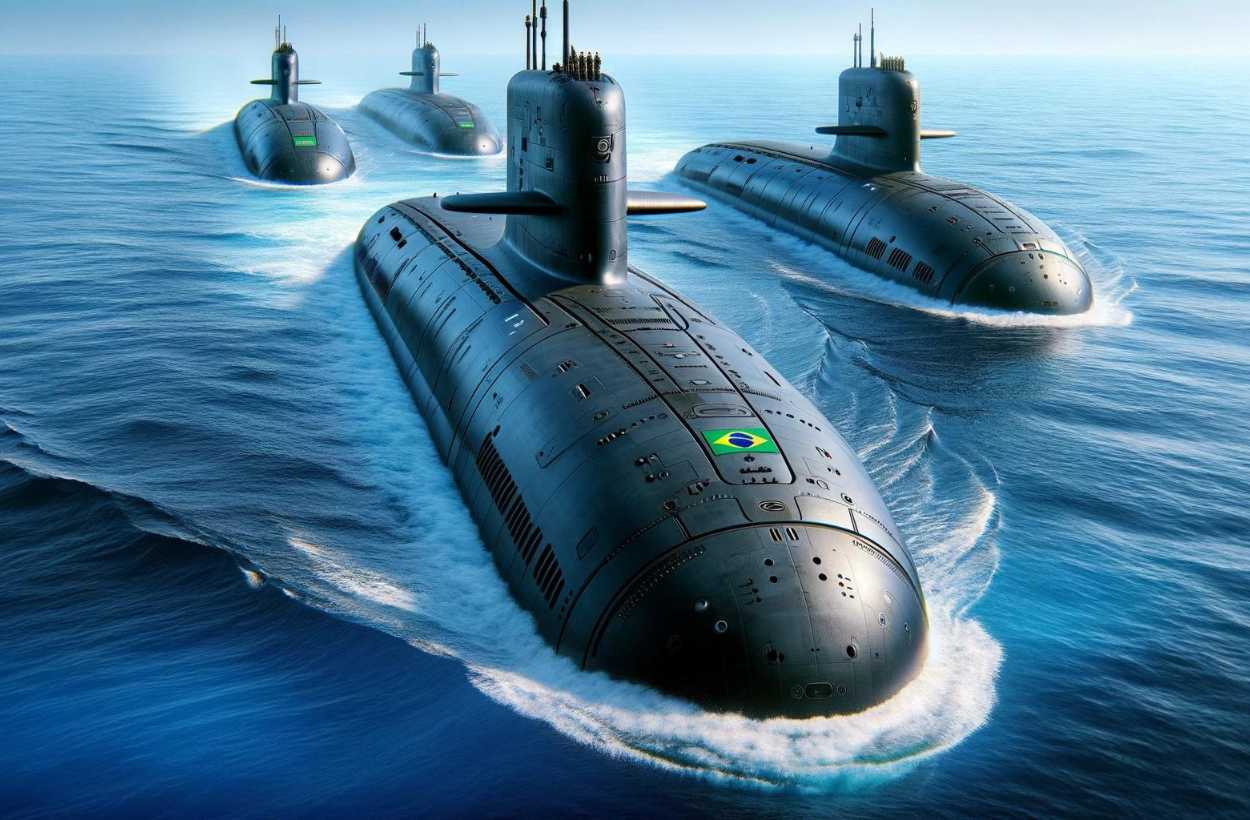
The Brazilian Navy, reinforcing its position as a naval power in Latin America, expands and modernizes its submarine fleet with new units of the Riachuelo class, facing challenges and planning for the future with nuclear submarines amid global competitive dynamics.
The Brazilian Navy, maintaining its tradition as a power naval power in Latin America, is in the process of revitalizing its submarine fleet. With the recent commissioning of the S-42 Toneleiro, the third of the Riachuelo class, and the launch of the S-41 Humaitá, the fleet expands to five operational units after the incorporation of the Tonelero.
This advancement comes after the controversial decommissioning of three submarines from the Tupi class, which had reduced Brazil’s operational capacity. The Toneleiro, still undergoing tests, promises to reinforce the fleet without major complications, due to the experience gained in building its predecessors.
The Brazilian Navy Already Has 4 Submarines
Despite the potential decommissioning of the Tupi submarine, the fleet already operates four submarines before the arrival of the S-43 Angostura. Currently, we have the S-30 Tupi, S-34 Tikuna, S-40 Riachuelo, and S-41 Humaitá. This year, the S-42 Tonelero was launched, which still needs to undergo tests and evaluations before being incorporated by the Brazilian Navy.
-
Historic bankruptcy of Centauro shocks the market, and the century-old company puts more than 500,000 products, machines, and complete infrastructure up for online auction.

-
New shoe factory in Ceará is expected to create 400 jobs and strengthen the local economy.

-
No one imagined it, but a mixture of sawdust with a mineral that fights fires surprises scientists with a result that changes the course of fire-resistant construction.

-
From empty land to a high-end house, wooden construction uses a lightweight system, metal structure for the foundation, ventilated ceramic cladding, and special windows to create an efficient and comfortable living space throughout the year.


This scenario underscores the strategic importance of maintaining at least five submarines for Brazil’s coastal security, reiterating the vital role of these vessels in the Navy since the early 20th century. The regional comparison highlights the Brazilian Navy against its neighboring navies, Chilean and Peruvian, with a more advanced and capable fleet. Internationally, Brazil stands on par with Sweden and surpasses Norway, Germany, and Australia in terms of submarine capacity.
The planning includes a move towards nuclear-powered submarines, consolidating Brazil’s position as a naval leader in the region. This fleet renewal, marked by ups and downs, symbolizes a new period of growth and modernization, highlighting the Brazilian Navy as a substantial force in the global naval landscape.
However, the Navy Plans to Retire Two Submarines
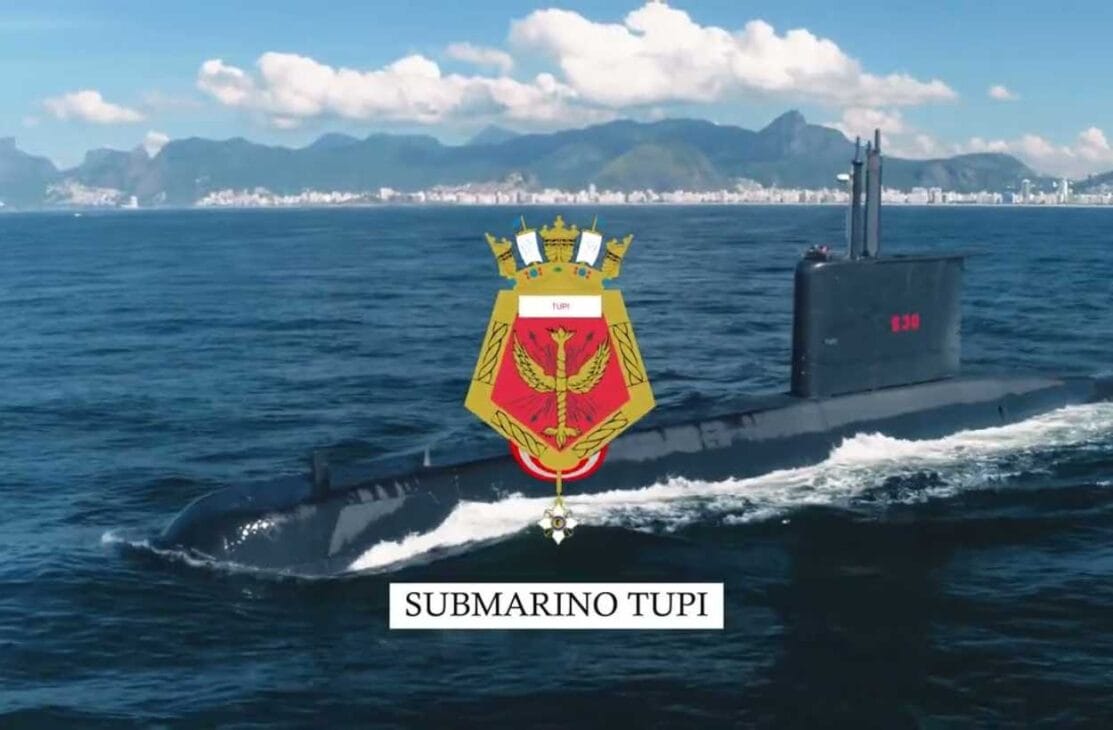
The Brazilian Navy plans to retire the Tupi submarine and, eventually, the Tikuna, as it advances in modernizing and expanding its fleet with new units of the Riachuelo class. The Tupi submarine is slated for retirement due to its service life and wear, making it less operational and efficient compared to the new units of the Riachuelo class.
Although the Tikuna is more modern, it will eventually undergo a similar process as the Brazilian Navy seeks to modernize its fleet with more technologically advanced submarines capable of meeting current and future maritime security demands.
S-43 Angostura Will Be Launched in 2025
The S-43 Angostura is the fourth submarine of the Riachuelo class, being part of a modernization and expansion project for the Brazilian submarine fleet. This class of submarines, developed in collaboration with France, represents a significant leap in technology and capability for the Brazilian Navy. The Angostura, like its class siblings, is designed to improve coastal defense, surveillance of Brazil’s vast maritime borders, and to carry out reconnaissance, search, and rescue missions.
The S-43 Angostura, following the standard of its predecessors, is expected to have advanced capabilities in anti-submarine and anti-surface warfare, incorporating modern technology in sonar, communication systems, and propulsion. The introduction of this submarine into the Brazilian fleet is set for 2025, according to reports, and is an important step to maintain and reinforce Brazil’s naval presence in the South American region, contributing to national and regional maritime security.
Besides These, the Brazilian Navy Plans to Build a Nuclear Submarine
The Brazilian nuclear submarine, named SN-10 Álvaro Alberto, represents a significant milestone for the Brazilian Navy, as it will be the first of its fleet with nuclear propulsion. This project places Brazil in the select group of countries capable of building and operating nuclear submarines, showcasing a considerable technological and strategic advancement.
The Álvaro Alberto is part of Brazil’s Submarine Development Program (PROSUB), a collaboration between Brazil and France that aims not only at the construction of conventional submarines, but also at developing nuclear capabilities. Nuclear propulsion offers significant advantages, such as greater navigation autonomy, the ability to remain submerged for much longer periods, and greater speed compared to conventional submarines.










-

-

2 pessoas reagiram a isso.