





 Portuguese
  English
  Spanish
  3 min of reading
  1 comment





From The Jesuit School in The 16th Century to The National System Created by Getúlio Vargas, The History of The First High School in Brazil Is A Journey of Centuries That Reflects The Formation of The Country Itself.
The quest for the first high school in Brazil takes us on a journey through time, long before the term “high school” existed. Secondary education in the country did not emerge from a single act, but evolved in stages, each with its own milestones and objectives, reflecting the transformations of Brazilian society.
From the seed planted by the Jesuits in the colony, through the elite model created by the Empire with the Pedro II School, to the first national structure defined in the Vargas Era, the trajectory of secondary education is the story of how Brazil formed its elites and structured its educational system. It was a long and arduous path, where the idea of simply buying a high school diploma was non-existent, and academic merit was the only way to social ascension.
The Seed of Education: The Jesuit Teaching in The 16th Century
The first form of secondary education in Brazilian lands was implemented by the Jesuit priests, who arrived in the country in 1549. The education was focused on the precepts of the Catholic Church and was aimed exclusively at the training of the colonial male elite.
-
A couple buys an old chalet, breaks the kitchen floor for renovation, and finds over a thousand coins of gold and silver hidden since the English Civil War over 4 centuries ago.
-
Rigid bags with their days numbered: new trend prioritizes comfort in 2026.

-
YouTuber creates an excavator equipped with a giant 4.5-meter sword to challenge his brother to a rematch, and the invention quickly goes viral on social media.

-
The U.S. Army surprises the world by presenting the UH-60MX Black Hawk helicopter capable of flying without pilots, controlled by a tablet, featuring the MATRIX system, smart sensors, and full autonomy in real combat and rescue missions.


The curriculum, based on the Jesuit study plan Ratio Studiorum, was humanistic and included Latin, Greek, rhetoric, and philosophy. The Meninos de Jesus School in Salvador (BA), founded shortly after the Jesuits arrived, is considered the first educational institution in Brazil and the embryo of this secondary education.
The Empire Model: The Creation of The Pedro II School in 1837
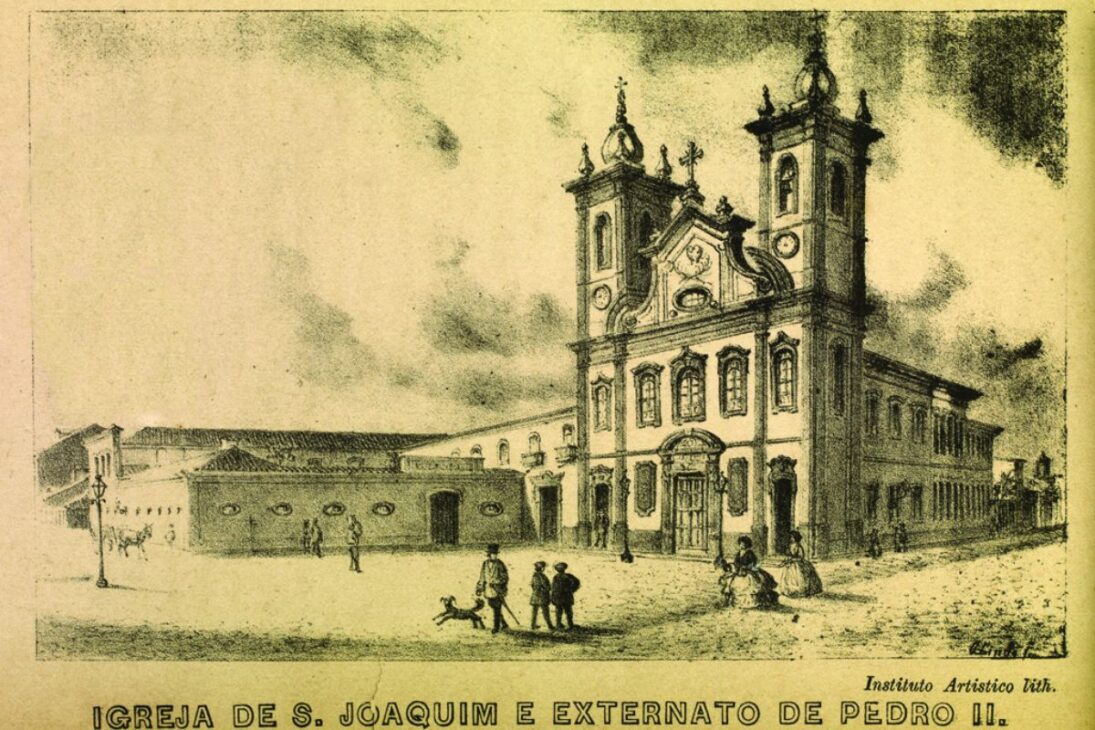
After the expulsion of the Jesuits in 1759, education in Brazil became disorganized. The significant next milestone, and what can be considered the first national model of secondary education, was the creation of the Pedro II School in Rio de Janeiro on December 2, 1837.
Founded to be the standard of excellence for all other schools in the Empire, the Pedro II School had a preparatory curriculum for higher education. Its study program was comprehensive, including languages, humanities, sciences, and mathematics. It consolidated an elitist secondary education model that served as a passport for universities and high society positions.
The First National Structure: The Capanema Reform of 1942
It was only in the 20th century, during Getúlio Vargas’s Estado Novo, that the first high school in Brazil gained a systemic organization at the national level. The Capanema Reform, implemented by Decree-Law No. 4,244 of April 9, 1942, structured secondary education into two cycles:
- 1st Cycle – Gymnasium: Lasting four years, it corresponded to what are today the final years of Elementary Education.
- 2nd Cycle – Collegiate: Lasting three years, it was divided into two modalities: the Classical, focused on humanities, and the Scientific, with an emphasis on mathematics and biological sciences.
The Evolution of Names: From Gymnasium and Collegiate to High School
The structure created by the Capanema Reform lasted for decades, but the names changed. In 1971, a new law unified the cycles, and secondary education began to be called “2nd Degree Education”.
The term “High School”, as we know it today, was only consolidated with the new Law of Guidelines and Bases of Education (LDB), promulgated in 1996.
The Three Milestones of The First High School in Brazil
The history of the first high school in Brazil does not have a single starting point, but three fundamental milestones:
- The Seed (16th Century): The Jesuits implemented the first model of secondary education.
- The Standard (1837): The Pedro II School created the first national excellence model.
- The System (1942): The Capanema Reform established the first unified structure for the entire country.







Talvez o primeiro colégio de ensino médio do Brasil tenha sido o Colégio do Caraça, que começou a funcionar em 1820. Inclusive, a grade curricular do Pedro II foi implantada pelos padres lazaristas do Caraça.