





 Português
  Inglês
  Espanhol
  4 min de leitura
  12 comentários


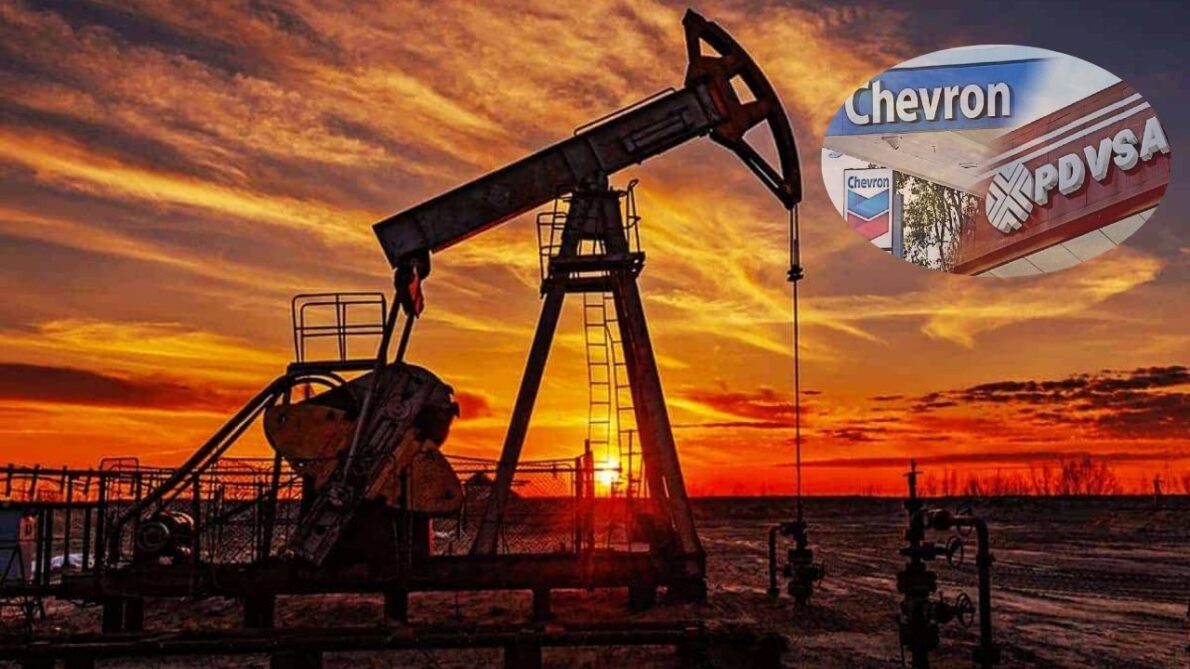


Chevron and PDVSA Activate First Well in the Orinoco Oil Belt, with 279 Billion Barrels, Highlighting That Oil Profits Exceed U.S. Sanctions
The collaboration between American oil giant Chevron and Venezuelan state-owned PDVSA is beginning to bear fruit. Petroindependencia, which is the joint venture with operations from PDVSA and Chevron, activated the first of 17 new generation oil wells planned to be installed this year as part of the ‘2024 Drilling Plan,’ according to a press release from the Venezuelan state company released this Wednesday.
Petróleos de Venezuela (PDVSA) is trying to revive the production of the Caribbean country with the help of a private oil giant like Chevron. The plan aims to end the decline of the Venezuelan oil industry, which used to easily produce more than two million barrels daily in the early 2000s. Now, Venezuela struggles to reach 800,000 barrels per day.
Last February, operations began in the Orinoco Oil Belt – a vast area in the east of the country that houses its largest oil reserves – in compliance with the “operational plan outlined by the joint venture,” one of the steps to increase national oil production, according to PDVSA.
-
Offshore industrial demand in Macaé skyrockets with the recovery of oil and gas and could grow by up to 396% by 2026 in the Campos Basin.
-
Offshore industrial demand in Macaé surges with the recovery of oil and gas and could grow by up to 396% by 2026 in the Campos Basin.
-
Brazilian giant expands borders in the Southeast: Petrobras confirms new oil discovery in ultra-deep waters in the pre-salt of the Campos Basin.

-
Alert in the global energy market: Severe tropical cyclone hits the coast and disrupts gas production at major plants in Australia, threatening global supply.


Venezuela and the Orinoco Oil Belt (FPO).
It is well known that Venezuela is the country with the largest proven oil reserves in the world. Proven reserves are those quantities of oil estimated to be recoverable at present, both commercially and technically, with reasonable certainty. Venezuela’s proven oil reserves total 300.878 billion barrels, the largest in the world. However, intriguingly, 90% of these reserves are located in this large strip of land known as the Orinoco Oil Belt (FPO).
In the Orinoco Oil Belt (FPO), 279.117 billion barrels of oil are housed. To understand the magnitude of the oil quantity in the FPO, one need only refer to the official proven reserves data from Saudi Arabia for comparison. The world’s largest oil exporter (Saudi Arabia) has proven reserves of 266.000 billion barrels underground. For instance, the U.S. barely reaches 40.000 billion barrels, despite being the largest producer in the world. The FPO vastly exceeds these numbers.
The U.S. Geological Survey explained in a report on the area that the part that actually contains large amounts of hydrocarbons covers approximately 50,000 km2 of the Eastern Basin Province of Venezuela and has hundreds of billions of barrels of oil, although the recoverable amount is the 279.000 billion mentioned earlier, which are the proven reserves.
The First Oil Well of Chevron and PDVSA
In this sense, it was explained that the activation of the well represents “an important milestone for the increase of production of this joint venture” and “reaffirms the commitment to drive the revival of the main industry of the Caribbean nation,” whose oil production grew by 9.3% last year compared to 2022, averaging 783,000 barrels per day (bpd).
“The CMI14 well is the first new generation well among the 17 planned in this year’s business plan“, the company stated. These new generation oil wells use higher technology, are more efficient, reduce the risk of spills, and, above all, have the ability to extract a larger percentage of the oil reserves through different systems, sometimes going beyond conventional vertical drilling.
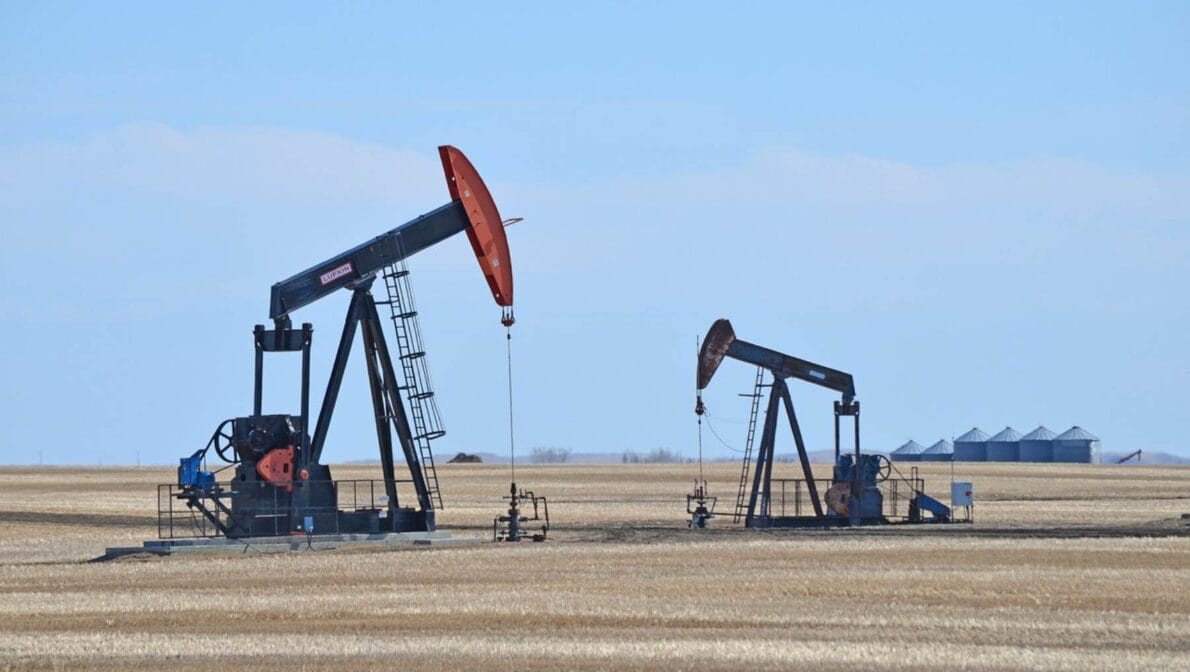
Venezuela seeks the knowledge and technology of a leading company in the sector, like Chevron, to revive oil production that once made it the largest producer in South America. Currently, the oil throne in this region undoubtedly belongs to Brazil, which, with its deepwater oil production, is pumping more than 3 million barrels of oil per day.
Information about Petroindependencia’s plan is known as there are only a few days left until the expiration of the sanctions relief granted by the U.S. to Venezuela, including for oil and gas, which began in October last year and ends on April 18, as part of the “incentives” that, according to Washington, were given for the Caribbean country to hold “competitive” presidential elections in July.
In the last nearly six months, Venezuela has expanded its international cooperation in the energy sector, signing agreements with Spain’s Repsol, France’s Maurel & Prom, and Mexico’s Pemex, among others. The joint operations between PDVSA and Chevron began months before this relief, in late 2022, after the U.S. granted a license to the American company in November of that year to resume operations with Caracas.










Países não tem amizades, países tem interesses. Os Estados Unidos vão continuar aliviando as sanções contra a Venezuela por conta do petróleo e continuarão fingindo que não gostam do Maduro. O mundo sofre de uma pandemia de hipocrisia.
A sensação que passa é que o atual governo não faz força para extrair o petróleo na margem equatorial. Geraria muitos empregos, diretos e indiretos na região. Geraria mais arrecadação de impostos e royalties para a região.
Diminuindo o apoio do “governo” em bolsa família e similares.
Resumindo o Brasil só ganharia.
No vale do jequitinhonha(mg) foi feito estudos que revelaram reservas de gás e petróleo e no Interior do Piauí também.ai eu pergunto! É mais barato prospectar of shore ou on shore. Até isso tem política braba?