





 Portuguese
  English
  Spanish
  4 min of reading
  0 comments


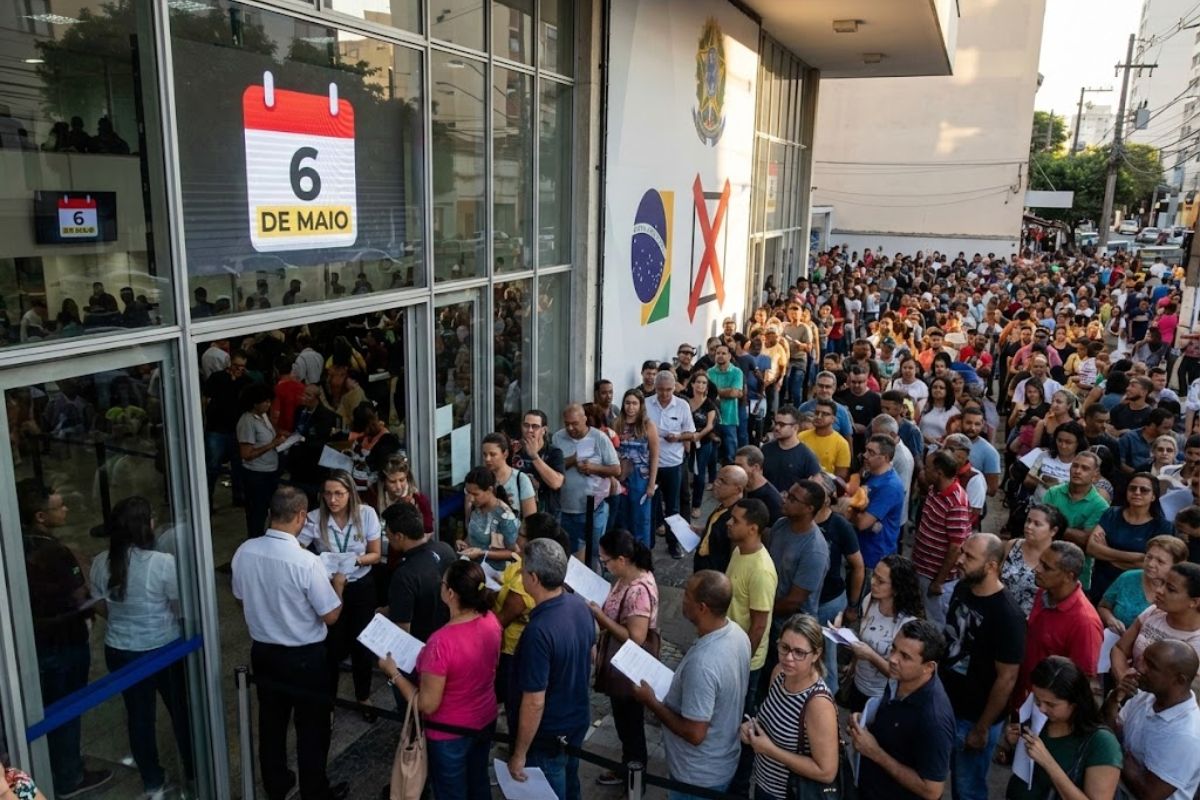
Voter Registration Must Be Regularized by May 6, 2026, When Voter Registration Closes by Law 150 Days Before the First Round on October 4. Those Who Wait Until the Last Minute Face Lines at Notaries, Use TSE Portal and e-Título, and Can Still Pay Fines Today
The Voter Registration is counting down to the 2026 elections in Brazil: voters with outstanding issues with the Electoral Court have until May 6, 2026 to regularize their situation and ensure participation in the polls. The regularization covers everything from obtaining the first voter registration to seemingly simple data adjustments that block the system when the deadline ends.
After the deadline, voter registration is closed and no modifications or updates can be made until the end of the election process, which increases the risk of queues and delays in the final days. The rule follows the Election Law, Law No. 9,504/1997, which determines the closure of registration 150 days before the first round, scheduled for October 4.
Why May 6 Is the Definitive Cut-Off Before the 2026 Elections
The May 6, 2026 deadline is the limit for regularizing outstanding issues because it marks the closure of voter registration in the election year. From this closure, any need for adjustment is blocked, including data changes and transfers, precisely during the period when many try to resolve everything at once.
-
Piauí will produce a new fuel that replaces diesel without needing to change anything in the truck’s engine and reduces pollutant gas emissions by half: truck drivers from all over the Northeast are already celebrating the news that will arrive later this decade.

-
A new Brazilian shopping center worth R$ 400 million will be built in an area equivalent to more than 4 football fields, featuring 90 stores, 5 cinemas, a supermarket, a college, and parking for 1,700 cars, potentially generating 3,000 jobs.

-
Larger than entire cities in Brazil: BYD is building a 4.6 km² complex in Bahia with a capacity for 600,000 vehicles per year, but the discovery of 163 workers in conditions analogous to slavery has shaken the entire project.

-
With an investment of R$ 612 million, a capacity to process 1.2 million liters of milk per day, Piracanjuba inaugurates a mega cheese factory that increases national production, reduces dependence on imports, and repositions Brazil on the global dairy map.


This cut-off is especially sensitive because common services depend on active registration. Those who need to obtain their first voter registration, transfer their electoral domicile, or update personal data must complete everything before the deadline, without relying on exceptions, as the system becomes unavailable for changes until the end of the electoral process.
What Can Be Resolved and What Usually Causes Issues
The regularization of the Voter Registration involves three main fronts: obtaining the first registration, transferring electoral domicile, and updating personal data. These routes serve both those starting their electoral life and those who have changed cities, changed registration information, or need to correct inconsistencies.
Moreover, checking for outstanding issues is a decisive step to avoid surprises close to the registration deadline. Prior consultation reduces the risk of going to the service center and discovering a block, especially when there is a fine for unjustified absence in previous elections.
Where to Check and What Channels Are Available
Before any request, the practical guidance is to check the status of the Voter Registration. This check can be done through the self-service on the TSE website, via the e-Título app, or in person at an electoral notary.
If there is an outstanding issue, regularization can occur online, with the completion of forms and submission of the necessary documentation. When applicable fines exist, the payment also needs to be resolved within the process to complete the regularization and free the electoral situation.
Lines, Unexpected Events, and Why Waiting Until the End Increases Risk
The proximity of the final deadline often increases demand at electoral notaries, and this tends to pressure service just when each lost attempt could cost days. In the final days, lines and unexpected delays increase, and the risk is not concluding in time, leaving one unable to adjust their registration even after the election.
The Electoral Court emphasizes that access to services is free, but this does not eliminate consequences in the event of irregularities. Fines may be applied for unjustified absence in previous elections, and an accumulation of outstanding issues can block regularization if not resolved in advance.
What Happens to Those Who Remain Irregular Besides Not Voting
Keeping the Voter Registration irregular affects more than just voting. A regularized situation avoids a series of civil restrictions that can become problematic in everyday life and in important decisions of the year.
Among the consequences mentioned are the inability to obtain a passport, enroll in public educational institutions, and hold public office through competitions. Regularization by May 6, 2026 is the way to avoid blocks and headaches with the Electoral Court during the election cycle in October.
The Voter Registration must be regular by May 6, 2026, because the registration closes and prevents any changes until the end of the elections, following the rule of 150 days before the first round on October 4, as stipulated in Law No. 9,504/1997. With inquiries through TSE, e-Título, or notary, free services and potential fines for previous absences, the message is clear: delaying increases lines and risks of civil restrictions.
Have you checked your Voter Registration status today, or will you wait until close to May 6 and face the chance of lines and blocking?









Seja o primeiro a reagir!