





 Portuguese
  English
  Spanish
  4 min of reading
  0 comments


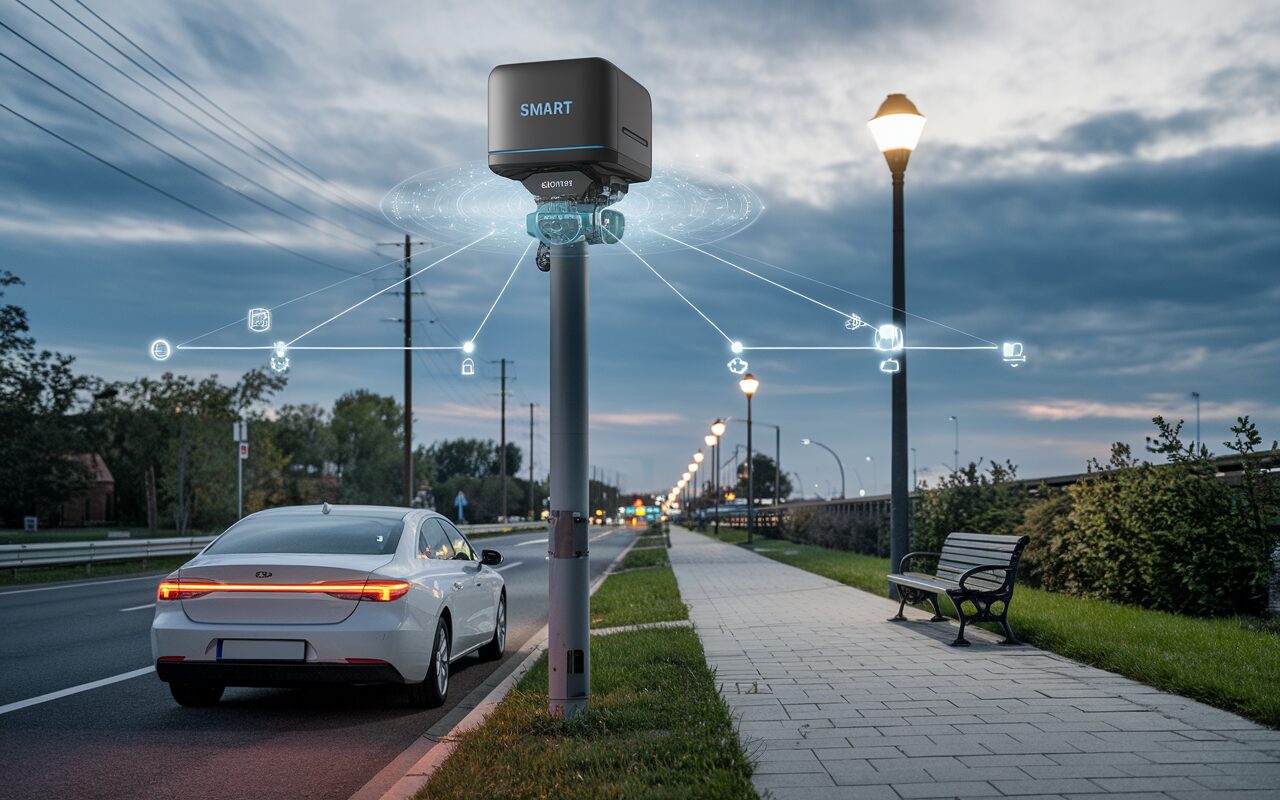
New Enforcement Technology Goes Beyond Speed and May Transform Traffic Violation Combating Worldwide, but Initially It Is Available Only in the United Kingdom.
Urban traffic may gain a significant ally in the coming years: an AI radar capable of detecting violations such as phone use while driving, lack of seat belts, and even irregular transportation of children. The innovation was recently tested in the United Kingdom and promises to change how authorities monitor and penalize risky behaviors on streets and highways.
Unlike traditional radars, which are limited to measuring vehicle speed, the new system utilizes high-precision cameras integrated with artificial intelligence algorithms to identify multiple violations simultaneously. The goal is to increase road safety, reduce accidents, and expand enforcement reach at strategic points in cities.
How the New AI Radar That Detects Multiple Violations Works
The new AI radar operates by combining high-definition cameras and advanced pattern recognition algorithms. Instead of just measuring speed, it analyzes in real-time the interior of vehicles, capturing images that indicate whether the driver is committing violations.
-
OMODA & JAECOO grows in Europe in 2026 with an integrated strategy of sales, innovation, local production, and technological advancement in the United Kingdom, Italy, and Spain.

-
OMODA & JAECOO expands after-sales service in Brazil with competitive maintenance, a 7-year warranty, and high availability of parts for technological SUVs.

-
OMODA & JAECOO appoints Alessandra Souza as executive marketing director in Brazil and accelerates brand expansion with a focus on innovation, networking, and hybrid portfolio.

-
Jaecoo 7 with super hybrid SHS system exceeds 1,200 km of combined range with a 1.5 turbo engine, high-density battery, and intelligent energy management.


Among the detectable behaviors are:
- Phone Use while driving, whether for calls, messages, or navigation in apps.
- Seat Belt Violation by the driver and passengers.
- Transporting Children in the front seat improperly or without an appropriate child seat.
- Handling Objects that may compromise safe driving.
The system can operate in any lighting and weather condition, using infrared sensors and high-resolution cameras. After capturing images, a human operator reviews to confirm the infractions detected automatically, ensuring the legal validity of penalties.
Test Results Indicate Surprising Effectiveness
During tests conducted in the United Kingdom in 2024, the new AI radar analyzed thousands of vehicles and recorded more than 800 violations in just a few days of operation. Most fines issued were related to phone use while driving and the lack of seat belt use.
These results impressed local traffic authorities, who saw the system as a powerful tool to increase compliance with laws and reduce the number of accidents caused by irresponsible behaviors.
The expectation is that the intelligent radar will start being officially used in the United Kingdom by 2025, with expansion planned for other regions of Europe and, in the future, for North America, Asia, and Latin America.
Phone Use and Lack of Seat Belts: Two Major Traffic Villains
According to data from the World Health Organization (WHO), phone use while driving increases the risk of serious accidents by up to four times. The distraction caused by interacting with the device compromises reflexes, risk perception, and reaction time, all critical factors for road safety.
The absence of seat belts remains one of the leading causes of fatalities in collisions, even in countries with strict laws. Statistics show that proper seat belt use can reduce the risk of death by up to 50% for drivers and 75% for rear-seat passengers.
In light of this scenario, the new AI radar emerges as a technological response to combat behaviors that have until now depended almost exclusively on in-person enforcement.
Artificial Intelligence Revolutionizes Traffic Enforcement
The application of artificial intelligence in traffic violation enforcement represents a significant advancement from traditional methods. The system can process a much larger volume of information in real-time, with greater accuracy and less margin for human error.
Additionally, the technology allows for:
- Continuous Coverage: AI radars can operate 24 hours a day, 7 days a week, without the need for breaks.
- Resource Optimization: reduces the need for constant physical patrols in low-risk areas.
- Increased Sense of Enforcement: drivers are likely to adopt safer behaviors knowing they are being monitored intelligently.
However, experts warn that the implementation of systems such as the AI radar must respect data protection laws and individual rights, ensuring that drivers’ privacy is preserved.
Future of Enforcement: More Technology and Less Tolerance for Risky Behaviors with the Arrival of the AI Radar
The trend is that in the coming years, the use of AI radars to detect phone use, lack of seat belts, and other violations will become standard in various parts of the world. Countries such as Australia, Canada, and the United States are already testing similar solutions.
In Brazil, the implementation of intelligent technologies in traffic enforcement is also advancing, although deployment still depends on specific regulations and adequate infrastructure.
The use of smarter systems promises not only to issue fines more efficiently but also to save lives, directly addressing the prevention of accidents that currently cost billions of reais to public coffers in healthcare and economic losses.
AI Radar: Summary of the Innovative Technology
| Feature | Details |
|---|---|
| System Name | Intelligent AI Radar for Traffic |
| Main Functions | Detect Speed, Phone Use, Seat Belt Violation |
| Technology Used | Artificial Intelligence + High-Resolution Cameras |
| Operation | 24/7, Subsequent Human Review |
| Testing Location | United Kingdom |
| Main Violations Detected | Phone Use, Seat Belt Absence, Irregular Child Transportation |
| Planned Expansion | United Kingdom, Europe, North America, Asia, and Latin America |










Seja o primeiro a reagir!