





 Portuguese
  English
  Spanish
  3 min of reading
  0 comments


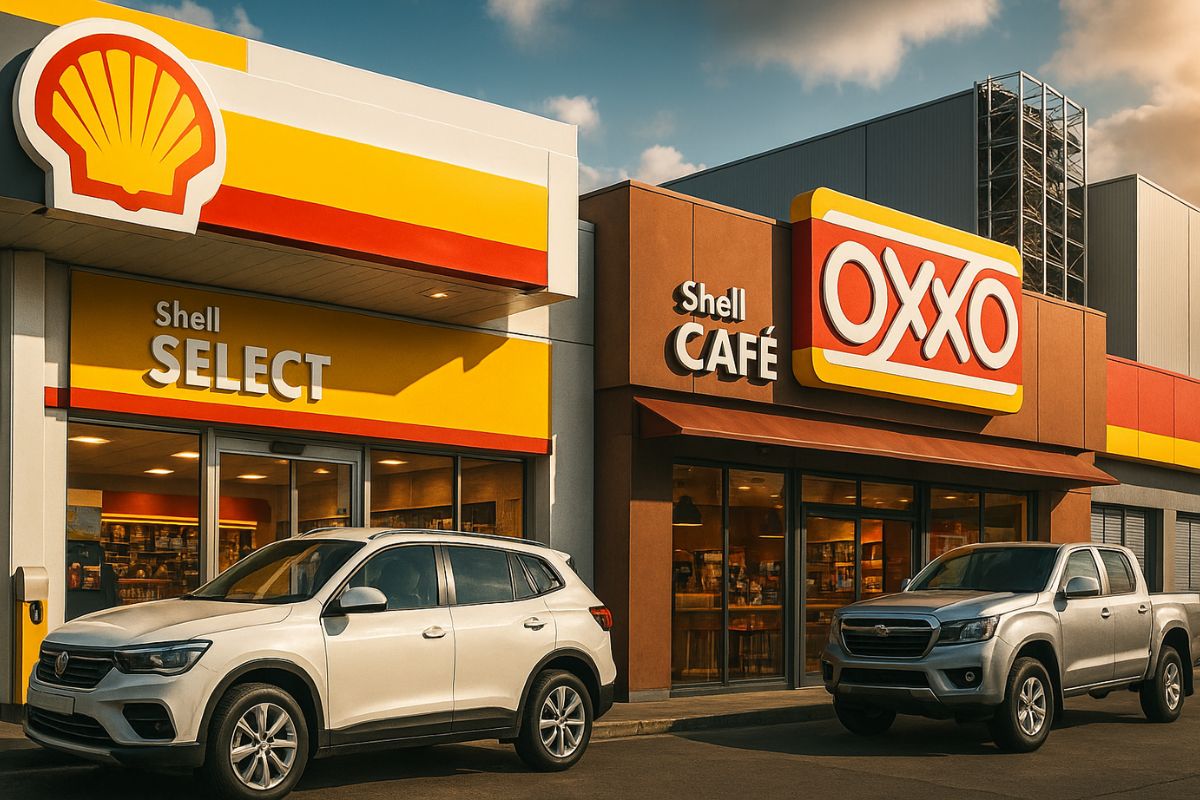
Raízen Takes Over 1,256 Shell Select and Shell Café Stores; FEMSA Retains 611 OXXO and Distribution Center in Cajamar
The restructuring marks the end of the joint venture Grupo Nós, formed in 2019 between Raízen and FEMSA to explore the convenience market in Brazil. The agreement divides the assets and reposition the two companies in strategic areas, opening up space for direct competition in the coming years.
What Changes With the Asset Division
According to the G1 portal, Raízen, a producer of sugar, ethanol, and energy, will maintain control over 1,256 Shell Select and Shell Café stores, which remain integrated into its network of fuel stations.
The company stated that the franchise model will be strengthened, aligned with its Shell integrated offer strategy, which combines fuels, convenience, and financial services in a single ecosystem.
-
Offshore industrial demand in Macaé skyrockets with the recovery of oil and gas and could grow by up to 396% by 2026 in the Campos Basin.
-
Offshore industrial demand in Macaé surges with the recovery of oil and gas and could grow by up to 396% by 2026 in the Campos Basin.
-
Brazilian giant expands borders in the Southeast: Petrobras confirms new oil discovery in ultra-deep waters in the pre-salt of the Campos Basin.

-
Alert in the global energy market: Severe tropical cyclone hits the coast and disrupts gas production at major plants in Australia, threatening global supply.


On the other hand, FEMSA, a Mexican multinational known for being the largest Coca-Cola bottler in Latin America and owner of the OXXO chain, will retain 611 OXXO markets in Brazil, as well as the distribution center in Cajamar (SP).
The company will also take on the available cash and debts of Grupo Nós, reinforcing its focus on expansion in the Brazilian retail sector.
Distinct Growth Strategies
According to José Antonio Fernández Garza, General Director of FEMSA Retail, OXXO Brazil will now be treated as a “strategic priority”, focusing on accelerating expansion and consolidation in the national market.
The expectation is that the brand will quickly expand its presence in large urban centers, leveraging its successful experience in Mexico.
Meanwhile, Raízen justified its decision as part of a process of portfolio recycling and simplification, prioritizing core businesses like renewable energy and fuels, as well as strengthening its already established convenience network alongside Shell stations.
Cade and Impacts on the Brazilian Market
Despite the announcement, the operation still requires the approval of the Administrative Council for Economic Defense (Cade), which will analyze the competitive impacts.
If approved, the convenience sector in Brazil will be dominated by two distinct poles: Raízen with Shell Select and Shell Café stores and FEMSA with the OXXO network.
Experts point out that this movement tends to increase competitiveness, as both brands have aggressive growth plans.
For consumers, the result may be greater diversity of services and promotions in the convenience sector, as well as investments in technology and logistics.
The end of the joint venture and the new asset division reinforce the rivalry between Raízen and FEMSA in the convenience retail sector in Brazil.
While one bets on integrating services at fuel stations, the other focuses on expanding neighborhood supermarkets in an independent model.
And you, do you believe that OXXO’s stronger entry will change Brazilian consumption habits, or will Raízen continue to lead in the convenience segment linked to gas stations?
Leave your opinion in the comments — we want to hear from those who live this reality every day.










Seja o primeiro a reagir!