





 Portuguese
  English
  Spanish
  5 min of reading
  0 comments


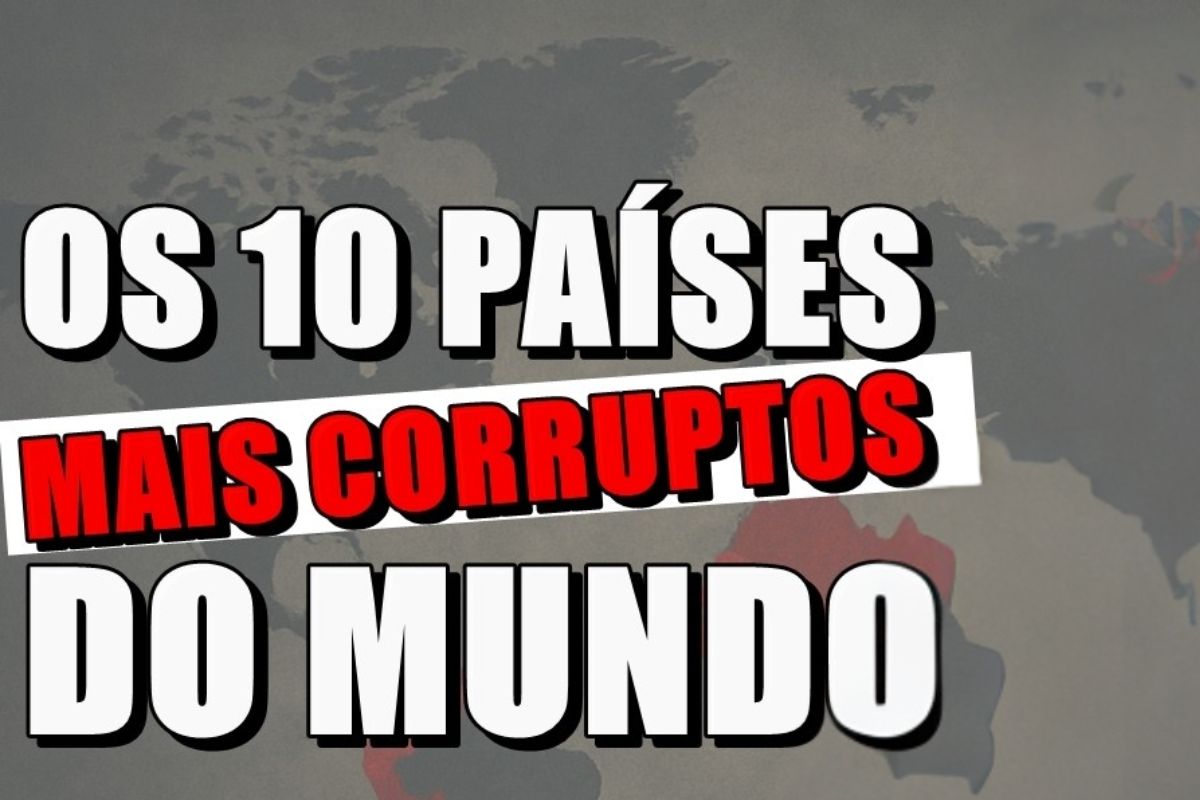
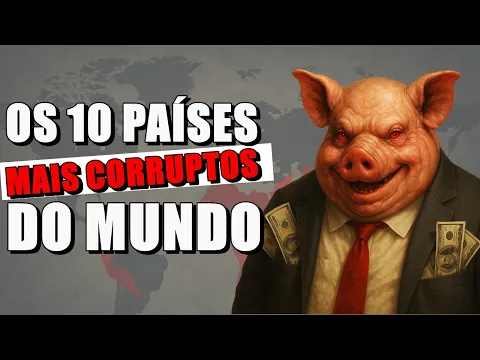
Report Highlights The 10 Most Corrupt Countries In The World And Records Brazil’s Worst Result Since The Beginning Of The Historical Series.
The new international corruption perception ranking presented a harsh picture: the list of the most corrupt countries in the world remained dominated by nations in institutional collapse, and Brazil achieved its worst score and ranking since the beginning of the series, raising a red flag about the weakening of controls and the escalation of impunity. The lower the score, the higher the perception of corruption, and the snapshot for 2024 was particularly negative for the country.
Although the Brazilian government criticizes the methodology based on specialized perceptions, the fact is that the trend of the indicator has deteriorated, while the positive top remains with Denmark, Finland, and Singapore. In South America, Uruguay stands out, reinforcing that strong institutions and transparency go hand in hand with better positions in a ranking that compares 180 countries.
How The Index Defines The Most Corrupt Countries In The World
The Corruption Perception Index assesses perceived corruption in the public sector by experts and market agents, on a scale of 0 to 100.
-
Brazilian city gains industrial hub for 85 companies that is equivalent to 55 football fields.

-
Peugeot and Citroën factory in Argentina cuts production by half and opens a layoff program for more than 2,000 employees after Brazil drastically reduced purchases of Argentine vehicles.

-
A Brazilian city gains a factory worth R$ 300 million with the capacity to process 200 thousand tons of wheat per year, a mill of 660 tons/day, silos for 42 thousand tons, and an industrial area of 276 thousand m².
-
Havan will leave the shopping mall in Blumenau to inaugurate something that the chain has never done before: a megastore in half-timbered style in the Historic Center of the city, which is expected to be completed in May and change the landscape of local retail.

Low scores mean environments where bribery, clientelism, and state capture are the norm, not the exception.
The result does not measure isolated scandals but structural patterns, quality of institutions, independence of the judiciary, freedom of the press, and oversight capabilities.
Recurring criticisms remind us that perception can worsen when investigations gain visibility.
Still, the historical series is useful for seeing trends: countries that strengthen transparency and accountability rise, while where repression of controls, loss of autonomy, and wars occur, there is a continuous plunge.
Who Are The 10 Most Corrupt Countries In The World And What Do They Have In Common
The “top 10” concentrates states captured by political-military elites, authoritarian regimes, and conflict zones. These are contexts where the law loses strength and corruption becomes the system.
In Sudan (10th), decades of authoritarianism, clientelism networks, and civil wars have made impunity the rule. Bribes have become the currency for accessing services, and reporting is risking one’s life.
Nicaragua (9th) illustrates institutional corrosion: concentration of power, politicization of the judiciary, and silencing of the press. With civil society under attack, transparency disappears and impunity becomes normalized.
In Equatorial Guinea (8th), oil wealth coexists with widespread misery. The family regime, accusations of money laundering, and symbolic oversight bodies show corruption as political loyalty.
Eritrea (7th) lives under a single party, militarized economy, and absence of elections. Bribes to escape indefinite military service and controls without audits consolidate an opaque environment.
Libya (6th) collapsed into militias and rival governments after 2011. Oil revenues, public contracts, and positions became loyalty currency, while the population remains without basic services.
In Yemen (5th), the civil war converted humanitarian aid into a political asset; funds disappear, medications do not arrive, and tribalism and arms govern access to rights.
Syria (4th) combines historical authoritarianism and war: access to goods and external aid comes through bribery and loyalty. Corruption has become a survival tactic for the regime.
Venezuela (3rd), despite having the largest oil reserves, suffers from state capture, hyperinflation, and exodus. Secret contracts, politicization of oversight, and schemes in state-owned companies have normalized plundering.
Somalia (2nd), without a functional state since 1991, operates with militias, clans, and smuggling, fueled by diversion of international aid and intimidation of whistleblowers.
In South Sudan (1st), the youngest country in the world, petrodollars and aid disappear in political-military networks. “Ghost employees”, inflated costs, and illegal arms sales make up a system that replaced institutions.
The common trait? Weak institutions, repression of the press, justice without independence, and opaque power financing.
Where the law is malleable and violence reigns, corruption ceases to be a deviation and becomes a model of governance.
Brazil: The Worst Position In The Historical Series Raises The Yellow Flag
Brazil is not among the most corrupt countries in the world, but it has recorded its worst score and worst ranking since the beginning of the series.
The dominant reading is that widespread annulments, advances in impunity, and capture of oversight bodies have deteriorated trust in the fight against corruption.
Rejections of information requests, political interference in state-owned companies, and low budget transparency also weighed heavily.
The government, in turn, disputes the methodology, noting that greater exposure of cases can amplify the negative perception even when there is investigative effort.
The divergence is legitimate, but the trend is clear: without strengthening integrity, public compliance, and effective accountability, the country will continue to lose positions with direct impact on investments, cost of capital, and social trust.
Why This Ranking Matters For The Economy And Real Life
Corruption is an invisible tax: it increases the cost of projects, drains resources from health and education, and deters investments.
Investors price regulatory risk and legal insecurity; the worse the indicator, the higher the premium required to finance projects.
In everyday life, corruption turns rights into favors. Bribery as a shortcut, clientelism as the norm, and opacity as culture erode expectations, fuel inequality, and undermine democracy. Societies with strong controls tend to have better services, more credit, and quality jobs.
What To Do: Lessons That Repeat In Countries That Improve
Successful experiences indicate a familiar menu. Radical transparency (open data on contracts, in real time), digital public procurement with audit trails, and traceability of amendments and agreements reduce the space for diversion.
Strengthening the Public Ministry and courts of accounts, ensuring technical autonomy of state-owned entities, and shielding regulatory agencies from political pressures improves governance.
Effective protection for whistleblowers, mandatory compliance in subnational entities, and independent evaluation of large projects complete the package. Without swift and predictable accountability, perception does not change.
The ranking of the most corrupt countries in the world is not a sentence, it is a thermometer. It points to where institutions bleed and where trust needs to be rebuilt.
For Brazil, the message is direct: either a robust public integrity agenda is resumed, or the worsening will become the new normal.

Do you agree that perception reflects Brazilian reality? In which areas do you see corruption having the most impact (health, projects, state-owned companies, municipalities)? What measure should be an immediate priority? Leave your opinion in the comments we want to hear from those who experience this in practice and what solutions you consider most urgent.








-

-

-

3 pessoas reagiram a isso.