





 English
  Francês
  Alemão
  Italiano
  Japonês
  Norueguês
  Portuguese
  Spanish
  3 min of reading
  0 comments



Discovery at 6,000 Meters in Minami Torishima May Redefine Japan’s Economic Security
The Japanese government confirmed this week a mineral discovery of enormous strategic relevance, according to a statement released in 2026.
The scientific vessel Chikyu collected samples of sediment rich in rare earths at an impressive 6,000 meters deep, establishing an unprecedented technical milestone for the country.
Preliminary estimates indicate that the area in the exclusive economic zone around Minami Torishima contains more than 16 million tons of rare earths.
-
If the USA were to go to war with Brazil, Washington’s greatest fear would not be the attack itself, but facing a vast territory, prolonged resistance, and a costly, chaotic, and unpredictable occupation.

-
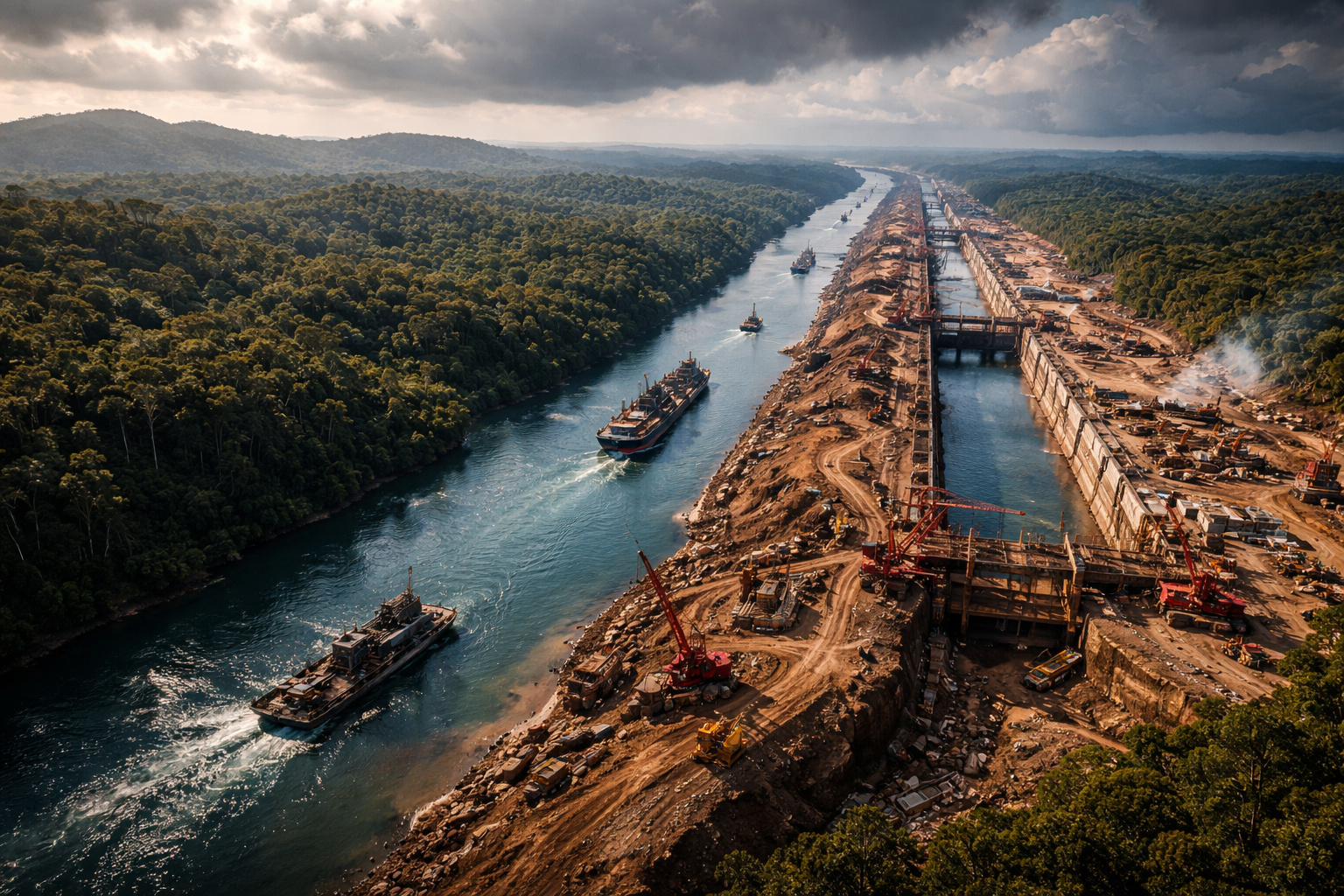
In 2013, Nicaragua sold the concession for a canal to rival Panama to a Chinese billionaire who lost 85% of his fortune, disappeared, and was declared bankrupt. Now the project resurfaces with a new route, a new Chinese partner, and a cost of $64.5 billion.
-
The USA announces a mysterious billion-dollar vault project to store critical minerals, but what intrigues experts is not just the plan itself, but why Latin America, including Brazil, has entered the center of this global dispute against China.

-
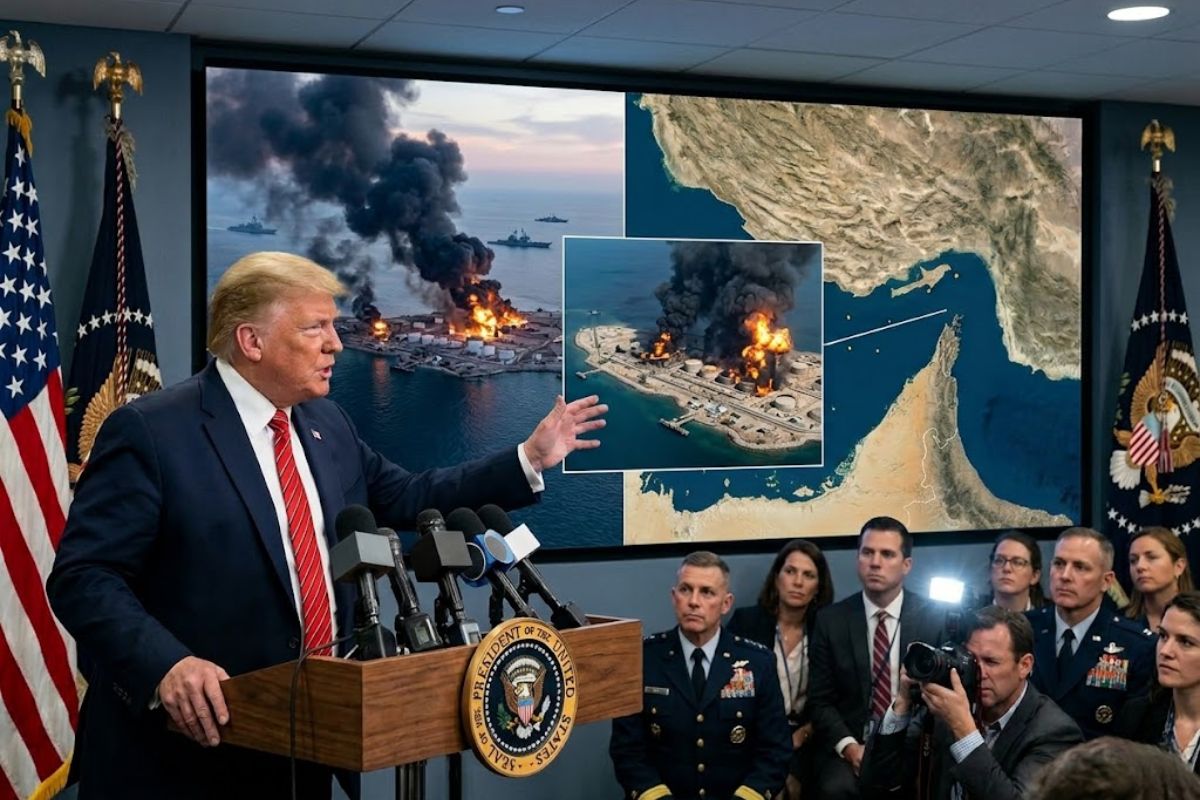
Trump Announces Bombing of U.S. Military Targets on Iranian Island Responsible for About 90% of Iran’s Oil Exports, Warns of Further Attacks if Navigation in Strategic Strait of Hormuz Is Threatened
If the volumes are confirmed, Japan will hold the third largest deposit in the world, with the capacity to supply strategic components for several centuries.
Technical Investigation Reveals Unprecedented Strategic Potential
Scientific teams conducted the deep-sea drilling mission with the Chikyu to reach the mineralized sediments.
Al Jazeera reported on the official assessment that classified the advance as significant for national economic security and global maritime development.
Currently, Japan imports about 70% of its critical metals from China, while Beijing controls approximately 92% of the global rare earth refining market.
In this scenario, the discovery strengthens Japan’s strategy to reduce vulnerabilities in the face of trade restrictions imposed by China on products considered “dual-use.”
Essential Metals for Advanced Technologies
Among the identified elements, two stand out due to their direct impact on the technology industry.
Dysporium drives the production of high-performance magnets used in electric vehicle motors and military systems, with an estimated equivalent to about 730 years of global consumption.
Yttrium underpins applications in lasers, advanced displays, and defense technologies, with an estimated potential for approximately 780 years of global consumption.
This data reinforces the strategic importance of the deposit for high-tech and defense supply chains.
Political Positioning and Economic Security
Prime Minister Sanae Takaichi stated that the discovery represents an initial step toward the industrialization of rare earths produced locally in Japan.
She emphasized that the country will seek resilient supply chains and avoid excessive dependence on a single trading partner.
The government spokesperson, Kei Sato, stated, as reported by Al Jazeera, that the advance strengthens both economic security and Japan’s maritime projection.
Technological Challenge at 6 Kilometers Depth
Despite the technical advancement, industrial exploration requires complex solutions.
The extraction of the so-called “rare earth mud” at 6,000 meters imposes operations under extreme pressures, complete absence of light, and high logistical costs.
Even so, Japan plans to start structural investments from 2027 and projects large-scale tests to achieve 385 tons of sediment per day.
Researcher Takahiro Kamisuna from the International Institute for Strategic Studies (IISS) stated to the Japan Times that regular extraction could ensure autonomy for Japan’s industrial supply chains.
Geopolitical and Economic Outlook
The discovery comes amid rising regional tensions, especially involving Taiwan and the trade of critical minerals.
Analysts assess that Japan’s technical advancement could alter the global balance in the rare earths market, which is currently heavily influenced by China.
Still, experts will need to prove the economic viability of exploration in ultra-deep waters in the coming years.
Japan has demonstrated technical capacity to access the so-called “oil of the 21st century”, but commercial consolidation will depend on efficient governance, environmental sustainability, and financial balance.
In light of this new strategic scenario, should the country accelerate exploration to strengthen its industry or prioritize a gradual advance that ensures economic and environmental stability in the long run?










-

-

-

-

-

37 pessoas reagiram a isso.