





 Portuguese
  English
  Spanish
  6 min of reading
  3 comments


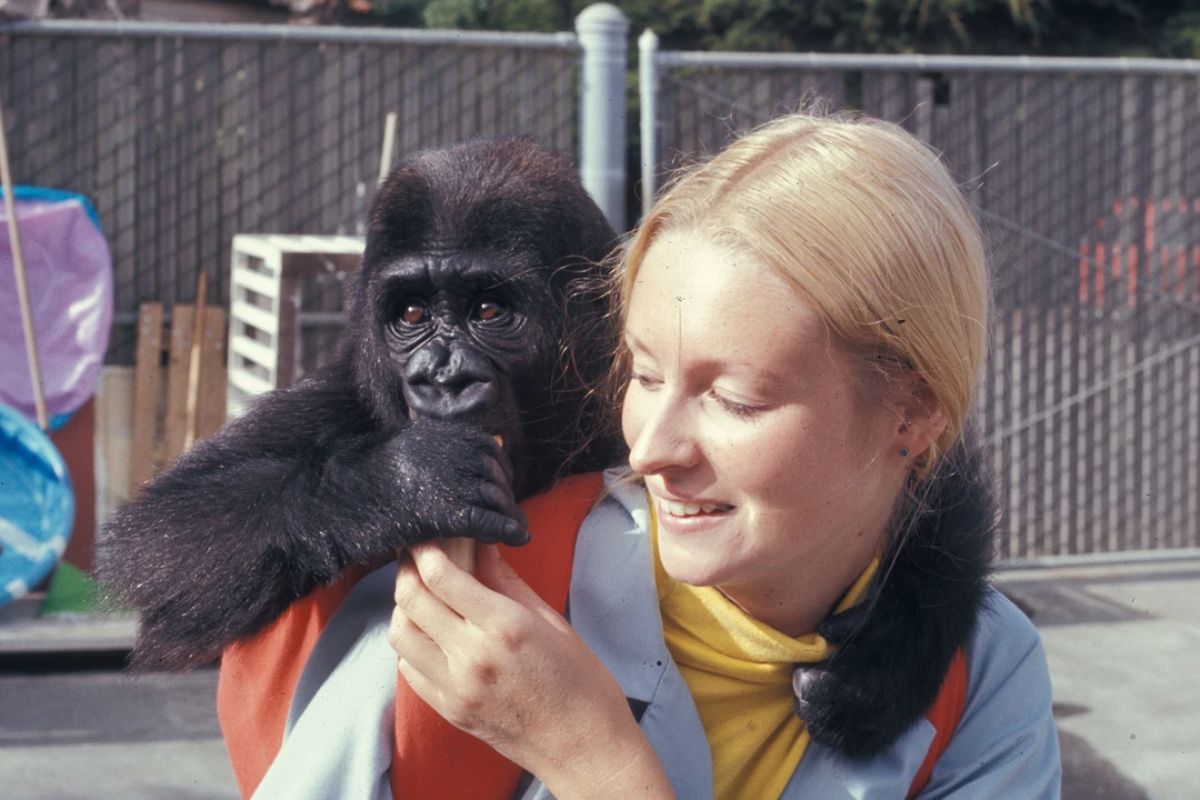


The Gorilla Koko Surprised by Learning Signs, Creating Combinations to Ask for Things and Becoming the Longest Primate Language Study. Researcher Penny Patterson Led the Project for Decades, but Critics Pointed to Human Projection and Lack of Conclusive Evidence, Keeping the Subject Divided to This Day
The story of Gorilla Koko starts as a shock against common sense. Many people imagine a gorilla as a brutish, obtuse, and stormy “King Kong.” However, Koko was described differently: small, sweet, and creative, a type of personality that doesn’t fit the stereotype and therefore stirred the popular imagination.
Koko’s journey also became a turning point because it did not remain only in emotion. For over four decades, the project led by Penny Patterson was presented as an attempt to discover whether humans and gorillas could communicate, using sign language as a bridge. And it was precisely there that the uncomfortable question was born: how far does a primate’s mind go when faced with a human communication system?
How The Experiment Began That Put a Gorilla in the Center of Science

Over 40 years ago, Penny Patterson initiated a project with a direct and bold objective: to test whether humans and gorillas could establish functional communication.
-
A forgotten cord on the floor of a basement in Vienna leads a plumber to a box containing 30 kilograms of gold with Mozart’s face, hidden before World War II. The treasure, worth 2.3 million euros, was just centimeters away from a worker who ignored the sign a day earlier.

-
A couple buys an old chalet, breaks the kitchen floor for renovation, and finds over a thousand coins of gold and silver hidden since the English Civil War over 4 centuries ago.

-
Rigid bags with their days numbered: new trend prioritizes comfort in 2026.

-
YouTuber creates an excavator equipped with a giant 4.5-meter sword to challenge his brother to a rematch, and the invention quickly goes viral on social media.


The story takes on an almost cinematic tone because it starts with skepticism. The idea of “teaching sign language to a gorilla” sounded to many like a joke or exaggeration.
Nevertheless, the work advanced and became routine. The project grew over decades, accumulating a vast amount of observation and recording, including thousands of hours of filming over 44 years, which helped to feed the perception that it was not a short experiment or an isolated episode.
Koko and Sign Learning: A Rhythm That Caught Attention

The Gorilla Koko was not described as someone who merely memorized gestures. Early on, she is said to have learned about one new sign each month.
This rhythm became a strong argument for those who argued that there was a real learning process taking place.
More important than learning isolated signs, Koko began to combine signs to ask for things. This detail is crucial because it changes the interpretation of what is happening. A single sign can be seen as conditioning or repetition.
Combining signs to form requests suggests intention, choice, and a kind of assembly of meaning, something that seems to bring the behavior closer to a more complex communication.
The Relationship Between Researcher and Gorilla Became Part of the Narrative

The project was not portrayed as something distant and cold. On the contrary. The relationship between Penny Patterson and Gorilla Koko was described as a lifelong bond, almost like the affection of a mother for a daughter, with a striking contrast: this “daughter” would have the strength of ten men.
This type of description helps to understand why the story crossed the boundaries of science and exploded in popular culture. It was not just research.
It was a relationship observed and transformed into a public narrative, filled with emotion, attachment, expectation, and even idolization.
Why The Gorilla Became a Global Headline and Still Divides Experts
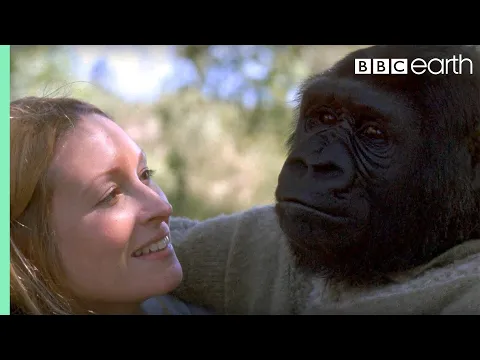

News about Gorilla Koko became headlines worldwide.
She was presented as a particularly intelligent gorilla and the focus of the longest ongoing primate language study, reinforcing the symbolic weight of the project.
However, popularity did not resolve the central problem. While the media and public tended to be enchanted by the idea of a “talking” gorilla, some scientists were less convinced. And that is where the point that keeps the debate alive comes in: there is a difference between believing and proving.
The Harshest Criticism: Human Projection and the Chasm Between Belief and Proof
A central criticism cited is that Penny Patterson could be a proud “gifted mother” of her “surrogate offspring,” with a tendency to project meanings that perhaps were not visible to other observers.
This criticism is not a detail. It touches the heart of the scientific discussion. If the observer is an active part of the interpretation, the reading of behavior can become contaminated.
The argument points to a chasm between what someone may believe they are seeing and what they can independently demonstrate.
In other words, the debate about Gorilla Koko is not just about signs made with hands. It is about method, evidence, and the limits of interpretation when an animal is intensively interacting with humans.
Self-Awareness: The Mirror as a Cutting Line
Another point cited as a divider is the idea of self-awareness. Koko was said to have abilities that go beyond recognizing a mirror.
The highlight is the ability to point to her reflection and indicate “that’s me,” something interpreted as self-awareness.
This detail is treated as a clue that the Gorilla may have a form of self-awareness similar to humans. And this connects the research to a larger theme: the line between humans and other great apes may be being redrawn, not only by Koko but by what this type of case represents.
When Science Touches the Law: Monkeys and the Debate on “Legal Rights”
The material also brings a consequence that goes beyond the laboratory: the discussion about rights. A court in Argentina decided that an orangutan could receive some type of legal rights similar to those that humans possess.
This enters the story because it expands the impact of the debate. If we accept that great apes can have levels of consciousness and more complex feelings, the uncomfortable question arises: what justifies that humans have rights that other species do not?
Gorilla Koko, in this sense, becomes a symbol of a modern tension. It is not just about communication. It is about moral status, species boundaries, and what society does when it begins to see “mind” where it previously saw only instinct.
What 44 Years of Filming Try to Prove and What Remains Unresolved
The project, with thousands of hours of filming over 44 years, is presented as something that would finally prove that animals can communicate with humans and even share deep thoughts and feelings.
But the story does not end with a period. The very existence of skeptics shows that the dispute persists. The question is not just “Did Koko make signs?”
The question is whether those signs carried true language, expressed own thoughts, and whether there was a mind interpreting the world in a way comparable to humans or merely reacting to human stimuli.
That is why the story continues to divide experts. It lies in between the hope that we are less “unique” than we think and the scientific rigor that demands evidence that can withstand the scrutiny of any observer.
Has The Line Separating Humans and Primates Gotten Thinner or Just More Confused
Almost half a century after the project’s inception, the story of Gorilla Koko still provokes the same type of intellectual discomfort: there may be much more happening in the minds of our closest relatives than we imagined, or perhaps there are limits that will always separate us.
If Gorilla Koko was a real case of intentional communication or a mirror in which humans projected desires, the effect was the same: it forced the world to discuss animal consciousness, self-awareness, and the boundary between “animal” and “person.”
Do you think that the story of Gorilla Koko proves that a primate can think like us, or does it reveal more about what humans want to believe?









Belo texto. Bela escrita. Parabéns.
Language is the thinker.
Yes in this particular case