





 Portuguese
  English
  Spanish
 4 min of reading
  0 comments


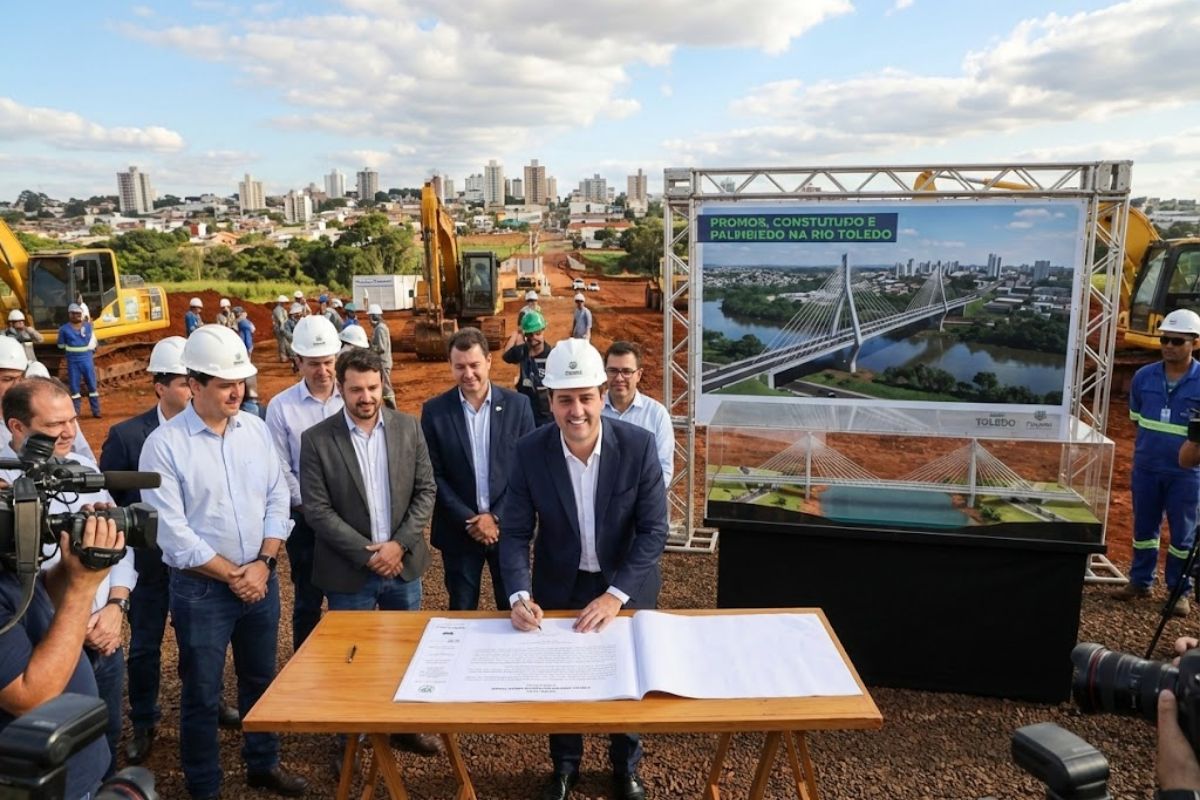
Signed on January 22, the cable-stayed bridge on Coroa do Norte Street will receive almost R$ 50 million via the Secretary of Cities, will have 230 linear meters, 160 meters of cable-stayed structure, and will pass over the Toledo River, connecting José João Muraro Avenue and Maripá Avenue, in Grande Pioneira in Toledo
The cable-stayed bridge announced for Toledo, in Paraná, was officially documented last Thursday (22), when Governor Carlos Massa Ratinho Júnior (PSD) signed the agreement that unlocks the construction on Coroa do Norte Street, with an investment of R$ 47 million and a crossing over the Toledo River.
In addition to building the cable-stayed bridge, the package includes urbanization work on the same street, with resources allocated via the Secretary of Cities. The promise presented at the event is for integration between regions of the city, reducing pressure on central traffic and strengthening the logistics of a Toledo described as the agribusiness capital of the state.
What Was Announced and Where the Cable-Stayed Bridge Will Be Located

The cable-stayed bridge is planned for Coroa do Norte Street, in Toledo, in the Western Paraná, passing over the Toledo River. The announcement was formalized with the signing of an agreement by Governor Ratinho Júnior, at a public event on Thursday (22).
-
A megaproject worth R$ 89 billion is advancing in Iraq and promises to change the game in global trade by creating a new corridor between Asia and Europe, reducing traditional routes and repositioning the country as a logistics powerhouse.
-
Goodbye bedside table: floating shelves become a trend in 2026 by freeing up space in the bedroom, improving circulation, bringing visual lightness, and integrating technology without taking up floor space.

-
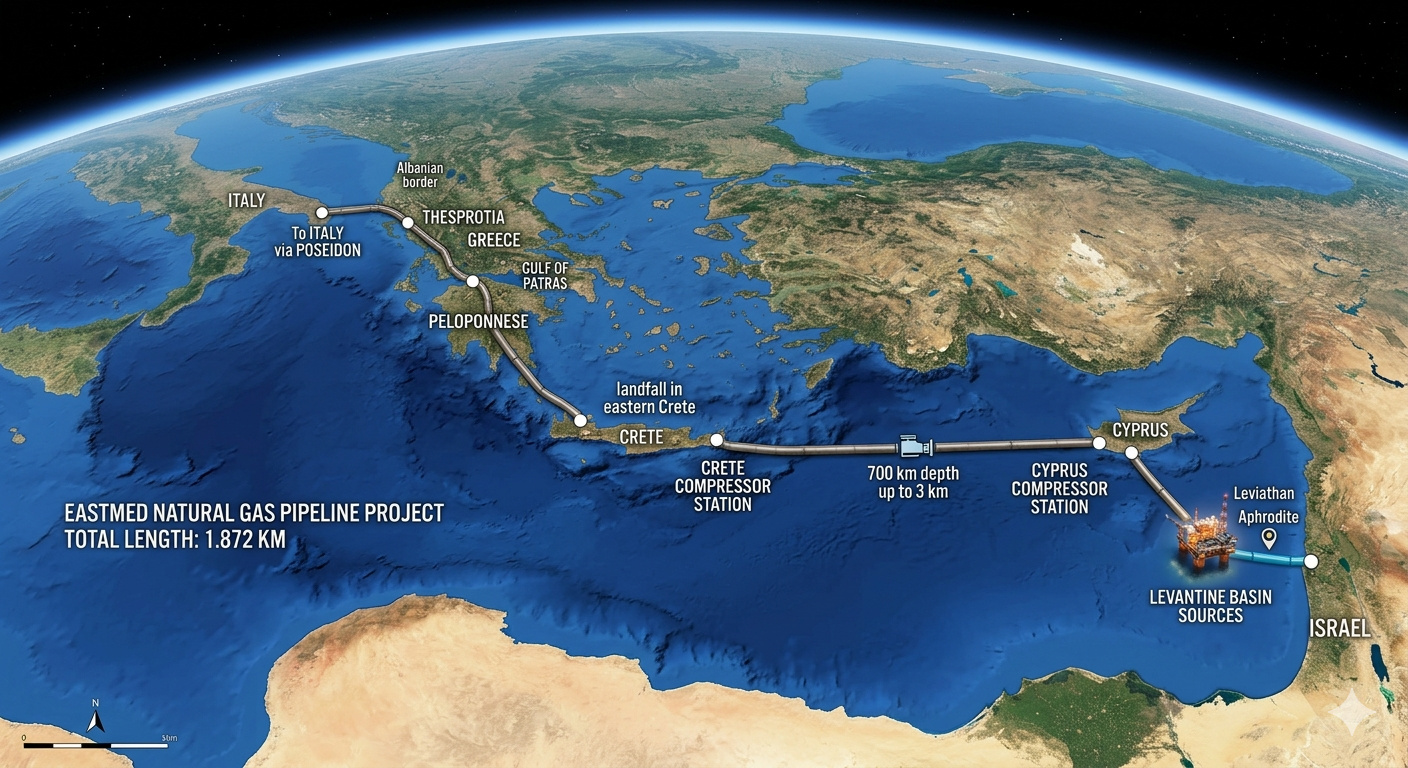
Israel, Greece, and Cyprus signed an agreement in 2020 to transport gas from the Mediterranean to Europe via a 1,872 km pipeline, but Turkey claimed sovereignty over part of the maritime route, and the project never materialized.
-
Israel, Greece, and Cyprus signed an agreement in 2020 to transport gas from the Mediterranean to Europe via a 1,872 km pipeline, but Turkey claimed sovereignty over part of the maritime route, and the project never materialized.

The reported investment is R$ 47 million, referred to as “almost R$ 50 million” in the announcement, and will be applied via the Secretary of Cities. The same amount also covers urbanization interventions on Coroa do Norte Street, connecting the special artwork to the requalification of the immediate area.
Structure Dimensions: 230 Linear Meters and 160 Meters of Stretched Segment
The presented project specifies that the bridge will have 230 linear meters in total. Within this length, 160 meters correspond to the cable-stayed structure, the section where the cables support the deck, characterizing the type of bridge chosen.
These figures were cited as part of the goal of improving local mobility, with a crossing designed to absorb urban flow and reorganize displacements that currently pressure the streets in the Center.
Direct Connection Between Avenues and Impact in Grande Pioneira
The bridge was described as a link between two specific arteries: José João Muraro Avenue and Maripá Avenue. The connection occurs in the Grande Pioneira region, with the idea of shortening routes and connecting extremes of the municipality.
In practice, the promised delivery is a change of route for those crossing the city and relying on passages that concentrate traffic. The central argument is to “unclog the traffic on the streets of the Center”, redistributing circulation to a new, more direct corridor.
Political Discourse and Economic Justification Linked to Agribusiness and Industry
At the event, Ratinho Júnior stated that the work will be important for Toledo as it integrates two regions of the city and aligns with a municipality that, according to him, has been industrializing and growing. In the same context, areas such as pharmaceuticals, technology, and food production were mentioned.
Toledo was characterized as the agribusiness capital of Paraná, and the bridge emerged as an infrastructure piece to support mobility and urban logistics in a city that expands economic activities and demands more efficient circulation.
Urbanization Along With the Cable-Stayed Bridge: Road Works and Surroundings in the Same Package
The announcement is not limited to the deck over the river. The investment will also be applied in urbanization works on Coroa do Norte Street, signaling that the intervention aims to adjust not only the crossing but also the experience of access, circulation, and integration of the lanes in the surroundings.
This detail is crucial, because a new bridge, without road adjustments around it, tends to transfer bottlenecks from one point to another. By linking urbanization to the bridge, the project attempts to present a complete mobility package for the directly impacted area.
Who Is Ratinho Júnior and Why the Announcement Gained Extra Attention
The governor responsible for the signing is Carlos Massa Ratinho Júnior (PSD). In the material presented, there is a note that he is the son of Ratinho, a host on SBT, who has also been involved in politics as a federal deputy between 1991 and 1995.
The work is treated as one of the largest recent urban interventions announced for the city, both for its value and for the promised effect on territorial integration and traffic.
In your view, should the cable-stayed bridge prioritize first the relief of the Center or the logistical connection to areas linked to agribusiness and the industrial expansion of Toledo?









-

-

9 pessoas reagiram a isso.