





 English
  Francês
  Alemão
  Italiano
  Japonês
  Norueguês
  Portuguese
  Spanish
  5 min of reading
  0 comments


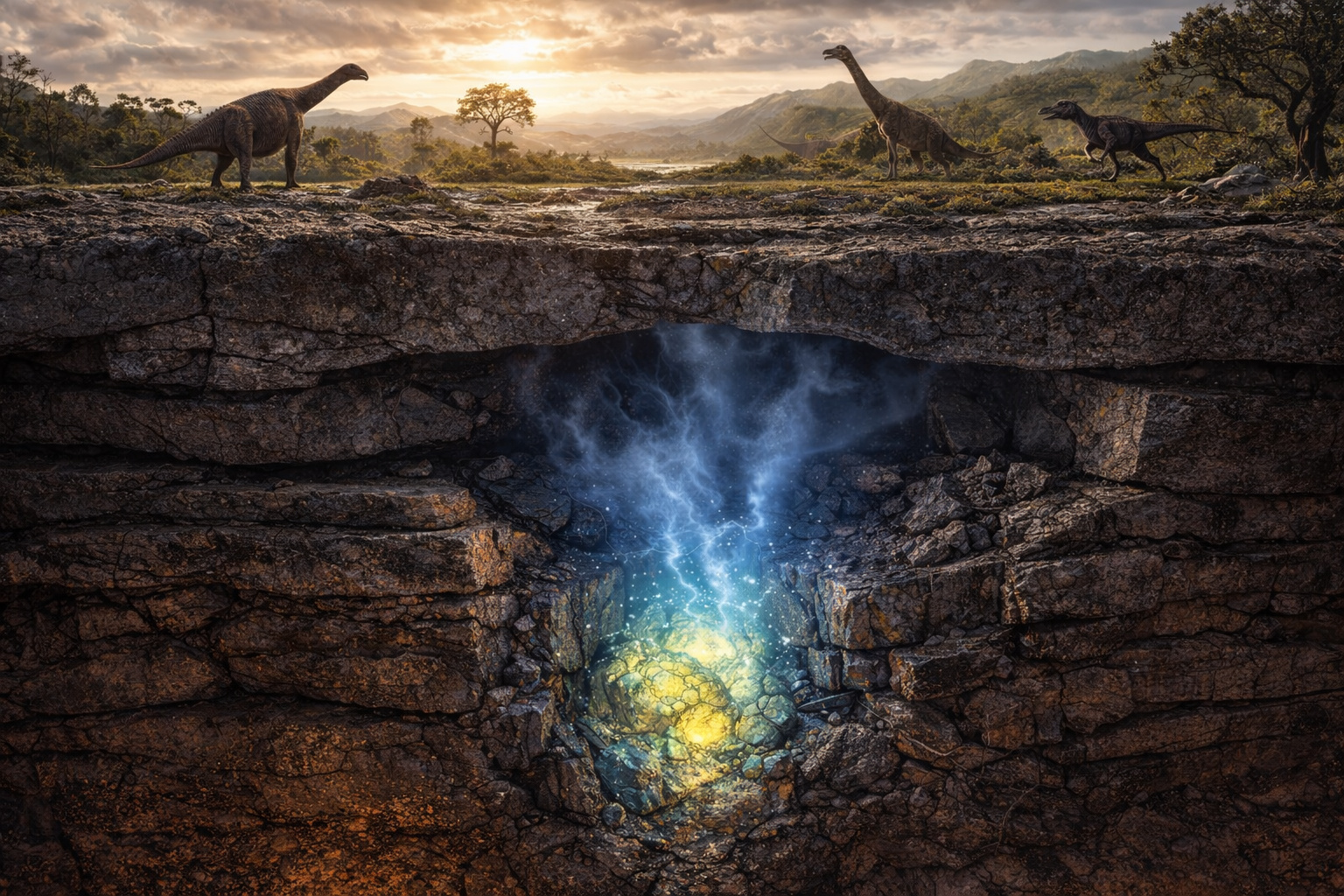
2 Billion Years Ago, Uranium Deposits in Africa Entered Spontaneous Fission and Created a Natural Nuclear Reactor That Operated for Hundreds of Thousands of Years.
Nuclear energy is often regarded as one of humanity’s greatest technological milestones, a result of centuries of science, advanced physics, and high-precision engineering. However, a discovery made in the 20th century revealed something unsettling: the Earth itself had mastered nuclear fission long before any civilization existed.
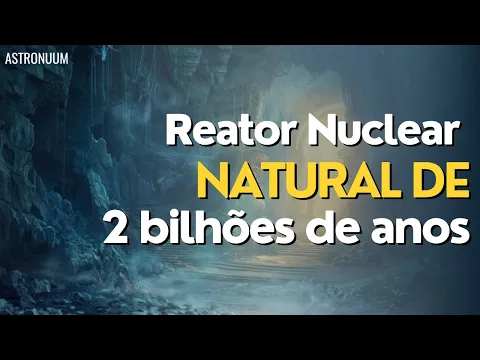
About 2 billion years ago, in a region of what is now Central Africa, specific geological conditions allowed natural uranium deposits to enter into self-sustained nuclear reactions, functioning in a surprisingly similar way to a modern nuclear reactor. This phenomenon did not occur for minutes or days, but for hundreds of thousands of years, in a cyclical and stable manner.
The location of this discovery is known as Oklo, in present-day Gabon, and represents the only proven natural nuclear reactor in the history of the Earth.
-
Fukushima Marks A Turning Point In Japan’s Energy Policy: After The Disaster, The Country Shut Down Its 54 Nuclear Reactors And, 15 Years Later, Only A Small Portion Have Returned To Operation
-
How Japan Overcame The Nuclear Bomb And Now Houses Millions In Hiroshima, While Ukraine Lost Chernobyl?

-
Bill Gates Receives Historic Approval to Build Giant 345 MW Nuclear Plant in the U.S. and Promises to Generate Up to 500 MW of Energy with Innovative Technology
-
India Opens Nuclear Energy to Private Capital to Accelerate Projects and Attract Billions, While Brazil Remains Stalled at Angra 3 and Discusses Who Will Foot the Bill for Completion
The Accidental Discovery That Revealed a Hidden Nuclear Power Plant in African Soil
The story of Oklo began completely unexpectedly in 1972, when French technicians were analyzing uranium ore extracted from the area. The goal was simple: to verify the isotopic composition of the material before its industrial use. It was then that something impossible appeared in the results.


Natural uranium has an extremely stable ratio between its isotopes, especially uranium-235 (U-235), responsible for nuclear fission. In Oklo, this ratio was abnormally low, as if part of the nuclear fuel had already been “burned.”
The only possible explanation was disturbing: nuclear fission reactions had occurred naturally at that site in the past.
Why Natural Nuclear Fission Was Only Possible 2 Billion Years Ago
Today, a nuclear reactor requires artificial uranium enrichment to operate. But around 2 billion years ago, the planet had a condition that no longer exists.
Back then:
- the natural proportion of U-235 was about 3%, similar to what is used in modern reactors;
- today, this proportion has dropped to about 0.7%, insufficient for spontaneous fission;
- the presence of groundwater acted as a neutron moderator;
- the local geology kept the uranium concentrated and stable.
These combined factors created, without any biological or technological intervention, a functional nuclear system.
How the Natural Nuclear Reactor of Oklo Really Worked
Unlike the image of a continuously running reactor, the Oklo system operated in extremely elegant natural cycles.
When groundwater infiltrated the uranium deposits, it slowed down the neutrons released by fission, allowing new reactions to occur. As the reaction intensified, heat caused the water to evaporate, interrupting the process.
After cooling, the water would return, restarting the cycle. Studies indicate that this natural “on-off” could occur every two to three hours, keeping the system stable for hundreds of thousands of years without any explosion risk.
How Long the Natural Reactor Remained Active and How Much Energy Was Generated
Physical models and isotopic analysis suggest that the Oklo reactors operated for periods varying between 100,000 and up to 1 million years, depending on the deposit analyzed. During this time:
- tons of uranium were consumed;
- huge amounts of energy were released slowly;
- fission byproducts were trapped in the rocks, without dispersing.
This proves that the Earth’s crust itself acted as a natural nuclear containment system, something modern engineers are still trying to replicate with maximum safety.
The Oklo Reactor as a Natural Laboratory of Nuclear Physics
One of the greatest scientific importance of Oklo goes beyond historical curiosity. It serves as a natural experiment on a geological scale, something impossible to reproduce artificially. The analysis of nuclear waste allowed:
- to test whether fundamental physical constants have changed over billions of years;
- to study the behavior of radioactive products in rocks over extreme periods;
- to evaluate the natural stability of buried nuclear materials.
The results showed that the laws of nuclear physics remained stable over 2 billion years, reinforcing fundamental models of modern science.
Why Oklo Is Crucial for the Safety of Modern Nuclear Deposits
One of the biggest challenges of nuclear energy today is the fate of radioactive waste. Where to store it for tens or hundreds of thousands of years? Oklo offers a real answer.
The fission products generated naturally remained virtually motionless for billions of years, trapped in specific minerals. This proves that, under the right conditions, deep geological storage can be extremely safe.
Thus, the natural reactor of Oklo is still studied today by:
- nuclear agencies;
- geologists;
- safety engineers;
- energy researchers.
A Unique Phenomenon That Will Probably Never Happen Again on Earth
Today, Earth no longer has the necessary conditions for a natural nuclear reactor to form again. The proportion of U-235 is too low, and geological environments have changed profoundly.
This makes Oklo a unique, unrepeatable, and deeply revealing event about the planet’s past. It shows that the Earth is not just the stage for life, but also a physical system capable of generating phenomena that we now associate exclusively with human technology.
What the Natural Nuclear Reactor of Oklo Changes in How We Understand the Earth
The existence of Oklo redefines fundamental concepts:
- it shows that nuclear processes can arise without intelligence;
- it reveals that nature can create extremely complex stable systems;
- it broadens our understanding of energy, deep time, and geology.
More than a curiosity, Oklo is a bridge between physics, geology, and scientific philosophy, reminding us that human technology often just rediscovers processes that the planet has already executed on its own.
A Powerful Reminder That the Earth Was Once More “Advanced” Than We Thought
Long before cities, machines, or even complex organisms dominated the planet, the Earth had already operated a functional nuclear reactor, with fuel, moderation, cycles, and containment.
This isolated fact places Oklo among the greatest scientific discoveries of the 20th century — not for its danger, but for the silent elegance with which nature solved a problem that today requires billions of dollars in engineering.









-

2 pessoas reagiram a isso.