





 Portuguese
  English
  Spanish
  3 min of reading
  0 comments


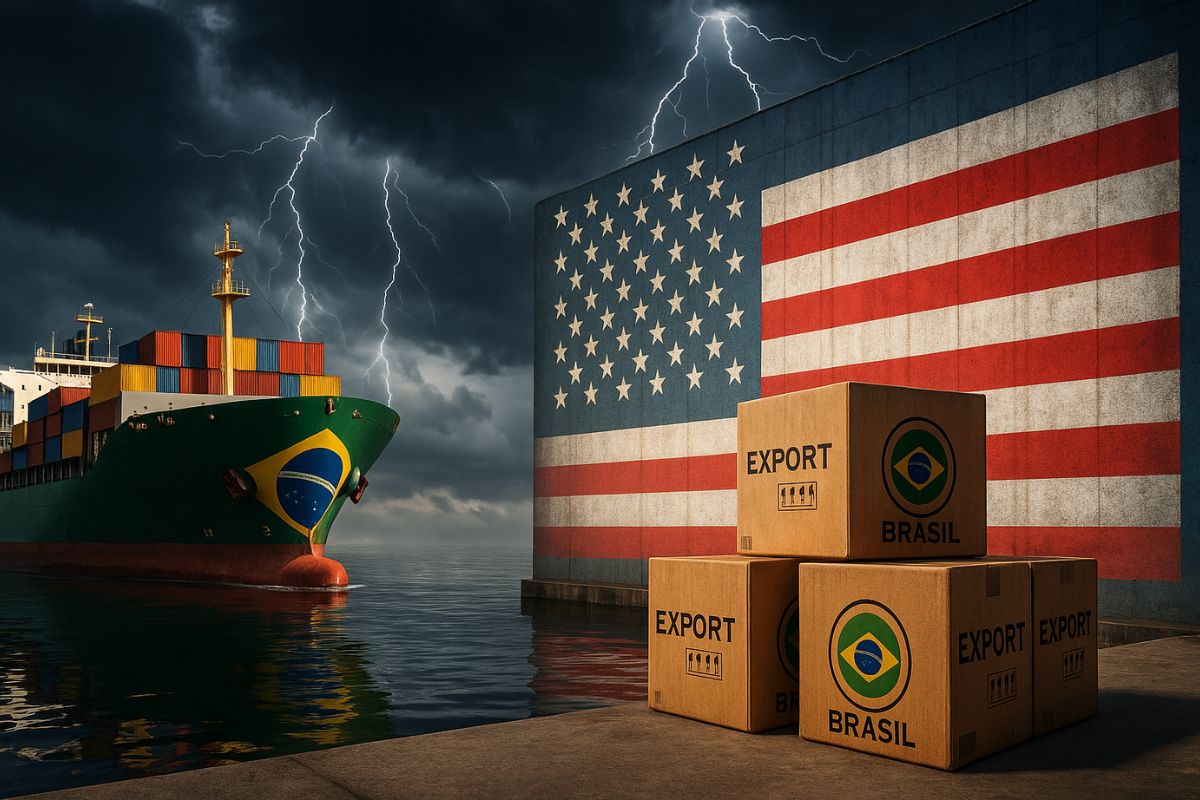
Geopolitical Recession: Brazil Loses Ground in Global Trade and Faces Higher Tariffs from the U.S. Marcos Troyjo Warns That the So-Called Geopolitical Recession Has Created a Perfect Storm for Brazil, Which Saw American Tariffs Jump from 10% to 50%
The concept of geopolitical recession has been gaining traction to explain the current international landscape. The term, used by Marcos Troyjo, former president of the BRICS Bank, describes a world where cooperation among countries diminishes and zero-sum games prevail: when one country gains ground, another necessarily loses. In this environment, the United States stands at the center of the turbulence, characterized by the so-called “Trumpulence,” marked by harsher tariffs and increasing trade tensions.
For Troyjo, Brazil has squandered a rare window of opportunity. Until recently, the country paid only 10% in import tariffs in the U.S., an index considered favorable. However, the lack of dialogue with Washington, combined with an anti-American rhetoric and a push for de-dollarization, has led the country to now face the highest tariff among all American trading partners: 50%.
What Geopolitical Recession Means
In Troyjo’s view, the geopolitical recession is characterized by increasing distrust among countries and difficulty in establishing lasting agreements. He divides events into microgeopolitical ones, short-term, such as the Ukraine war, and macrogeopolitical ones, long-term, such as the dispute between the United States and China.
-
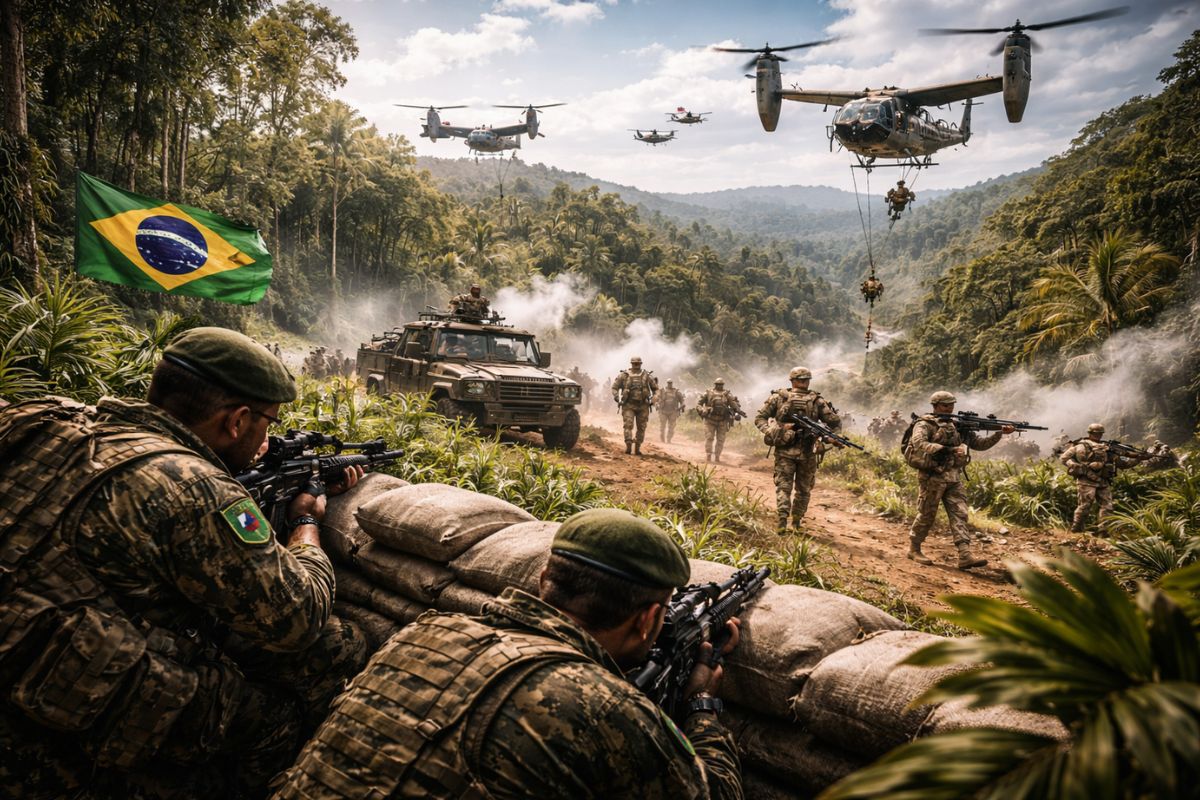
If the USA were to go to war with Brazil, Washington’s greatest fear would not be the attack itself, but facing a vast territory, prolonged resistance, and a costly, chaotic, and unpredictable occupation.
-
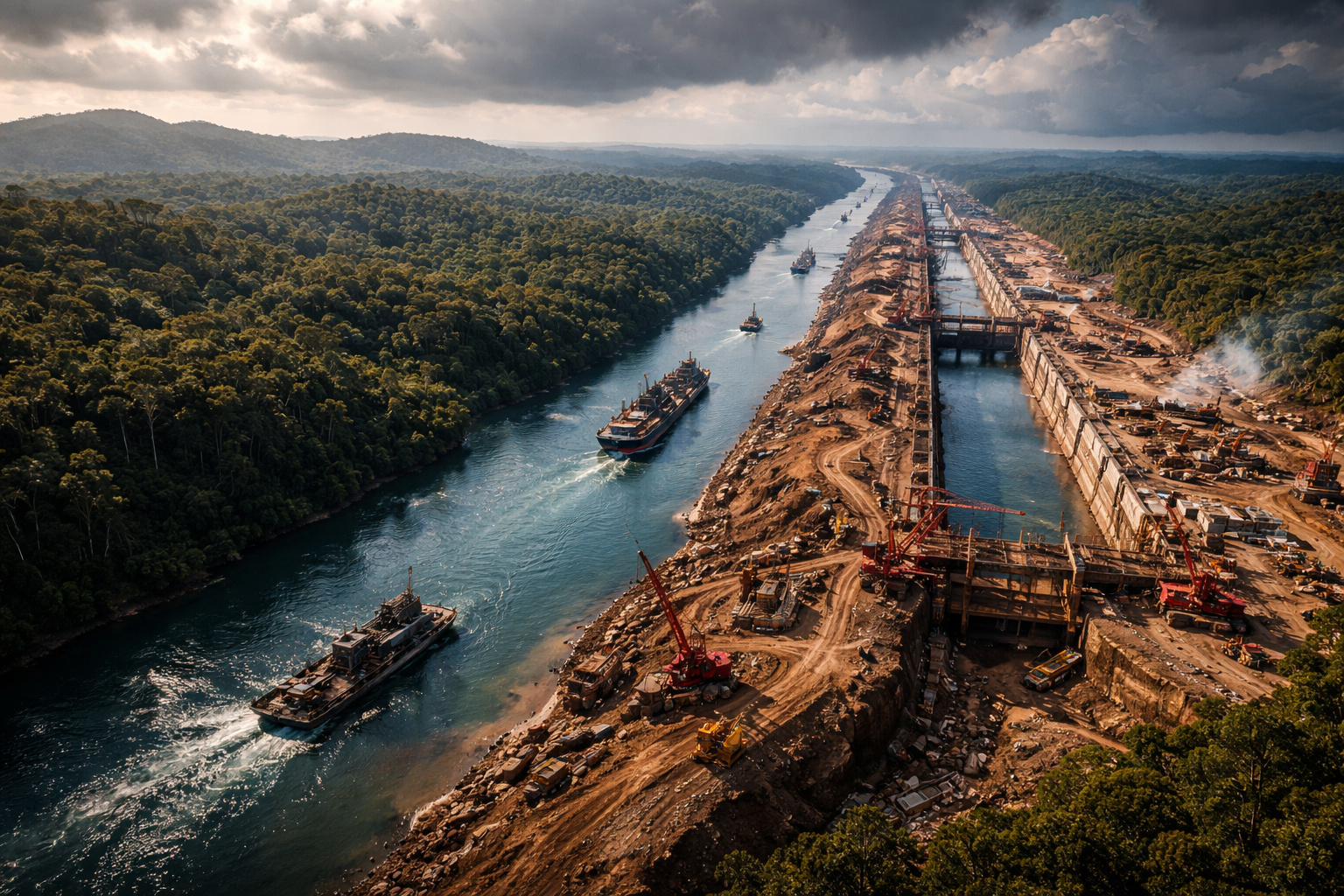
In 2013, Nicaragua sold the concession for a canal to rival Panama to a Chinese billionaire who lost 85% of his fortune, disappeared, and was declared bankrupt. Now the project resurfaces with a new route, a new Chinese partner, and a cost of $64.5 billion.
-
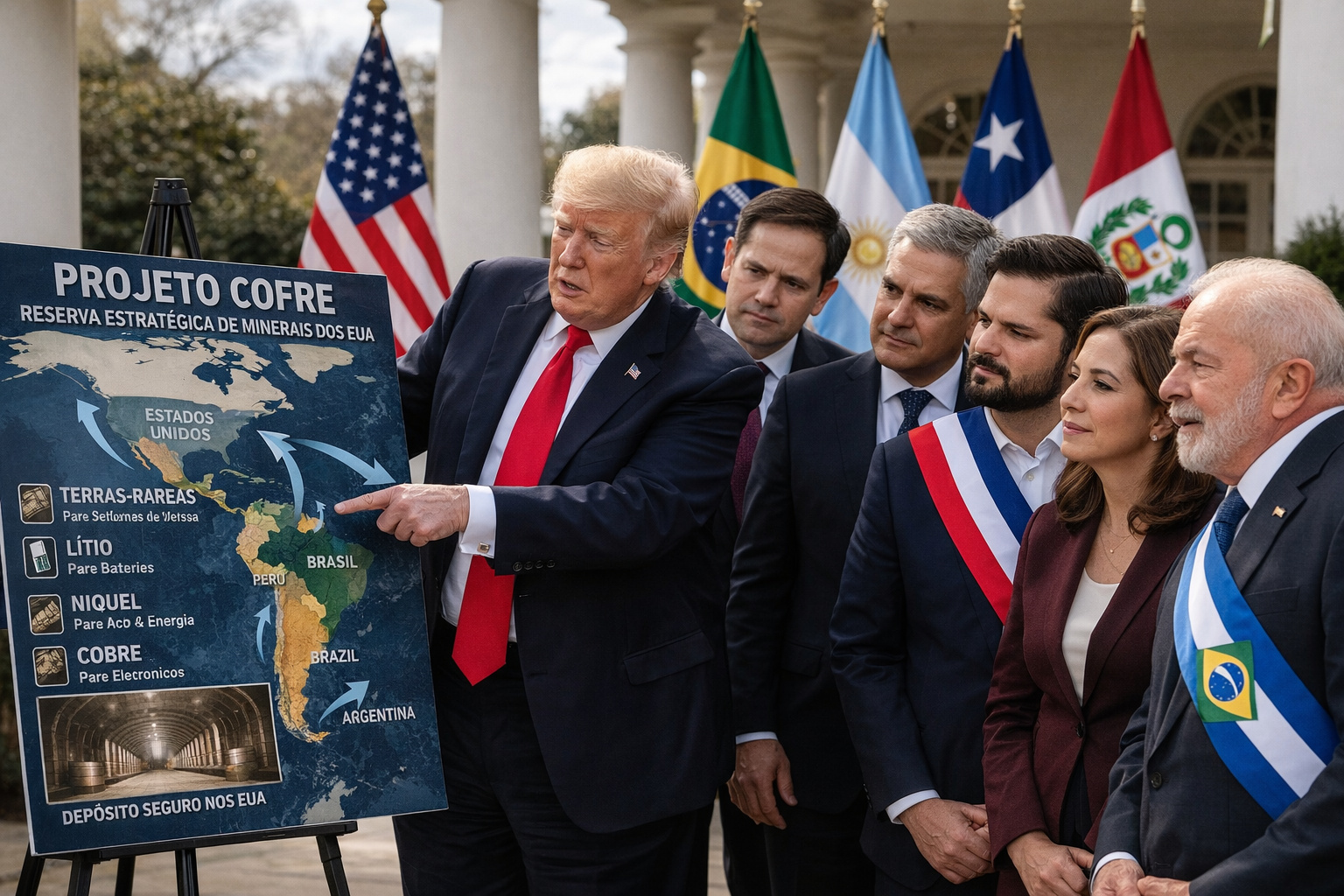
The USA announces a mysterious billion-dollar vault project to store critical minerals, but what intrigues experts is not just the plan itself, but why Latin America, including Brazil, has entered the center of this global dispute against China.
-
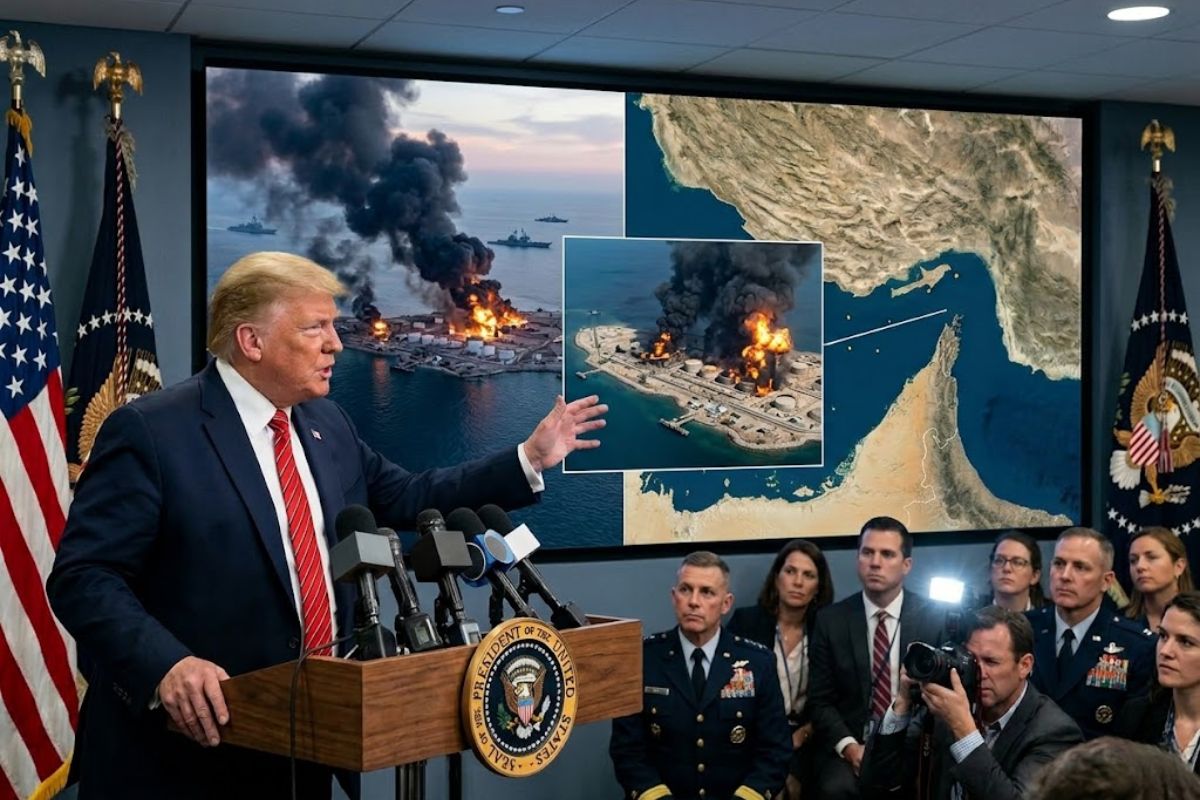
Trump Announces Bombing of U.S. Military Targets on Iranian Island Responsible for About 90% of Iran’s Oil Exports, Warns of Further Attacks if Navigation in Strategic Strait of Hormuz Is Threatened
This instability creates additional barriers to international trade and requires each country to know how to negotiate strategically. While leaders of powers like India, Germany, Italy, and even the European Union maintained direct dialogue with the White House, Brazil remained isolated, without talks or high-level meetings with Washington.
The Missed Opportunity for Brazil
According to Troyjo, between April and July 2025, Brazil experienced a phase where it could have expanded its presence in the American market. With relatively low tariffs, there was room to capture new shares in the higher value-added goods market, such as furniture, textiles, and industrial products.
However, the absence of a clear trade strategy and political rhetoric against the U.S. created an environment of complacency. While Asian countries faced harsher tariffs, Brazil failed to leverage its competitive advantage.
Economic and Trade Impact
The numbers clearly show the loss of ground. The U.S. import market moves about US$ 3.6 trillion annually, which is equivalent to more than the combined GDP of 56 African countries. In this realm, Brazilian exports represent only 1.1%, or around US$ 41 billion.
For Troyjo, this low participation reflects historical commercial incompetence, as the U.S. is a natural destination for high value-added Brazilian products. The recent increase in tariffs to 50% consolidates an unfavorable position, making it difficult to expand national exports and reducing the competitiveness of Brazilian companies.
The Perfect Storm
The former president of the BRICS Bank summarizes the situation as a perfect storm: in addition to diplomatic isolation and higher tariffs, Brazil also faces internal and external pressures related to the debate on de-dollarization and the presidency of BRICS.
In this scenario, the geopolitical recession directly affects the country, which has ceased to be seen as a strategic partner and now pays the price for misguided choices in foreign and trade policy.
Marcos Troyjo’s analysis shows how the geopolitical recession exposes Brazilian vulnerabilities in the midst of global competition. While other countries sought to minimize losses through active negotiations with the U.S., Brazil distanced itself and ultimately faced record tariffs.
And you, do you believe that Brazil erred in not maintaining direct dialogue with the U.S. during this geopolitical recession? Do you think there is still time to regain ground in international trade? Leave your opinion in the comments — your perspective can enrich this debate.








Seja o primeiro a reagir!