





 Portuguese
  English
  Spanish
  3 min of reading
  0 comments


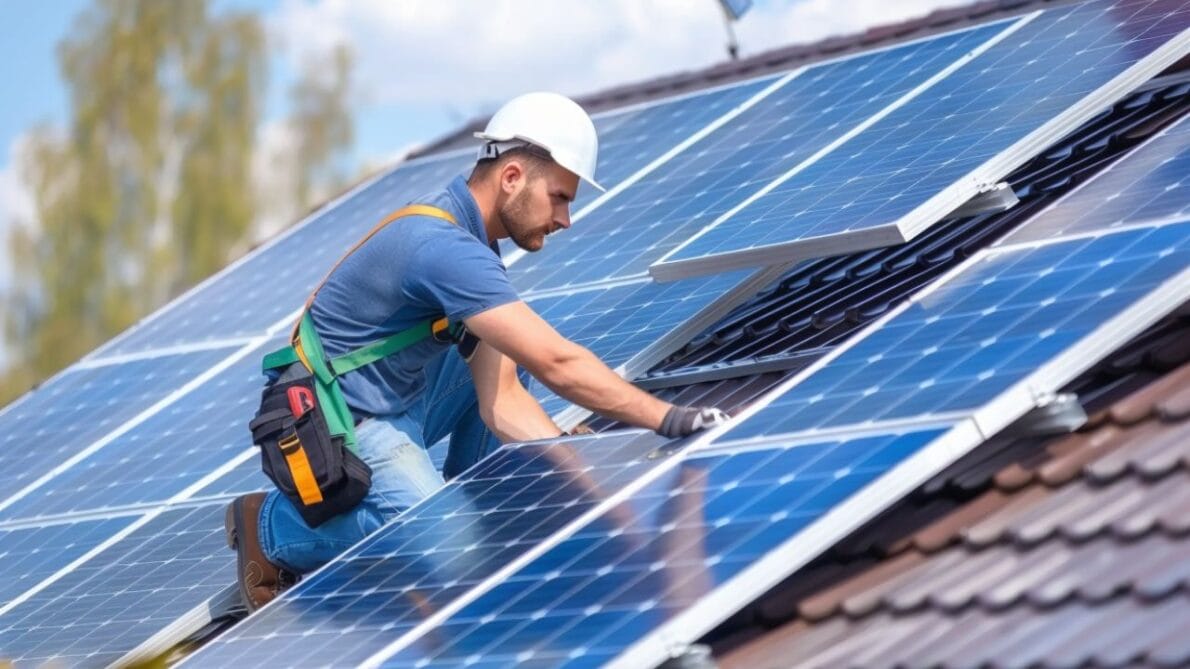
In 2024, the Brazilian solar energy market witnesses a significant reduction in the cost of photovoltaic kits, which resulted in a decrease in the time required to recover the initial investment (payback). This change makes solar energy more accessible and economical for consumers, boosting its adoption throughout the country.
After facing initial challenges in 2023 due to the implementation of Law 14.300, the solar energy sector in Brazil celebrates a significant turnaround this year. An average reduction of 34% in the prices of photovoltaic kits has been revealed, resulting in a savings of 28% compared to January 2023. This price adjustment transforms solar energy into an even more viable and attractive option for Brazilians.
The term “payback”, fundamental in the context of investments in solar energy, reflects the period required for an investment to pay for itself through the savings generated. With the recent price drop, this period is now significantly shorter, an evolution that could revolutionize the distributed generation (GD) market in the country.
This Is The Best Time To Invest In Solar Energy


Particularly noteworthy is the improvement in payback scenarios across various regions of Brazil. For states with less favorable conditions, the payback time has decreased from 6.8 to 5.1 years. In states with more favorable conditions, the reduction has been even more impressive, from 3.5 to just 2.6 years. These changes are promising for the continuous and sustainable expansion of solar energy, especially considering energy inflation and other economic variables that affect the final cost for consumers.
-
Renewable energy advances over protected areas in Brazil, and a survey by the Energy Transition Observatory reveals silent impacts that challenge environmental conservation and pressure sensitive traditional territories.

-
Rio Grande do Sul accelerates energy transition: State invests in renewable technologies and consolidates decarbonization strategies and pathways to attract billions in new industrial investments.

-
With 160,000 m² of collectors, an area larger than 20 football fields, Silkeborg, in Denmark, hosts a solar thermal plant that heats 19,500 homes and could become the largest solar heating plant in the world.

-
A study reveals the expansion of renewable energy procurement in Brazil and shows how companies are taking advantage of opportunities to reduce expenses, ensure energy efficiency, and strengthen strategic environmental commitments.


To assist in the analysis and calculation of payback, the sales automation tool Azume has been widely adopted by integrators across Brazil, proving essential for simplifying the transition to solar energy. This resource allows professionals and consumers to make accurate projections and adjust their investments according to market fluctuations and regional specifics.
The drop in the price of photovoltaic kits and the reduction in payback time in 2024 solidify solar energy as one of the most promising and economically viable energy alternatives in Brazil. This is undoubtedly the best time to invest in solar energy, not only for the savings generated but also for its environmental benefits and long-term sustainability.
Technology And Innovation In Photovoltaic Kits
The significant reduction in the prices of photovoltaic kits, which fell by an average of 34%, can be attributed to technological innovations that have increased the efficiency of solar panels and reduced production costs. Improvements in photovoltaic cell technology, such as the use of more efficient materials and advanced manufacturing techniques, have allowed manufacturers to offer higher quality products at more competitive prices.
Moreover, as demand for solar energy grows, the scale of production also increases, which naturally leads to a reduction in unit costs. These innovations not only make solar energy systems more accessible for end consumers, but also increase return on investment over a shorter timeframe, making energy from the sun an even more economically and environmentally attractive option.
And What Are The Prices Of Photovoltaic Kits?
The prices of residential photovoltaic solar energy kits vary according to capacity and voltage, being available in 110V or 220V. According to information from Portal Solar updated in March 2024, the costs for residential kits, excluding installation, are as follows:
Residential Solar Energy Kit 2 kWp: R$ 7,740.00
4 kWp Kit: R$ 12,680.00
8 kWp Kit: R$ 21,360.00
12 kWp Kit: R$ 30,480.00
The residential solar energy kit includes photovoltaic panels, a grid-tie solar inverter, mounting structure, special cabling for direct current, and special connectors, covering all necessary elements for capturing and converting solar energy into usable electricity at home.









Seja o primeiro a reagir!