





 English
  Francês
  Alemão
  Italiano
  Japonês
  Norueguês
  Portuguese
  Spanish
 5 min of reading
  0 comments


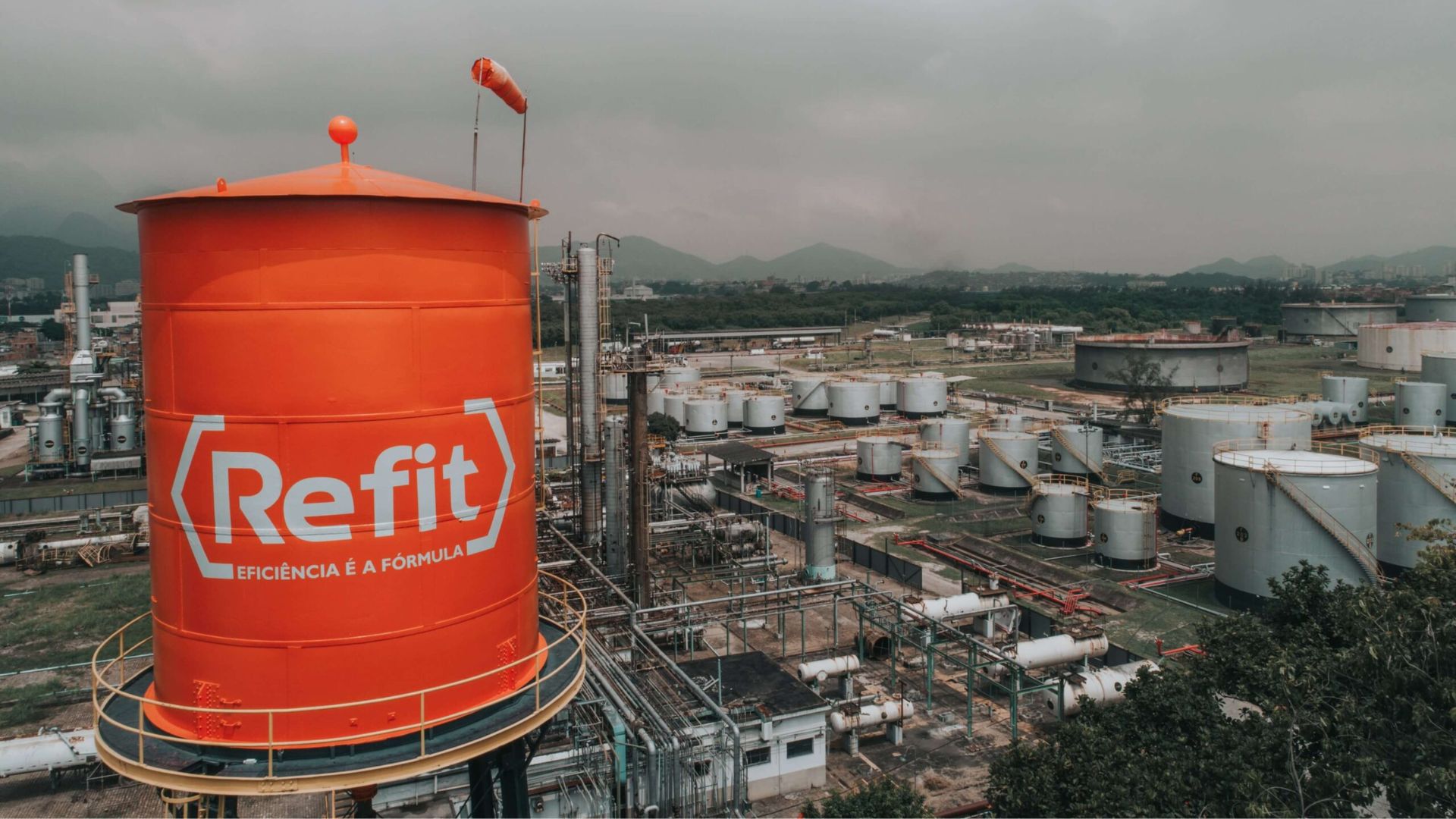
Manguinhos Refinery (Refit) Obtains Partial Release from ANP After Meeting Almost All Requirements, Moving the Fuel Market and Signaling Impact on National Supply
On October 25, 2025, the National Agency of Petroleum, Natural Gas and Biofuels (ANP) authorized the partial resumption of operations of the Manguinhos Refinery (Refit), located in Rio de Janeiro. The decision came after the company met 10 out of 11 requirements imposed by the regulatory agency during a rigorous inspection conducted in September.
Refit’s Shutdown: Causes and Consequences
The release includes essential activities such as movement, storage, shipping, and loading of products. However, the distillation tower remains shut down until Refit proves the technical need for its use in gasoline production. This measure aims to ensure regulatory compliance and operational safety of the refinery.
The shutdown of the Manguinhos Refinery occurred on September 26, 2025, after the ANP identified irregularities in the plant’s operations. Among the main points raised was the suspicion of irregular importation of unspecified gasoline, labeled as naphtha or condensate.
-
Petrobras announces new oil discovery in the pre-salt of the Campos Basin and reinforces Brazil’s prominence with high-quality reserves that can increase production and energy revenues.

-
Alert in the fuel market: Analysts and a former director of ANP warn that oil prices may worsen in the coming months due to global instability.

-
Ocyan brings executives and digital solutions to Macaé Energy 2026 and highlights offshore expansion with Nexio and a new base in Macaé.

-
Petrobras advances 4.6% with rising oil prices and the dollar, reigniting the debate on macro risks, pricing policy, and fiscal impact in Brazil.

According to the ANP, this practice could aim to inappropriately reduce the tax burden. Additionally, structural and operational flaws compromising product traceability and facility safety were pointed out. The measure was preventive and sought to protect the fuel market and consumers from potential risks.
Refit Presents Reports and Seeks to Reverse Shutdown
In response to the accusations, Refit presented two independent technical reports proving that the seized products were not automotive gasoline, but rather crude oil.
The company also stated that it followed all ANP regulations and that since 2015, it has reduced contaminated areas in its plant by more than 98%, as verified by Ibama in a recent inspection.
The partial release is the result of a technical and regulatory effort to ensure the continuity of operations within legality, the company stated.


Areas Released by ANP at Manguinhos Refinery
The partial release of Refit includes the following operational areas:
- Product movement
- Storage
- Shipping
- Loading
These activities are essential for the fuel distribution logistics, especially in the state of Rio de Janeiro. However, the distillation tower — a key component in gasoline production — remains shut down. The ANP justified that, so far, the company has not demonstrated the technical need to use the distillation columns with the imported raw materials.
Refit and the Fuel Market: Effects of Partial Resumption
The partial resumption of operations at the Manguinhos Refinery may have significant effects on the fuel market, especially at a regional level. The plant has the capacity to process about 13,000 barrels per day, which represents a modest fraction of national production but is significant for local supply.
The total interruption of Refit’s activities raised concerns about price increases and reduced supply in the state of Rio de Janeiro. With the partial release, a gradual normalization of logistics and distribution is expected.
Furthermore, the measure reinforces the ANP’s role as a regulatory and supervisory body, promoting greater transparency and safety in the sector.
Sector Reactions to ANP’s Decision
The Brazilian Institute of Oil and Gas (IBP) expressed support for the ANP’s decision, highlighting that monitoring is essential to combat fraud and moralize the sector. It is an essential step in the moralization of a sector important for the state’s and country’s economy, said IBP.
Experts in the sector also point out that the ANP’s actions may encourage other refineries to strengthen their internal controls and adopt stricter compliance practices.
History of Manguinhos Refinery and Refit’s Operations
The Manguinhos Refinery, currently operated by Refit, has a long history in the Brazilian oil sector. Founded in 1954, the plant has undergone various phases of modernization and faced regulatory and environmental challenges over the decades.
In recent years, Refit has sought to reposition the refinery as a competitive alternative in the fuel market, focusing on the importation of raw materials and regional distribution. However, the recent shutdown exposed operational weaknesses that are now being addressed.
The Importance of ANP in Regulating the Fuel Market
The ANP has intensified its monitoring actions at refineries and fuel distributors throughout the country. The agency acts to ensure that operations are in compliance with technical, environmental, and tax regulations.
In the case of Refit, the ANP demonstrated firmness in imposing the shutdown and requiring the plant’s compliance. The partial release, in turn, shows that the agency is willing to recognize companies’ advancements, provided they are properly proven.
With the partial release, the expectation is that Refit will gradually resume its participation in the fuel market. However, the continued shutdown of the distillation tower limits the productive capacity of the refinery.
Complete regularization will depend on the presentation of robust technical justifications and ANP’s approval. In the meantime, the market remains attentive to developments and the stability of regional supply. Refit may also face reputational and operational challenges, requiring investments in compliance, transparency, and communication with stakeholders.
Lessons for the Oil and Fuel Sector
The partial release of the Manguinhos Refinery by the ANP represents an important milestone in the relationship between regulation and operation in the fuel sector. The episode highlights the need for technical compliance, transparency, and responsibility on the part of companies.
For the fuel market, the partial resumption of Refit’s activities may relieve logistical pressures and contribute to price stability in the short term. However, the case serves as a warning for the entire sector about the importance of strictly following regulatory standards.
The ANP’s firm actions and Refit’s technical response demonstrate that it is possible to balance oversight and operational continuity, provided there is a commitment to legality and safety.









Seja o primeiro a reagir!