





 Portuguese
  English
  Spanish
  3 min of reading
  0 comments


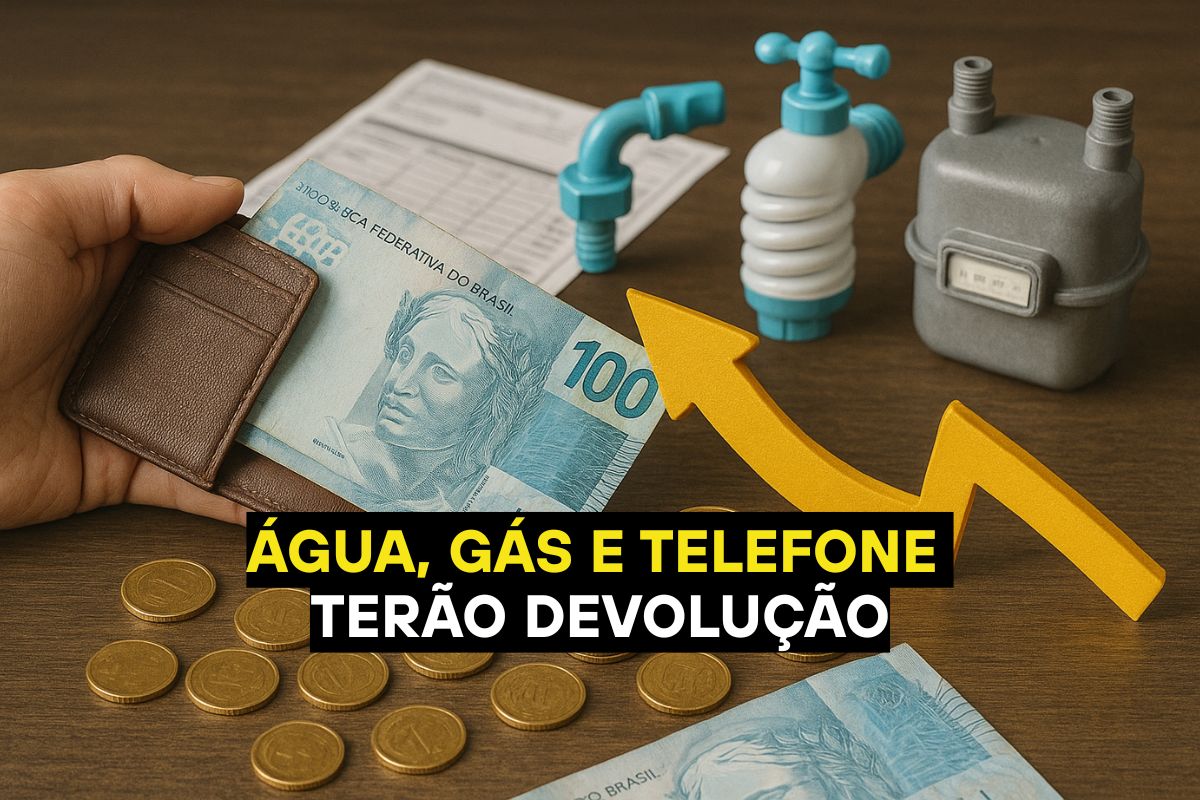
New Mechanism of the Tax Reform Will Refund Part of the Taxes Paid on the Consumption of Essential Services and Seeks Greater Fiscal Justice
The Tax Reform has brought one of the most anticipated measures to ease the burden on low-income families: tax cashback. The system will allow for the refund of part of the taxes collected on electricity, water, cooking gas, and even telecommunications services.
According to experts, the measure represents a step forward in the quest for fiscal justice, as it reduces the impact of the tax burden on those who feel its weight the most in their budgets. Although it still depends on complementary regulations, the mechanism already has percentages and deadlines defined by law.
What Is the Tax Reform Cashback
The cashback from the Tax Reform works as an automatic refund: after paying bills for essential services, part of the tax value is returned to the consumer.
-
A new Brazilian shopping center worth R$ 400 million will be built in an area equivalent to more than 4 football fields, featuring 90 stores, 5 cinemas, a supermarket, a college, and parking for 1,700 cars, potentially generating 3,000 jobs.

-
Larger than entire cities in Brazil: BYD is building a 4.6 km² complex in Bahia with a capacity for 600,000 vehicles per year, but the discovery of 163 workers in conditions analogous to slavery has shaken the entire project.

-
With an investment of R$ 612 million, a capacity to process 1.2 million liters of milk per day, Piracanjuba inaugurates a mega cheese factory that increases national production, reduces dependence on imports, and repositions Brazil on the global dairy map.

-
Brazilian city gains industrial hub for 85 companies that is equivalent to 55 football fields.


The refund will be applied to the CBS (Contribution on Goods and Services) and the IBS (Tax on Goods and Services), taxes that replace PIS, Cofins, ICMS, and ISS.
According to Complementary Law 214/2025, the cashback will come into effect in 2027 for the CBS and in 2029 for the IBS.
The refund must occur within 15 days after the calculation of the amounts, with an additional 10 days for the transfer to the beneficiaries.
Refund Percentages Already Defined
The legislation establishes specific refund percentages for different services.
The gas cylinder of up to 13 kg, for example, will have 100% refund of the CBS and 20% of the IBS, while electricity, water, sewage, telecommunications, and natural gas will have 20% cashback on each tax.
Families registered in the CadÚnico will be the primary beneficiaries, ensuring that the funds actually reach those who need them most.
Additionally, the federal government, states, and municipalities may define even higher percentages for their share of revenue, expanding the social reach of the measure.
Objectives of the Refund Mechanism
The main objective of the cashback is to reduce the regressivity of the Brazilian tax system, which has historically penalized low-income consumers more.
By refunding part of the taxes, the government seeks to align the tax burden with the contributory capacity of each citizen.
Another central point is to decrease the impact of taxes on the consumption of basic services, which usually represent a significant portion of monthly expenses for families.
Thus, the measure aims to strengthen purchasing power and increase social inclusion.
Who Will Be Entitled to the Benefit
The cashback from the Tax Reform will be restricted to low-income families registered in the CadÚnico.
Additionally, it is necessary for the per capita family income to be up to half a minimum wage, for the CPF to be regularized, and for the residence to be in Brazil.
According to Bernard Appy, Extraordinary Secretary of the Tax Reform, the expectation is that the mechanism will increase purchasing power by up to 10% over the next 15 years.
For him, the Dual VAT, along with the cashback, should also reduce costs for companies and reflect in lower prices for consumers.
The cashback from the Tax Reform represents an important step toward making the tax system fairer and more balanced.
By refund taxes on energy, water, gas, and telephony, the mechanism can ease essential expenses and increase the disposable income of low-income families.
And you, do you believe that this refund model will really improve the lives of poorer Brazilians? Or do you think the impact will be limited given the high tax burden? Leave your opinion in the comments — we want to hear from those who feel this in their daily lives.








Seja o primeiro a reagir!