





 Português
  Inglês
  Espanhol
  5 min de leitura
  0 comentários


Discover Why Renewable Energy Regulation Is Essential for Sustainable Advancement, Energy Security, and the Fight Against Climate Change.
In recent decades, the world has undergone an important energy transition.
Indeed, we have moved from an almost absolute dependence on fossil fuels to an era in which renewable sources, such as solar, wind, biomass, and hydroelectric, are gaining more and more ground.
In this context, at the heart of this movement, there is an essential element that ensures good functioning, security, and balance between progress and environmental preservation: renewable energy regulation.
-
Renewable energy advances over protected areas in Brazil, and a survey by the Energy Transition Observatory reveals silent impacts that challenge environmental conservation and pressure sensitive traditional territories.

-
Rio Grande do Sul accelerates energy transition: State invests in renewable technologies and consolidates decarbonization strategies and pathways to attract billions in new industrial investments.

-
With 160,000 m² of collectors, an area larger than 20 football fields, Silkeborg, in Denmark, hosts a solar thermal plant that heats 19,500 homes and could become the largest solar heating plant in the world.

-
A study reveals the expansion of renewable energy procurement in Brazil and shows how companies are taking advantage of opportunities to reduce expenses, ensure energy efficiency, and strengthen strategic environmental commitments.


Regulation, therefore, does not just represent a set of bureaucratic rules.
It is the foundation that allows for the sustainable growth of clean energy sources, protecting both the environment and societal interests.
To understand its importance, it is necessary to go back in time a bit and understand how this discussion has evolved over the years.
Moreover, regulation helps to address practical issues involving the production and use of renewable energy.
For example, the supply of energy needs to be stable, even when the sun is not shining or the wind is not blowing at a given time.
Thus, technical and operational regulations ensure this stability, by integrating renewable sources with other forms of generation and storage.
The Historical Context of Energy Regulation
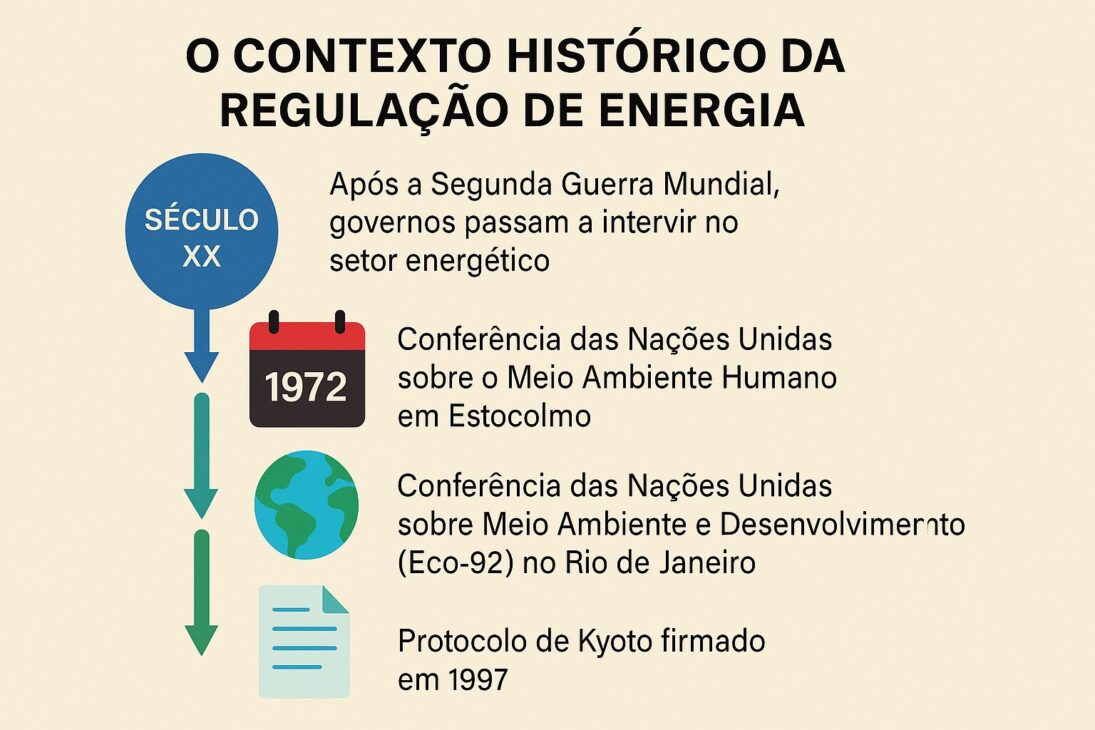
The need to regulate the energy sector began to gain strength in the 20th century, especially after World War II.
According to the website of the International Energy Agency (IEA), during that period, governments began to intervene more intensely in the supply and distribution of energy, considering it an essential service for economic development and the well-being of the population.
However, the predominant energy still came from fossil sources, such as oil and coal.
Only in the 1970s, with the oil crises, did the international community begin to discuss more sustainable energy alternatives.
The United Nations Conference on the Human Environment, held in Stockholm in 1972, was the first major international event to address the relationship between energy and the environment, as recorded on the UN Environment website.
From there, the international community began to associate economic development with the need to preserve natural resources.
Over the years, especially after the United Nations Conference on Environment and Development (Eco-92), held in Rio de Janeiro in 1992, and the Kyoto Protocol in 1997, the world saw the emergence of the concept of sustainable development as a global priority.
As pointed out by the United Nations Framework Convention on Climate Change (UNFCCC) website, these events spurred the creation of legal frameworks and public policies to encourage clean energy sources.
In this process, many countries began to develop their own regulations, adapting international principles to their economic, social, and environmental realities.
This diversity makes regulation a strategic tool for national development, promoting investments, technological innovation, and job creation.
What Does Regulating Renewable Energy Mean?
Renewable energy regulation involves a set of laws, guidelines, public policies, and technical standards that organize the production, distribution, and consumption of energy from renewable sources.
It ensures that this sector grows in an orderly manner, with real benefits for society and the environment.
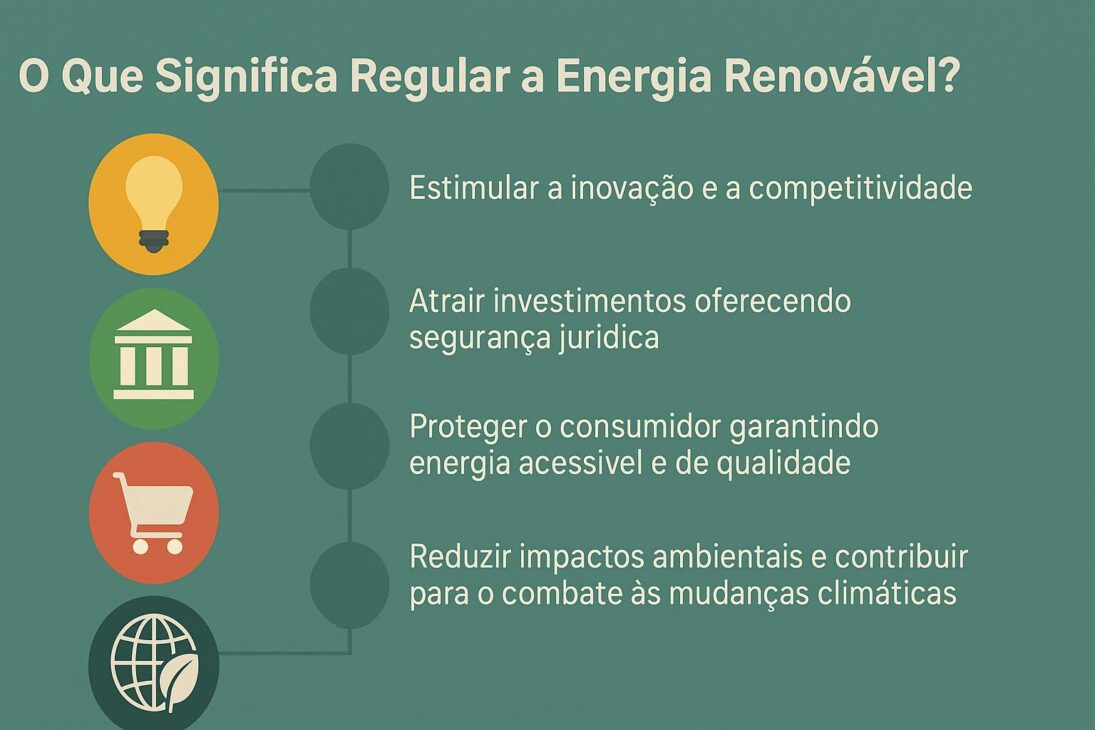
Among the objectives of this regulation are to stimulate innovation and competitiveness, attract investments by providing legal certainty, protect consumers by ensuring accessible and quality energy, reduce environmental impacts, and contribute to the fight against climate change.
This regulation happens at different levels: national, state, and even municipal. It also involves international agreements, such as the commitments made under the Paris Agreement of 2015, according to the UNFCCC website, where countries commit to increasing the use of clean sources to reduce greenhouse gas emissions.
Another important aspect consists of the regulation of distributed generation, which allows households, businesses, and industries to produce their own renewable energy, usually solar, and inject the surplus into the electrical grid.
This change transforms the electric sector, as it decentralizes production and democratizes access to clean energy.
Regulation and Innovation Go Hand in Hand
One of the biggest challenges of regulation is keeping pace with the rapid technological innovation in the energy sector.
New models of generation, storage, and distribution of energy are constantly emerging.
Solar photovoltaic energy, for example, has experienced exponential growth in recent years, driven by improvements in technology and cost reductions, according to data from the International Renewable Energy Agency (IRENA).
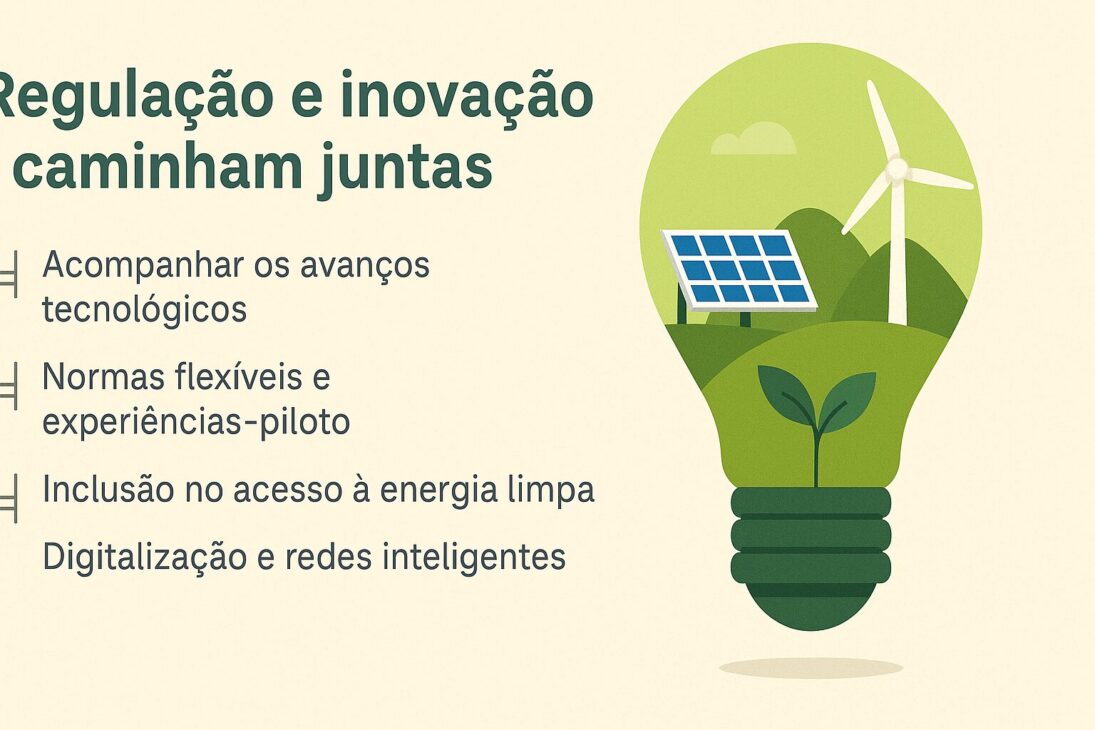
To ensure that these innovations benefit society broadly, regulation needs to keep pace with this advancement.
This means creating more flexible rules, revising outdated legislation, and making room for pilot experiences, such as “energy communities,” where groups of consumers share locally generated energy.
Smart regulation also considers social aspects, like the inclusion of low-income populations in access to clean energy.
Subsidy programs and specific incentives help ensure that the energy transition does not widen inequalities, but rather reduces historical injustices in access to basic services.
Another relevant point is the role of digitalization and new information technologies in managing the electrical system.
Regulation should allow for the adoption of smart grids, which improve monitoring, efficiency, and integration of renewable sources.
This facilitates the balance between supply and demand.
The Challenges of Regulation in a Transitioning World
Although the importance of renewable energy regulation is recognized, it still faces many challenges, both in developed countries and in developing nations.
Among the main obstacles are the slow pace of legal processes, the overlap of norms between different levels of government, the lack of continuous financial incentives, and the resistance from traditional sectors of the energy industry.
Overcoming these challenges requires dialogue among government, civil society, the private sector, and the scientific community.
The path is long, but the benefits are significant.
In addition to reducing environmental impacts, renewable energy creates jobs, promotes regional development, and makes energy systems more resilient to climate change.
In Brazil, bureaucratic processes for environmental licensing delay the implementation of new projects.
Moreover, regulation must address the specificities of the different regions of the country, which have distinct potentials and demands.
The active participation of society plays a decisive role.
Awareness of the importance of renewable energy and support for transparent and efficient public policies accelerate the energy transition.











Seja o primeiro a reagir!