





 Portuguese
  English
  Spanish
  4 min of reading
  1 comment


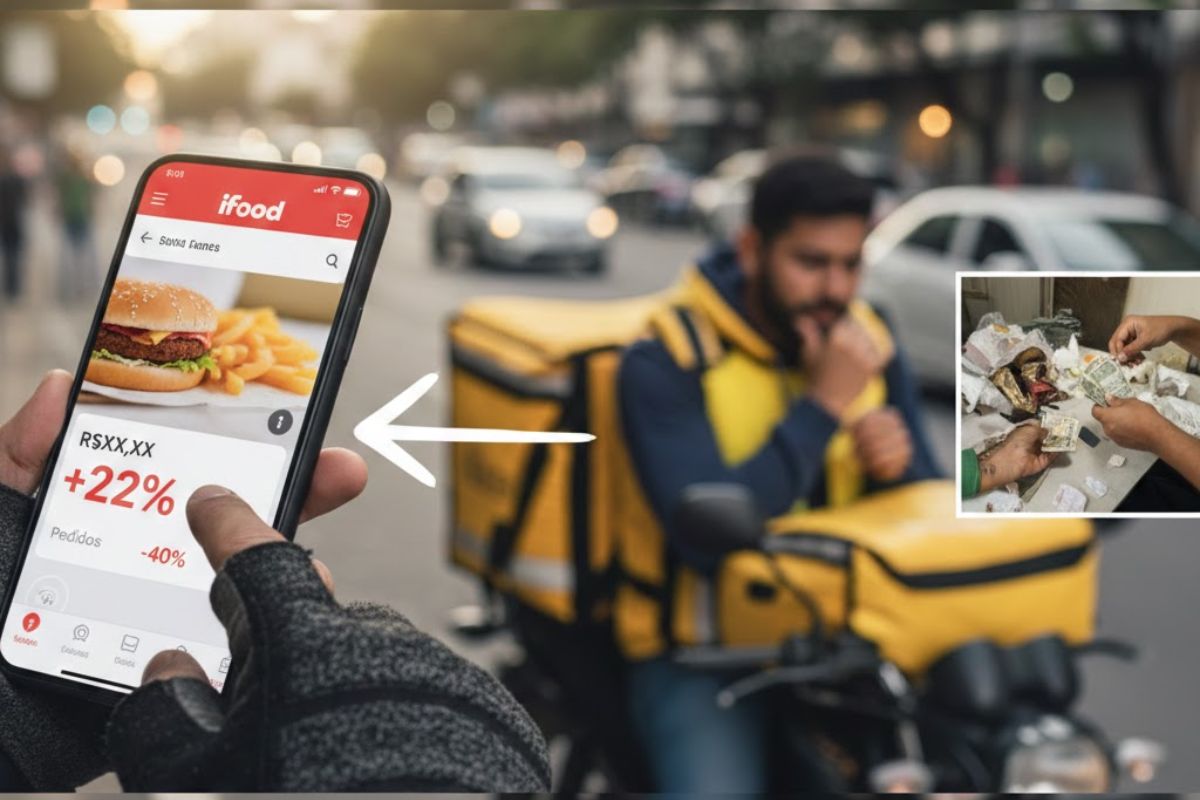


Internal Study of iFood Indicates That the Rule Proposed by Boulos for Delivery Apps Would Increase the Average Price of Dishes by 22 Percent, Reduce Orders by 40 Percent, and Cut Incomes for Deliverers by Up to 77 Percent Across Brazil Pressured by Inflation
The promise to regulate work in delivery apps moved from electoral rhetoric to the political and economic arena. The federal government, the Chamber of Deputies, platforms, and deliverers are disputing, point by point, what the final design of the rules will be that will define how much is paid, how much is charged, and who will bear the cost in the delivery chain.
At the center of the dispute is a proposal for minimum remuneration defended by Guilherme Boulos, currently the minister of the General Secretariat of the Presidency, which foresees a fixed amount of R$ 10 plus R$ 2.50 per kilometer traveled. A study conducted by iFood projects that this arrangement could increase snack prices by 22 percent, reduce orders by 40 percent, and cut the incomes of the deliverers by up to 77 percent, if the transfer is not absorbed by the consumer.
What Is Being Discussed in the Regulation of Delivery Apps
The regulation of work in delivery apps was one of the campaign promises of President Luiz Inácio Lula da Silva and is also publicly advocated by the President of the Chamber, Hugo Motta.
-
50 viaducts, 4 tunnels, 28 bridges, and 40 kilometers of bike paths: BR-262 in Espírito Santo will receive 8.6 billion reais for the largest engineering project in the state’s history, inspired by the Immigrant Highway in São Paulo.

-
Brazil produces too much clean energy and doesn’t know what to do with it: over 20% of solar and wind capacity was wasted in 2025 while investors flee and 509 renewable generation projects were abandoned in the last year.

-
Piauí will produce a new fuel that replaces diesel without needing to change anything in the truck’s engine and reduces pollutant gas emissions by half: truck drivers from all over the Northeast are already celebrating the news that will arrive later this decade.

-
A new Brazilian shopping center worth R$ 400 million will be built in an area equivalent to more than 4 football fields, featuring 90 stores, 5 cinemas, a supermarket, a college, and parking for 1,700 cars, potentially generating 3,000 jobs.


Since 2023, however, the topic has dragged on in public hearings, divergent statements within the government itself, and strong pressure from companies, restaurants, and workers.
The initial diagnosis is known: deliverers live in a regulatory limbo, with no clear framework in the CLT and without an own model that defines social rights, pension protection, and a minimum remuneration base.
At the same time, platforms argue that sudden changes could undermine the current business model, reduce orders, and hit precisely those who live off delivery apps.
How the Minimum Amount Proposal Defended by Boulos Works
In the public debate, Boulos presented an objective design for the remuneration of those working in delivery apps:
- minimum payment of R$ 10 per delivery
- addition of R$ 2.50 per kilometer traveled
The formula aims to ensure a more predictable base for deliverers, reducing the risk of very long or delayed rides with remuneration considered low by the category.
In practice, however, any structural adjustment of this type needs to be absorbed by some link in the chain: platforms, restaurants, or final consumers.
It is precisely at this point that the iFood study comes in, projecting the effect of this minimum fee on the price of snacks and on the volume of orders made on delivery apps.
What the iFood Study Projects for Prices and Order Volume
According to the study presented by iFood, the implementation of the minimum remuneration suggested by Boulos would have three main effects on the delivery apps market:
average increase of 22 percent in dish prices for consumers
40 percent decline in the number of orders made on the platform
potential reduction of up to 77 percent in the income of deliverers
The reasoning is straightforward: if the cost per delivery rises broadly and the transfer is passed on to the consumer, a significant part of the public will stop ordering as frequently, reducing the total volume of available rides.
With fewer orders in the market, the final income of deliverers tends to fall, even with a higher minimum remuneration per ride.
From the platform’s perspective, the study serves as a warning that a poorly calibrated adjustment could produce the opposite effect desired by those advocating for workers, undermining the economic sustainability of the delivery apps model.
Between Labor Rights and Risk of Market Contraction
On the other side of the debate, unions and groups of deliverers argue that the current situation is unsustainable, with long hours, high exposure to risks, and little predictability of monthly earnings.
The defense of a minimum remuneration in delivery apps appears as an attempt to correct an asymmetry where the platform controls the flow of orders while the worker absorbs much of the risks.
The impasse lies in finding a balance point. If the minimum remuneration is set too far below the proposed amount, deliverers feel that nothing changes in practice.
If it is close to the formula of R$ 10 plus R$ 2.50 per kilometer, the iFood study projects a significant contraction in demand within the delivery apps ecosystem, directly impacting restaurants that depend on delivery revenue and consumers who currently fit this expense into their monthly budget.
Legislative Path and Uncertainties for the Future of Delivery Apps
To try to organize the proposals under discussion, the President of the Chamber created a commission in May dedicated to consolidating suggestions gathered in hearings with representatives from platforms, restaurant owners, and deliverers.
The goal is to feed the text of PLP 152/2025, authored by Deputy Luiz Gastão, which should serve as the basis for the new regulation of delivery apps.
While the final text is not determined, no one knows precisely how much delivery will cost or how much deliverers will earn in the coming years.
The prolonged uncertainty keeps the category in a state of insecurity and leaves companies and restaurants operating without clarity regarding what the future regulatory cost of each order will be.
Given this scenario, in your routine would you be willing to pay more for snacks on delivery apps to ensure higher minimum income for deliverers, or do you think that would end up making you order much less for delivery?









Meu o Boulos é sensacional!!! ISSO MESMO