





 Portuguese
  English
  Spanish
  6 min of reading
  0 comments


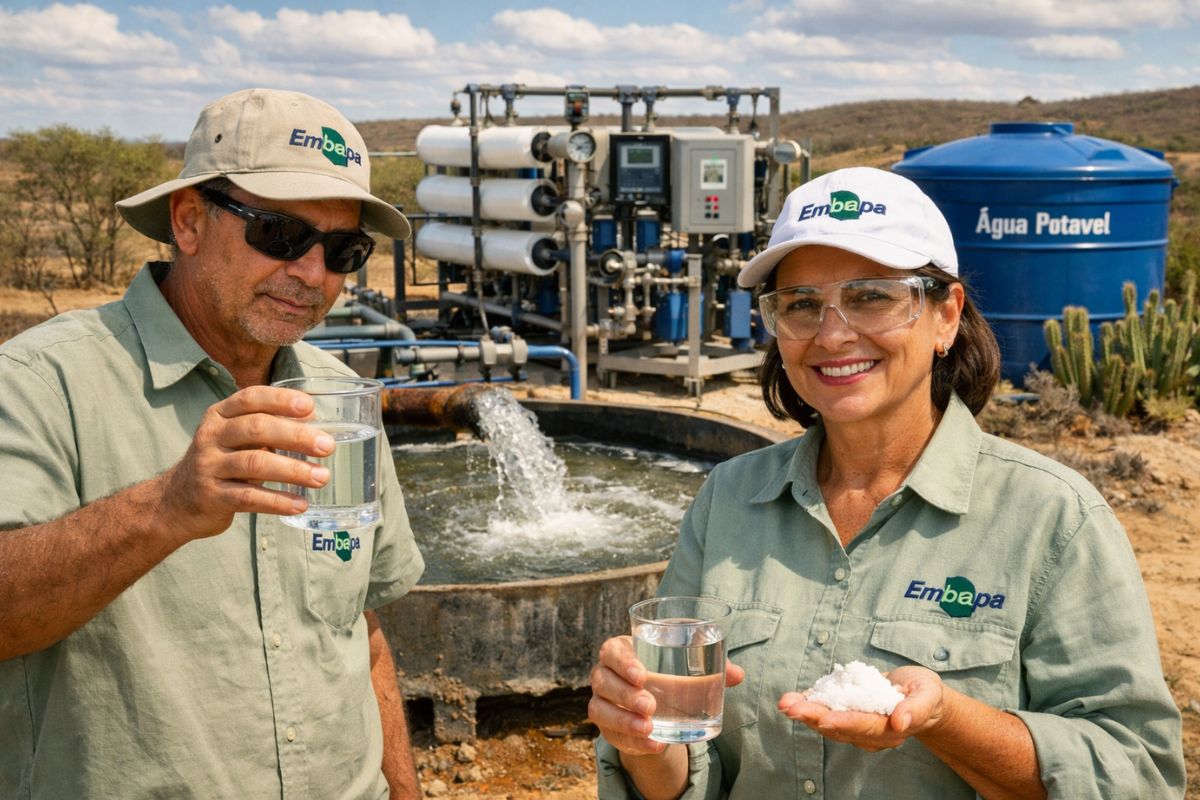
The Sal da Terra Project, led by Embrapa Semiárido, develops productive systems that use saline water from wells in the Semiárido region to irrigate forage, grains, and integrated aquaculture and agriculture systems, with plans to implement 50 biosaline production units in six states of the northeastern region
The saline water that exists underground in much of the Brazilian Semiárido has always been treated as a problem. Unsuitable for conventional irrigation and rejected by traditional agriculture, this brackish water remained stagnant in wells that served almost no purpose. Now, researchers from Embrapa Semiárido have discovered how to transform this wasted resource into a productive tool. The Sal da Terra Project develops adapted agricultural systems that use saline water to produce forage, grains, and even fish in a region where 140,000 wells contain this type of water.
Agricultural production in the Semiárido has always depended on rainfall, making farmers vulnerable to prolonged droughts that devastate crops and livestock. Biosaline agriculture emerges as an alternative to break this dependency, integrating crops, livestock, and aquaculture in systems that coexist with salinity instead of fighting it. The project plans to implement 50 units of biosaline production in six states of the region, bringing practical solutions directly to the field.
What is biosaline agriculture and why does it work with saline water

Biosaline agriculture is a production model that uses saline or brackish water to irrigate crops and raise animals in integrated systems. Instead of treating salinity as an obstacle, the approach selects plant and animal species that tolerate or even benefit from high levels of salts in the water.
-
China inaugurates a ghost factory that operates in the dark 24 hours a day without any human workers and produces 10 million smartphones a year using 97% of equipment developed by the company itself.

-
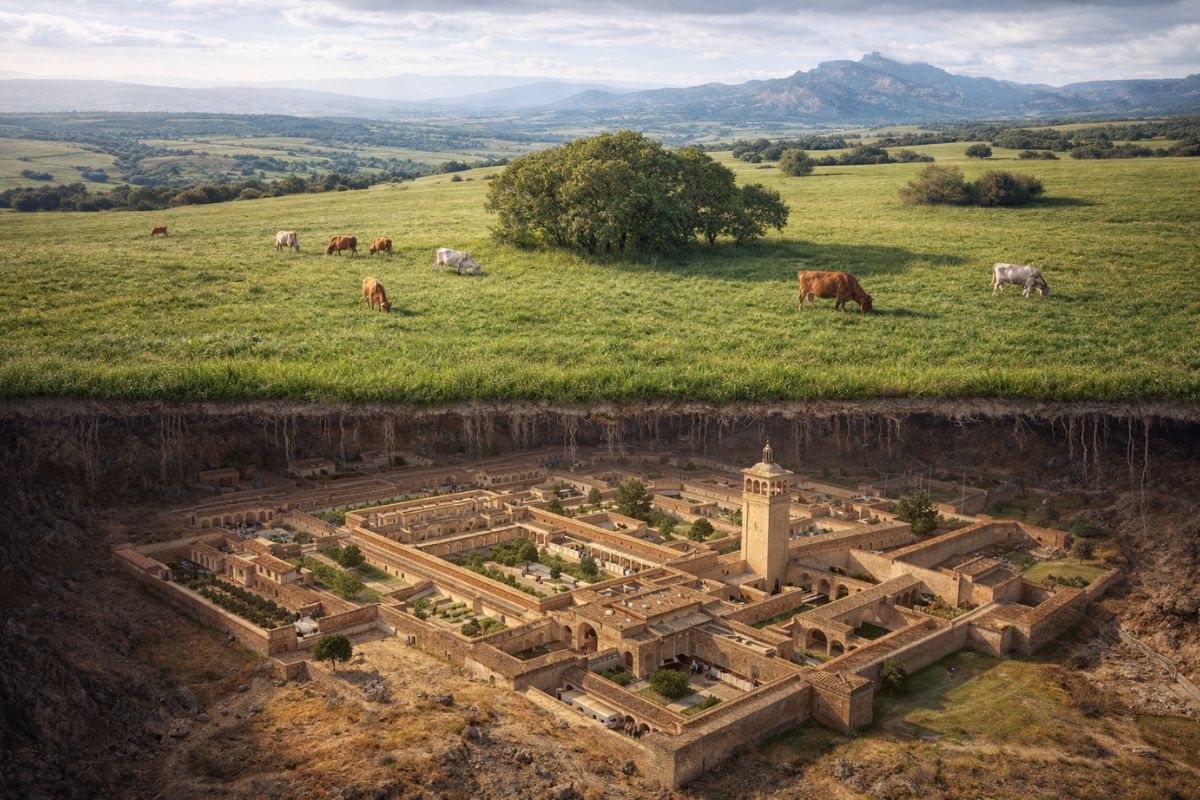
A thousand-year-old caliphate city may be hidden beneath a pasture in Spain where anyone could walk by without noticing anything, but LiDAR technology has revealed terraces, walls, and a planned urban grid beneath the surface.
-
In 2028, Earth will cross debris left by the Swift-Tuttle comet in 1479, and the world’s most famous meteor shower could turn into a storm of hundreds of shooting stars per hour, a phenomenon that hasn’t occurred since before Columbus arrived in America.

-
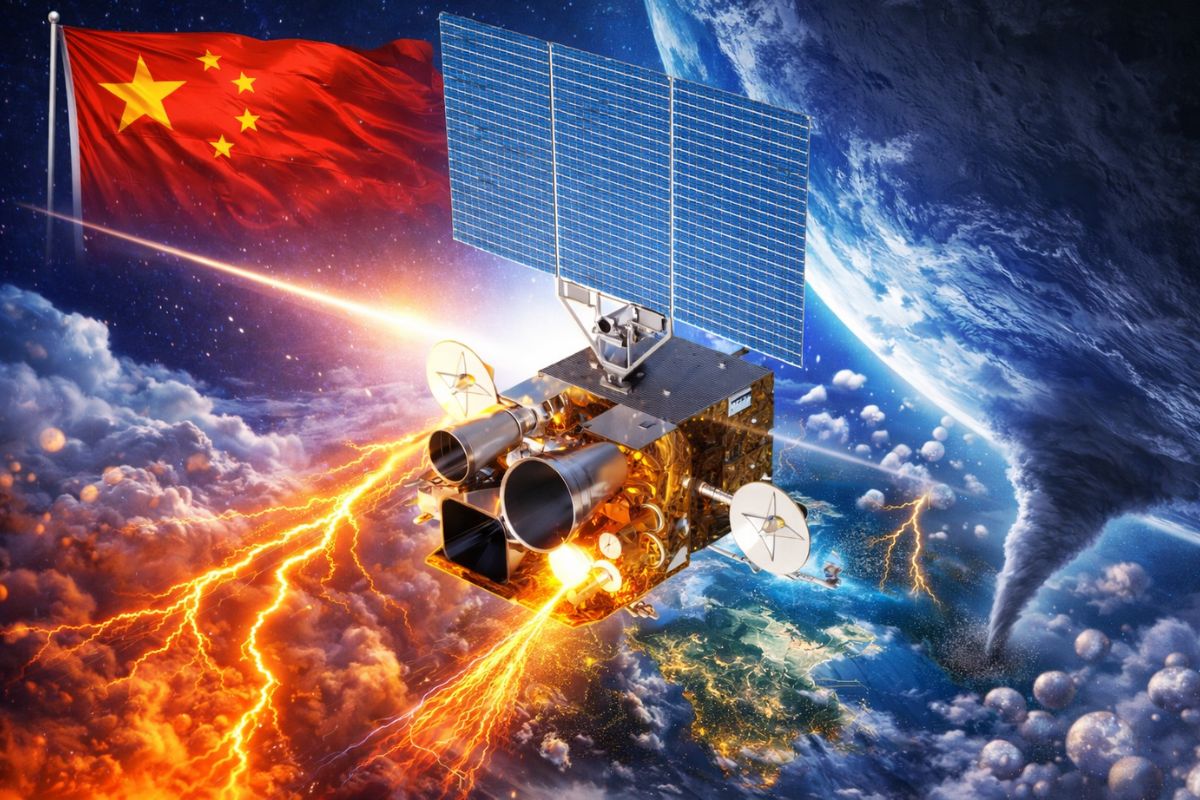
China launches the world’s most advanced weather satellite with 6 scientific instruments, a lightning detector, and artificial intelligence capable of predicting storms, tornadoes, and hail with unprecedented accuracy.

The concept is not exclusive to Brazil: specialized centers such as the Biosaline Agriculture Institute in Dubai, UAE, and researchers in China have already developed rice varieties capable of producing with seawater.
For researcher Everaldo Porto from Embrapa Semiárido, the world is experiencing what can be considered a new agricultural revolution based on the use of saline water for irrigation.
In the Brazilian Semiárido, this revolution has a fertile ground: there are about 140,000 wells drilled in the region, many with brackish or saline water that is unsuitable for conventional irrigation but can feed biosaline systems.
The Sal da Terra Project aims to transform these underutilized wells into production engines for communities that currently rely solely on rainfall.
What is produced with saline water in the Brazilian Semiárido

The systems developed by Embrapa integrate different activities in relatively small areas. In about one hectare, it is possible to combine aquaculture, forage production, and agricultural crops intended for community consumption, all irrigated with saline water.
Studies show that crops such as saltwort, gliricidia, and elephant grass perform well when irrigated with highly saline water, making them ideal for feeding livestock during dry periods when the Caatinga vegetation loses biomass and the food supply for animals plummets.
The production of forage irrigated with saline water is especially relevant during prolonged droughts that hit the Semiárido. Without alternative feed, breeders lose animals or are forced to sell them at ridiculous prices.
With the biosaline system, the farmer maintains forage production even without rain, breaking the cycle of losses that repeats with each drought. In addition to forage, the systems also allow for the production of seedlings of native Caatinga species and irrigated fruit cultivation adapted to local conditions.
The care that the use of saline water requires to avoid destroying the soil
Using saline water in agriculture is not simply about opening the well and irrigating. Researcher Welson Simões from Embrapa Semiárido warns that the problem often lies not in the salinity of the water itself, but in the accumulation of salts in the soil over time.
Without proper management, irrigation with saline water can degrade the land and render it unproductive in a few years.
In addition to salinity, another critical factor is sodicity, related to excess sodium in the water or soil. While some salts can be removed by the natural infiltration of rainwater, sodium alters the soil structure, reduces infiltration capacity, and harms plant development.
Therefore, the research of the Sal da Terra Project involves detailed analyses of soil, water, and cultivation systems, as well as the selection of varieties more tolerant to salinity. The use of saline water without this technical knowledge can cause more harm than good.
The 50 biosaline production units that will bring technology to the field
The Sal da Terra Project is not limited to the laboratory. The initiative plans to implement 50 biosaline production units in six states of the Semiárido, functioning as technological showcases and demonstration units.
In these spaces, farmers will be able to practically learn about different productive alternatives adapted to local conditions, including systems that use saline water to irrigate, raise fish, and produce forage simultaneously.
Welson Simões highlights that part of the technical knowledge required has been built over decades of Embrapa research in the Semiárido. The strategy now is to expand these studies and transfer solutions to the field through practical demonstrations that allow farmers to see the results before adopting the system.
The units will demonstrate integrated agricultural systems, production of seedlings of native Caatinga species, irrigated fruit cultivation with saline water, and other technologies developed by Embrapa and partner universities.
Why saline water can change agriculture in the Brazilian Semiárido
The Brazilian Semiárido is home to millions of people whose livelihoods depend on agriculture vulnerable to lack of rainfall. Each prolonged drought means crop loss, animal deaths, and rural exodus.
The saline water that exists abundantly underground in the region was seen as unusable, but science is proving that it can be the basis for productive systems that function independently of rainfall.
The potential impact is enormous. With 140,000 wells available and a technology that allows transforming this saline water into a productive resource, the Semiárido can cease to be synonymous with agricultural scarcity.
Biosaline agriculture does not replace conventional irrigation where it is possible, but offers a real alternative where the only option until now was to wait for rain. It is a paradigm shift that places Brazilian science at the forefront of a global trend.
When the problem becomes a solution in the Sertão
The saline water of the Semiárido has been treated as a problem for decades. Now, Embrapa is showing that 140,000 wells of saline water can transform into production sources for communities that had no alternative to rain.
With the Sal da Terra Project and its 50 demonstration units, biosaline agriculture is coming out of the laboratory and into the field.
The Sertão may be at the beginning of a silent revolution that transforms salt into food.
Did you know about biosaline agriculture? Do you think this technology can really change life in the Semiárido, or are the soil management challenges too great? Leave your comments and share this article with those interested in agriculture and innovation in the Northeast.





Seja o primeiro a reagir!