





 Portuguese
  English
  Spanish
  2 min of reading


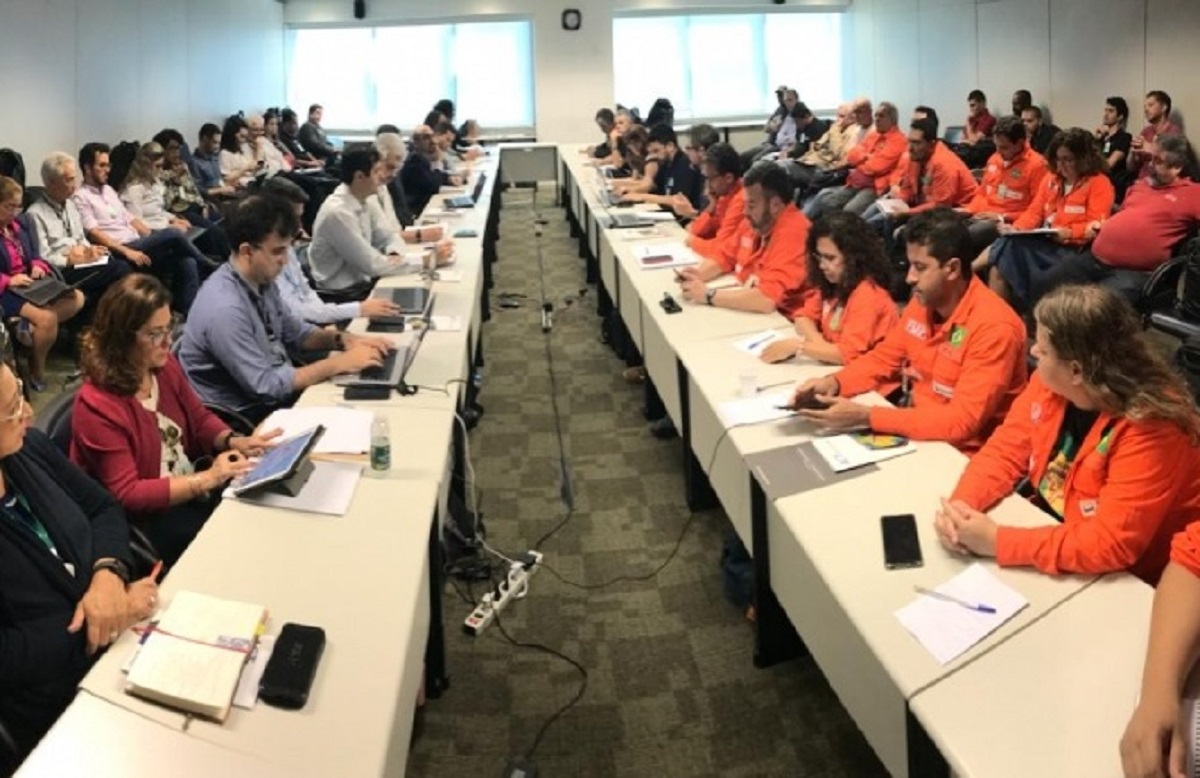
First Meeting to Define the 2019 Collective Agreement Between Petrobras and Oil Workers’ Representatives Ends Without Agreement and Was Marked by a Tense Atmosphere
The first meeting between Petrobras and workers aiming for the 2019 collective labor agreement did not start well for both sides.
The lack of agreement between the National Federation of Oil Workers (FNP), the Unified Oil Workers Front (FUP), and Petrobras marked the atmosphere of the meeting.
Petrobras’s proposal to maintain salaries without adjustment was met with shouts of “no rights fewer” from the workers, and the FNP even classified the proposal as “shameful”. (See at the end of the article for Petrobras’s proposal).
-
Government unlocks R$ 554 million for a highway that has been requested for decades and accelerates the duplication of BR.

-
Without bricks, without cement, and without endless construction: the cardboard house that is assembled in modules and can be moved.

-
Billions of barrels on the equatorial margin could lead Amapá to double its oil production in Brazil — the state aims to enter the route of companies in the Campos Basin, attract investments, and boost jobs and businesses in the oil and gas sector.

-
Without bricks, without cement, and without endless construction: the cardboard house that is assembled in modules and can be moved.

This, by the way, was not the only point that displeased the oil workers; the state company also proposed ending the payment of bonuses for those working in onshore production fields and suspending the additional payment for workers in the state of Amazonas, both measures to be adopted starting September 1st.
The oil workers were also unhappy with the changes in the Young University Program that prevent new registrations and changes or withdrawals from the course, at the risk of losing the right to the benefit.
What the Unions Think
The FNP stated that Petrobras’s collective agreement proposal cuts rights already earned in previous agreements, totaling 25 clauses from the current agreement, in addition to freezing salaries.
On the other hand, the FUP, through its coordinator, José Maria Rangel, stated that Petrobras’s proposal to remove rights obtained by workers is already aimed at preparing for the privatization of the company.
With the tense atmosphere, the meeting ended with both class entities rejecting Petrobras’s proposal and deciding that, by June 6th, they will hold assemblies to evaluate the proposal together with the workers.









Seja o primeiro a reagir!