





 Português
  Inglês
  Espanhol
  3 min de leitura
  0 comentários



Imagine a military technology so advanced that it can neutralize threats even before they become a real danger. Now, think that this technology is 100% Brazilian.
Well, Brazil has a secret weapon that could change the game for global air defense: the MAA-1 Piranha missile.
But what makes this missile so special? Is it truly capable of defending the country’s airspace against any threat? Get ready for a surprising revelation about the military power of the Brazilian Air Force (FAB).
The Hidden Power of National Technology
Developed by Mectron, a Brazilian high-tech company, the MAA-1 Piranha missile is a true gem of military engineering.
-
A bright yellow mushroom imported from Asia escaped from a cultivation farm in the United States in 2010 and is now aggressively spreading across 25 states, destroying entire communities of native fungi in American forests.

-
With 11,000 tons and sensors capable of hunting submarines at long distances, the Type 055 has become one of the most feared floating arsenals of the Chinese navy.

-
Buried under China, a colossal machine weighing 20,000 tons began operating as the largest neutrino detector on the planet and, in just 59 days, surpassed results that science took half a century to achieve.

-
Iran enters the center of a climate alert after the war emitted 5.6 million tons of CO2 in two weeks, surpassing the annual pollution of entire countries.


Equipped with an infrared guidance system, the Piranha can detect the heat signature of enemy aircraft engines with frightening accuracy, following its target until the moment of impact.
This technology places Brazil on par with the world’s greatest powers in the field of air defense.
The missile, which can reach an impressive speed of up to 4,3 thousand km/h, is designed to equip next-generation combat aircraft such as the AMX A-1, F-5EM, and Gripen NG.
With a range of up to 10 kilometers, the MAA-1 Piranha can neutralize threats long before they become a real danger to Brazilian territory.
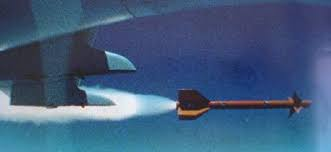
Surgical Precision in Aerial Combat
The infrared guidance system of the MAA-1 Piranha is what makes it such a feared weapon. Its infrared seeker is capable of quickly differentiating a real target from false decoys, such as flares launched by enemy aircraft.
This ensures that the missile remains focused on its target until the moment of impact, maximizing the likelihood of target destruction.
This level of precision is essential in modern aerial combat, where the ability to react quickly to threats can make all the difference between the success and failure of a mission.
MAA-1 Piranha: A Constant Evolution for Brazil’s Defense
The development of the MAA-1 Piranha began in the 1980s, during a time when Brazil sought greater technological independence in defense.
The project, led by Mectron in collaboration with the FAB and other Brazilian institutions, culminated in the first successful launch in 1993.
Since then, the missile has undergone various updates and improvements, adapting to the new demands of the modern battlefield.
The current version, known as MAA-1B Piranha, incorporates significant advancements in aerodynamics, guidance systems, and maneuverability.
These improvements have made the missile even more lethal and efficient, ensuring that Brazil remains at the forefront of military technology.
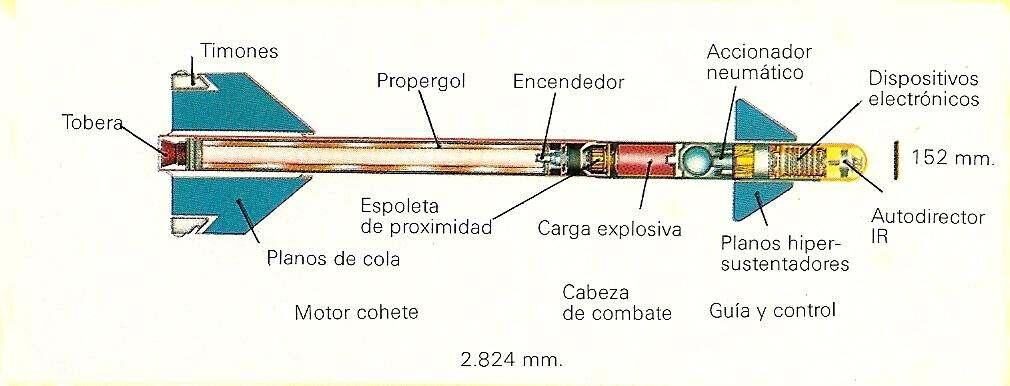
The MAA-1 Piranha as Brazil’s Aerial Shield
In the current complex and unpredictable geopolitical landscape, the ability to respond quickly to aerial threats is crucial.
The MAA-1 Piranha is not just a weapon; it is a true protective shield for Brazilian airspace.
This weapon represents a milestone in the national defense industry, demonstrating Brazil’s capacity to produce cutting-edge and innovative technology.
The Future of Brazilian Air Defense
With the incorporation of the MAA-1 Piranha, the Brazilian Air Force is better equipped than ever to face the challenges of the future.
The versatility and effectiveness of the Piranha ensure that it will remain a central piece of Brazil’s air defense for many years.
However, the continuous advancement of military technology demands constant evolution, and Brazil is prepared to continue developing innovative solutions.
The MAA-1 Piranha is not just a testament to technological excellence; it is a symbol of Brazil’s commitment to defending its territory.
With its impressive speed of 4.3 thousand km/h and infallible precision, the Piranha establishes Brazil as a power in the field of air defense. But will other nations be able to keep pace with Brazil’s innovation?






Seja o primeiro a reagir!