





 Portuguese
  English
  Spanish
  4 min of reading
  0 comments


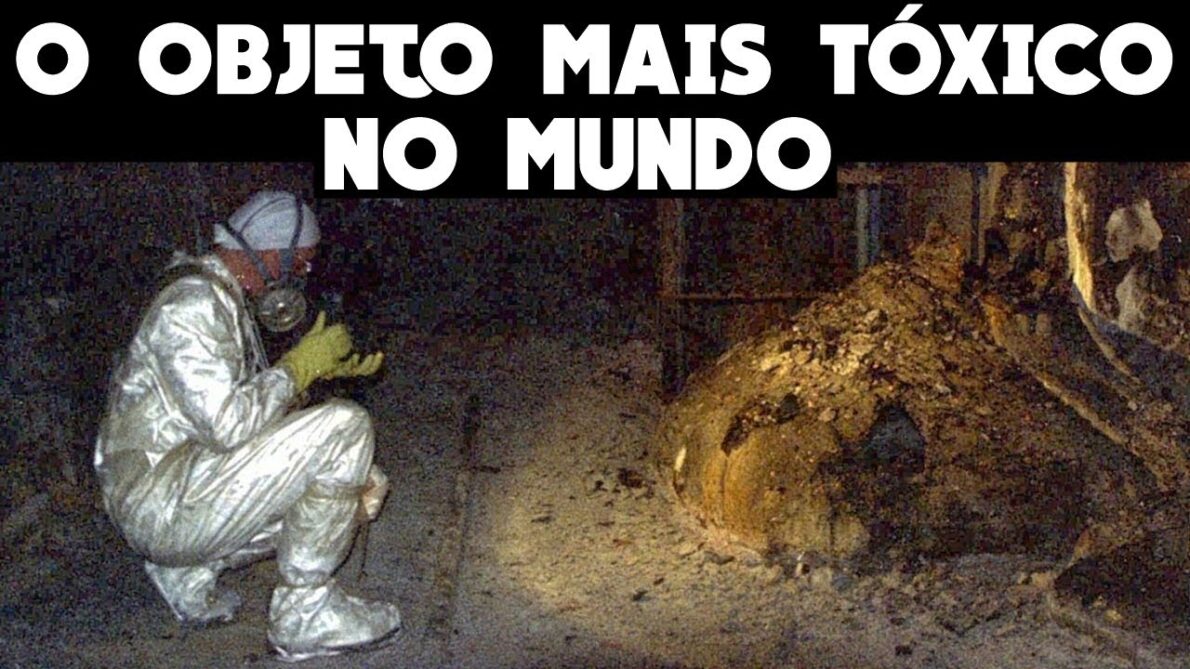
Most Dangerous Place in Chernobyl? Meet The Elephant’s Foot, A Radioactive Material That Emerged After The Tragic Accident and Is Still Emitting Radiation Today.
On the night of April 25 to 26, 1986, the world witnessed the worst nuclear accident in history at a civilian facility, when the explosion of the reactor at the Chernobyl plant released an immense radioactive cloud over the Soviet Union and much of Europe. Although the Chernobyl tragedy is widely known, few are aware of a mysterious object hidden beneath the sarcophagus that still covers the site today. In this article, we will explore this terrifying enigma that continues to concern scientists and experts decades after the disaster, and discover the most dangerous place in Chernobyl.
Understand What Is Hidden in Chernobyl and Why It Is So Dangerous
We will talk about the famous elephant’s foot, a solidified flow of radioactive material similar to lava that flowed from an old nuclear reactor, and it was named because it resembles an elephant’s foot. This lump was discovered six months after the accident and quickly became a local specialty.
However, at that time, people rarely entered the steam distribution corridor without a reason, as radiation levels in this area were exorbitant.
-
Friends have been building a small “town” for 30 years to grow old together, with compact houses, a common area, nature surrounding it, and a collective life project designed for friendship, coexistence, and simplicity.

-
This small town in Germany created its own currency 24 years ago, today it circulates millions per year, is accepted in over 300 stores, and the German government allowed all of this to happen under one condition.

-
Curitiba is shrinking and is expected to lose 97,000 residents by 2050, while inland cities in Paraná such as Sarandi, Araucária, and Toledo are experiencing accelerated growth that is changing the entire state’s map.

-
Tourists were poisoned on Everest in a million-dollar fraud scheme involving helicopters that diverted over $19 million and shocked international authorities.



As the most dangerous place in Chernobyl, being close to the elephant’s foot for just three minutes without special protective equipment would be enough to cause your death in a few months from radiation-related illness. Even machines could not withstand this level of gamma radiation.
During the first investigation, the equipment that measures the intensity of the gamma ray field exceeded its limits and was damaged. The machine was designed to measure 3000 MeV of radiation per hour, so engineers prepared a more powerful sensor, placed it on a child’s toy horse to insert it into the suspect room. When they finally managed to measure, the radiation level had reached 14,500 MeV per hour.
What Is The Composition of The Elephant’s Foot?
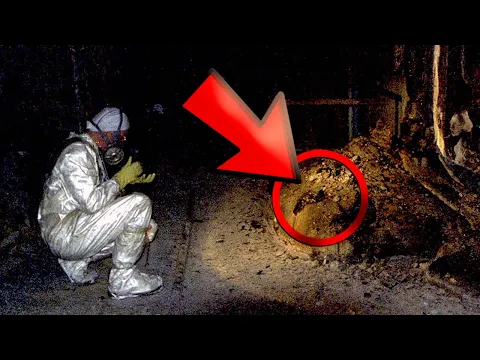
To at least understand the composition of the elephant’s foot, which is in the most dangerous place in Chernobyl, they decided, without considering the dangers, to research this object.
For this, a drill coupled to a cart was used, but the object was so hard that the drill had no effect. In fact, not only the drill but all electronic devices stopped working near this strange object weighing several tons.
As a result, the researchers became even more anxious to collect samples of these substances, so they found a soldier who volunteered to try to break the solidified lava with an axe and collect some pieces, but things did not go as well as expected, and this volunteer had to be removed from the site because he was exposed to too much radiation.
The problem was solved by a shooter who fired a piercing bullet at the object and managed to collect a fragment for analysis. What they identified is that the elephant’s foot is composed of uranium and zirconium mixed with iron, chromium, and nickel, in addition to calcium, aluminum, sodium, magnesium, silicon oxides, among other compounds.
How The Most Dangerous Place in Chernobyl Came About
The fuel for this nuclear plant was uranium dioxide pellets, inserted into zirconium fuel cladding tubes.
This tube containing fuel is called a fuel element and a controlled nuclear reaction occurs within it, but this nuclear reaction went out of control in unit 4 of the Chernobyl nuclear plant, but something even more frightening was happening inside the reactor when radioactive ash started to be released into the air. Temperatures in some places exceeded 2600 °C and, in seconds, one third of the reactor core was turned into a molten mass.
Then the fuel cladding melted and all pieces were dumped to the bottom of the reactor. In the following eight days, this lava flowed out of the damaged reactor, mingling with the serpentine isolation reactor shield, concrete, sand, and other materials it came into contact with. Since this type of lava is formed by the melting of the reactor core, it is called corium. In the Chernobyl nuclear plant accident, the radioactive lava leaked from the reactor, spread across the reactor room floor, and entered the suppression pool.










-

-

8 pessoas reagiram a isso.