





 Portuguese
  English
  Spanish
  4 min of reading
  0 comments


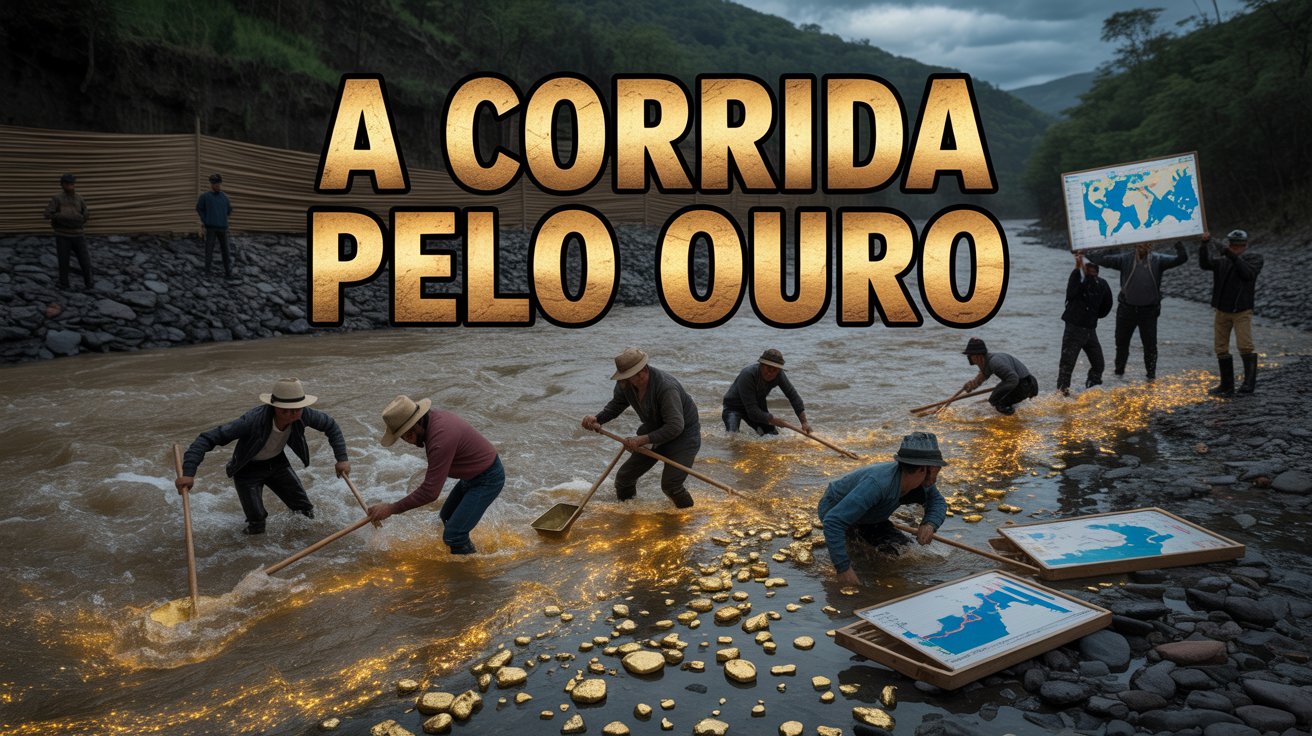
More Than 64 Tons of Gold Discovered in the Indus River Generate Illegal Rush and Could Transform an Economy Forever.
A significant mineral discovery with economic impact was recently made in Pakistan, attracting global attention.
More than 64 tons of gold were found in the bed of the Indus River, near the city of Attock, according to preliminary estimates released by the local government in May 2025.
This find represents one of the largest gold deposits identified in Asia in recent decades, with an estimated value of about 80 billion Pakistani rupees — equivalent to more than R$ 1.5 billion in Brazilian currency.
-
Motorola launched the Signature with a gold seal from DxOMark, tying with the iPhone 17 Pro in camera performance, Snapdragon 8 Gen 5 that surpassed 3 million in benchmarks, and a zoom that impresses even at night.

-
Satellites reveal beneath the Sahara a giant river buried for thousands of kilometers: study shows that the largest hot desert on the planet was once traversed by a river system comparable to the largest on Earth.

-
The government requests the Federal Revenue Service for a new system to automate the income tax declaration, reducing errors, time, and bureaucracy for millions of Brazilians.

-
Scientists have captured something never seen in space: newly born stars are creating gigantic rings of light a thousand times larger than the distance between the Earth and the Sun, and this changes everything we knew about stellar birth.


According to experts, the exploration of this gold could mean a significant boost for the country’s economy, currently seeking growth and stability after years of economic and political challenges.

Technical Investigation Reveals Unique Mineral Potential
The discovery resulted from a technical study conducted by consultants specialized in mineral geology, funded by the government of Pakistan.
According to the official report released, teams worked for months on the geological survey of the region, which is one of the country’s most important watersheds.
The gold was found in the bed of the Indus River, which runs through Punjab, the most populous province of Pakistan.
According to NESPAK (National Engineering Services of Pakistan), the state-owned company responsible for engineering studies, the mineral wealth of the region could transform the course of the local and national economy.
Economic and Social Impacts of the Discovery
The value of the extracted gold, estimated at over one billion reais, presents a strategic opportunity for Pakistan to invest in infrastructure, health, education, and other essential sectors.
Moreover, this discovery could stimulate job creation and the development of sustainable mining technologies.
Experts point out that the country may also attract foreign investments, which is crucial to consolidating its position in the global market.
However, as the Pakistani government emphasizes, exploration must follow strict technical and environmental criteria to ensure the sustainability of the venture.
Illegal Gold Rush Causes Tension in the Region
Despite the economic potential, the announcement of the discovery triggered a concerning side effect.
Local residents began to scour the riverbed on their own, even using heavy machinery in clandestine operations.
This gold rush has caused social conflicts and raised environmental concerns, as uncontrolled extraction threatens the local ecosystem and could lead to the degradation of natural resources.
To contain the situation, the government applied Section 144, a legal provision that restricts public gatherings and activities in the affected area, prohibiting unauthorized mining and ensuring public safety.
Planning for Sustainable Exploration
Currently, Pakistan is focused on establishing clear rules for granting exploration areas.
The Department of Mines and Minerals of the Punjab province is working with NESPAK to develop environmental impact studies and define technical parameters.
There is still no set date for the official start of mining, but authorities emphasize that all future operations must be regulated and rigorously monitored.
This stance aims to avoid the common problems seen in other countries, where rampant extraction has caused serious environmental and social damage.
The Discovery in a Global Context
The discovery in the Indus River follows the global trend of finding large mineral reserves that can revolutionize local economies.
For example, in 2023, one of the largest combined reserves of gold, silver, and copper was found after three decades of research, according to international data.
These findings reinforce the importance of responsible mining for sustainable development, which balances economic growth with environmental preservation.

What Does the Future Hold for Pakistan?
Economic and geopolitical experts assess that this mineral wealth could be a turning point for Pakistan.
The ability to transform natural potential into benefit for the population depends, however, on efficient governance, transparency, and commitment to sustainable development.
Meanwhile, the local tension caused by illegal miners highlights the social challenges that accompany this type of discovery.
The government will need to balance environmental protection, public safety, and economic utilization to ensure that the gold from the Indus River brings lasting prosperity to the country.
What do you think should be the priority for Pakistan: to quickly exploit the mineral wealth to boost the economy or to focus on a slower and more sustainable exploration, to preserve the environment? Share your opinion!





Seja o primeiro a reagir!