





 Portuguese
  English
  Spanish
 5 min of reading
  19 comments


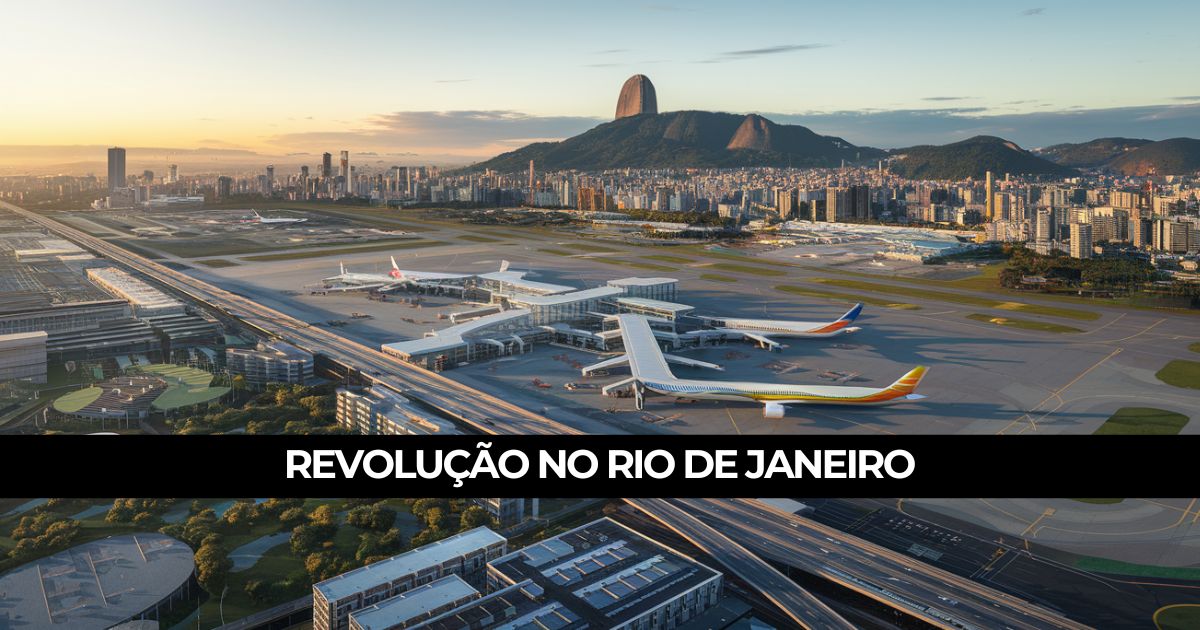


Rio de Janeiro May Be About to Witness an Unprecedented Urban Revolution: The Creation of an Aerotropolis Around Galeão Airport, in Partnership with Zhengzhou, China. The Idea Is to Transform the Airport into a Global Hub of Business and Innovation, Redefining the Economic and Urban Future of the City.
What Makes a City Become a Vibrant Center of Innovation and Global Business? In Rio de Janeiro, the Answer May Be About to Gain a New Dimension with the Arrival of a Mega-Aerotropolis.
According to Diário do Rio newspaper, although still little known to the general public, this ambitious proposal promises to profoundly alter the economic and urban landscape around Tom Jobim International Airport, Galeão, transforming it into the axis of an unprecedented “airport city”.
The initiative draws inspiration from the success of Zhengzhou Airport in China, one of the largest aerotropolises in the world, covering an impressive 700 km².
-
50 viaducts, 4 tunnels, 28 bridges, and 40 kilometers of bike paths: BR-262 in Espírito Santo will receive 8.6 billion reais for the largest engineering project in the state’s history, inspired by the Immigrant Highway in São Paulo.

-
Brazil produces too much clean energy and doesn’t know what to do with it: over 20% of solar and wind capacity was wasted in 2025 while investors flee and 509 renewable generation projects were abandoned in the last year.

-
Piauí will produce a new fuel that replaces diesel without needing to change anything in the truck’s engine and reduces pollutant gas emissions by half: truck drivers from all over the Northeast are already celebrating the news that will arrive later this decade.

-
A new Brazilian shopping center worth R$ 400 million will be built in an area equivalent to more than 4 football fields, featuring 90 stores, 5 cinemas, a supermarket, a college, and parking for 1,700 cars, potentially generating 3,000 jobs.


This development milestone is the result of a strategic vision that combines air transportation with business, logistics, technology, and urban integration.
According to official sources, the Rio project will involve an international partnership that will be formalized during the U20 event, part of the G20 program, this October.
International Partnership Promises to Accelerate Transformation
According to the City Hall of Rio, the project is an unprecedented collaboration between the local government and the Zhengzhou Airport Economic Zone (ZAEZ), recognized for its global pioneering in aerotropolises.
During the U20 event, the cooperation agreement will be officially signed, bringing to Rio the integrated urban development experience that has already revolutionized Zhengzhou’s economy.
This collaboration goes far beyond technical knowledge: it opens doors for investments and technologies that can catalyze the growth around Galeão into a true airport city, connected globally.
John Kasarda, the creator of the aerotropolis concept, will be present at the event and emphasizes the importance of this urban transformation: “The expansion of commercial facilities around airports is turning these areas into anchors of metropolitan development,” Kasarda said in a panel on aerotropolises at the event.
Kasarda has been responsible for projects in over 25 locations worldwide, and his work in Zhengzhou will serve as the main model for Rio.
A Privileged Geography for an Ambitious Project
For the CEO of Companhia Carioca de Parcerias e Investimentos (CCPar), Gustavo Guerrante, the location of the Rio airport is one of the project’s strengths.
“Rio has the privilege of having an airport on an island integrated into the city, something that few metropolises around the world have,” Guerrante highlighted.
Tom Jobim International Airport is located on Governador Island, close to the urban center and surrounded by Guanabara Bay, allowing for the planning of a multimodal space with high connectivity.
This unique structure can be optimized with the experience from Zhengzhou, resulting in greater transportation efficiency and logistical economy.
According to Guerrante, this feature will allow Rio to expand its commercial routes and enhance its urban mobility system, creating new business and development opportunities for the city.
Aldeya Life Park: Starting Point for the Carioca Aerotropolis
The project behind this transformation did not start from scratch.
Four years ago, the City Hall of Rio began building Aldeya Life Park, an economic hub spanning approximately 150,000 m² on the airport premises.
According to the project leader, André Bendavit, Aldeya Life Park is the first step towards consolidating the “airport city” concept in Brazil, offering infrastructure that connects land, sea, and air.
The location allows for the use of both Guanabara Bay and roadways, such as the Linha Vermelha and Avenida Brasil, creating a high-mobility hub that broadens transportation options.
Additionally, the plan includes the construction of a ferry terminal, connecting the airport to the city center and Santos Dumont airport, expanding the transportation network in the region.
Bendavit highlighted the importance of this infrastructure for the success of the carioca aerotropolis: “Multimodal connectivity is essential to make this project viable and competitive.”
Aerotropolises Around the World: A Successful Model
The aerotropolis concept, which links an airport to the urban and economic planning of a city, has already proven successful in cities like Dubai, Amsterdam, and Hong Kong.
These locations have become economic and logistical hubs, with the airport serving not only as a point of entry and exit for passengers but also as a catalyst for sectors like e-commerce, high technology, and healthcare services.
According to experts, this model has the capacity to energize the local economy by reducing transportation costs and increasing logistical efficiency, attracting companies from various sectors.
The application of this concept in Rio could mean an unprecedented transformation.
The project is expected to not only bring innovations in infrastructure and technology but also create jobs, foster the development of services aimed at the local population, and enhance the city’s tourism potential.
Aerotropolis: The Airport as the Heart of a Metropolis
The definition of aerotropolis highlights the airport’s role as a hub of economic and social activities that generate value for the entire city.
According to the concept, in addition to traditional functions, an airport can drive areas such as high-tech industry, logistics, distribution centers, and even the healthcare sector, which benefits from proximity to air transport to expand service reach.
This cutting-edge infrastructure aims to create a vibrant and dynamic environment that contributes to regional growth.
According to Guerrante, the partnership with Zhengzhou brings a significant advantage to the carioca project: “We are not starting from scratch.
We are integrating the best practices already implemented in China and adapting them to our context,” the director stated.
With Chinese support, Rio gains a tested and validated model, reducing risks and accelerating implementation.
The Future of Rio’s Airport City: An Urban Revolution or a Distant Dream?
Given the magnitude and challenges of a project of this nature, the question remains: does Rio de Janeiro have what it takes to become one of the main global hubs of innovation and connectivity?
In a context of significant urban transformations, the idea of an aerotropolis could indeed leverage the economic and social potential of Rio de Janeiro, but it will depend on efficient public management, robust investments, and international cooperation.
Will this “megacity” around Galeão really be able to elevate Rio de Janeiro to the level of a global hub for development and innovation?








Ótimo, um projeto em um bairro com uma das maiores concentrações de favelas do RJ. Uma ilha , com uma única entrada e saída e o projeto se apontado na “mobilidade” da linha vermelha e amarela!!!! É pra rir ?????
Projeto para dar dinheiro que a chineses e nada mais ! Ridículo!! E o prefeito? É o mesmo que “comeu” o dinheiro das olimpíadas e não saiu do papel vários projetos previstos !!! Acredita quem quer !!!
Putz, parceria com a CHINA !
Ninguém merece.
Mais uma obra inacabável fonte de muita corrupção.
Tem que combinar com CV, PCC e as Milícias.
São os donos da Cidade