





 Portuguese
  English
  Spanish
 3 min of reading
  0 comments


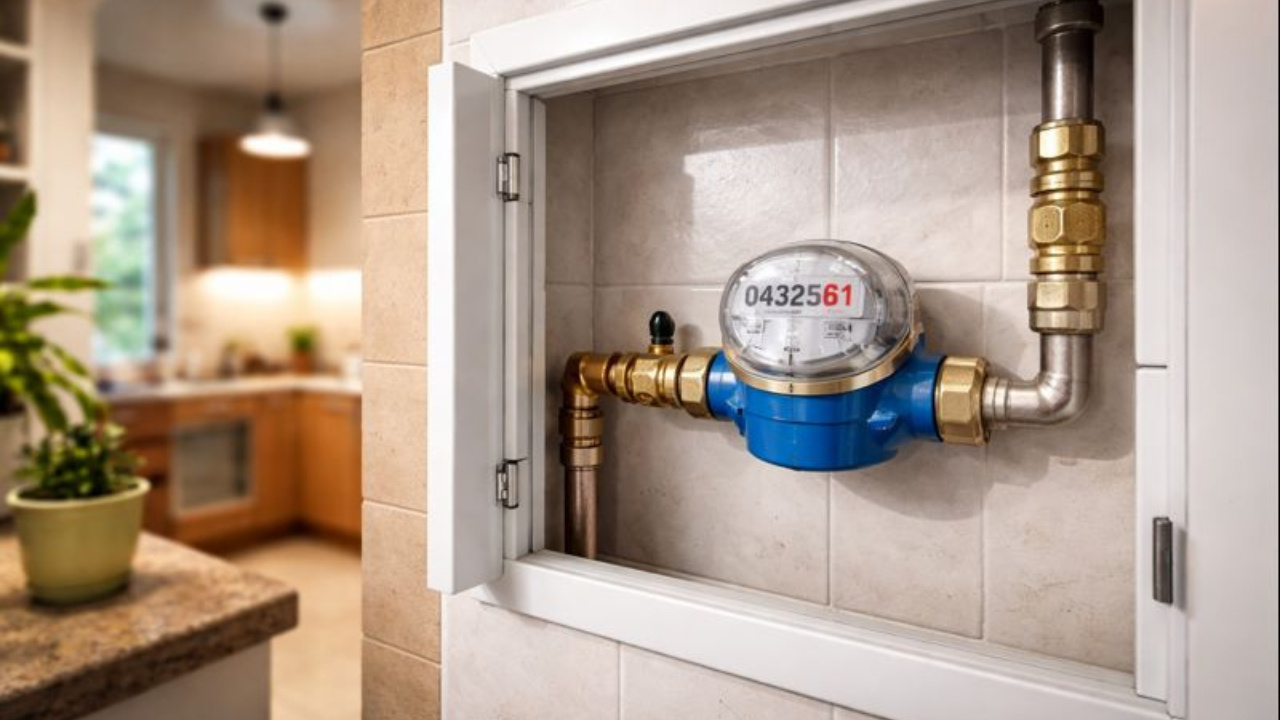
New Water Meter Law Strengthens Consumer Security and Fines Utilities for Improper Installation.
A new Water Meter Law has started to directly change the routine of thousands of properties in Rio de Janeiro.
Law No. 9,207, signed by Mayor Eduardo Paes, came into effect on December 19 and requires that water meters be installed inside properties, prohibiting installation in external areas such as walls and sidewalks.
The measure applies to the entire municipality of Rio de Janeiro and aims to combat theft of meters, enhance consumer security, and reduce recurring losses caused by vandalism.
-
The Senate approves a bill that criminalizes misogyny, hatred, or aversion towards women, and includes the crime in the Racism Law with a penalty of up to 5 years.

-
Chamber Approves Bill That Allows Pepper Spray for Women Over 16 and Imposes Strict Rules for Purchase, Possession, and Use as Self-Defense

-
Chamber Approves Law to Combat Leucaena, Fast-Growing Plant That Dominates Land and Threatens Native Species in Various Regions of the Country

-
Asset Division: Know What Cannot Be Divided in Case of Divorce


Right at the beginning of its effectiveness, the regulation began to require operational changes from water utilities, which now need to adapt their internal installation projects and review technical standards previously adopted.
The legislation also establishes severe financial penalties in case of non-compliance.
Why The Water Meter Law Was Created
The creation of the Water Meter Law addresses an old problem faced by residents in different regions of the city.
In neighborhoods with higher crime rates, theft of meters has become frequent, causing direct troubles for the population.
Additionally, the removal or destruction of equipment often left properties without water supply for several days.
This forced residents to resort to emergency solutions, often with extra costs and impacts on their daily routines.
Therefore, by requiring internal installation, the government aims to protect the equipment and, consequently, the end consumer.
Internal Installation Becomes Mandatory Rule
With the new legislation, internal installation of water meters is now the mandatory standard in Rio de Janeiro.
From now on, utilities cannot install equipment in external areas, such as facades, walls, or sidewalks, without express authorization.
The meters must be positioned inside the property, in visible, accessible, and secure locations.
Thus, reading consumption, monitoring, and maintenance remain possible, without compromising the protection of the equipment.
Meanwhile, the change requires technical and operational adaptations from the companies responsible for the supply service.
Consumer Security Is The Central Focus Of The Law
The main objective of the Water Meter Law is to strengthen consumer security.
By keeping the equipment inside the property, the legislation reduces risks of theft, intentional damage, and improper handling.
Moreover, the new model decreases disputes over responsibility for losses caused by third parties.
Before the law, many consumers ended up bearing the costs of problems originating from outside their properties.
Thus, the regulation brings more legal clarity and protection to the service user.
Fines For Utilities Can Reach R$ 20 Thousand
The legislation provides for fines for utilities that violate the new rules.
Each external installation made without authorization can incur a penalty of R$ 10 thousand.
In the case of recurrence, the fine amount doubles, reaching up to R$ 20 thousand per infraction.
The collected resources will be allocated to the Municipal Fund for Consumer Protection and Defense.
Therefore, the municipality reinforces the educational and punitive nature of the measure.
And What If The Resident Opts For External Installation?
Although internal installation is the rule, the law allows the owner to voluntarily opt for external installation of the water meter.
However, this choice entails additional responsibilities.
In this case, the consumer becomes responsible for damage, theft, and maintenance of the equipment. In other words, any loss is no longer attributed to the utility.
On the other hand, this alternative offers flexibility for properties with structural limitations, as long as the resident is aware of the risks.
Expected Impacts In The Most Affected Neighborhoods
The expectation is that the new Water Meter Law significantly reduces the troubles in areas with a high history of theft of meters.
With fewer occurrences, the trend is for greater continuity in supply and fewer complaints from consumers.
Additionally, the measure helps improve the relationship between users and utilities, strengthening consumer security and predictability of service.










-

Uma pessoa reagiu a isso.